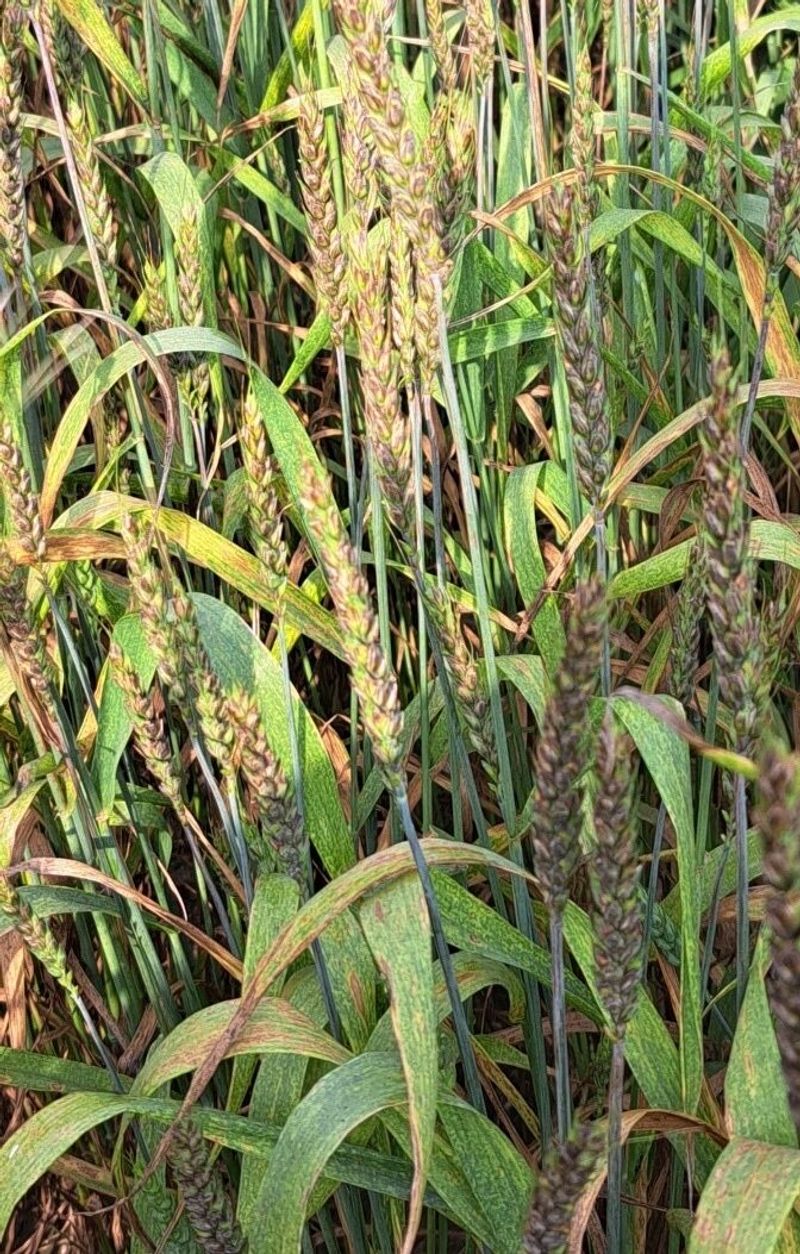

In a repeat of the situation seen in March 2022, wheat crops across Punjab are showing purple discolouration on glumes and peduncles due to above-normal temperatures during February-March. Experts at Punjab Agricultural University (PAU) have clarified that this pigmentation is not a disease and does not affect the developing grain, cautioning farmers against spraying fungicides unnecessarily.Dr DS Bhuttar, Head, Department of Plant Pathology, said, “Most of the wheat crop in Punjab is in earing phase. Lately, farmers have shown concern on the appearance of purple pigmentation on wheat glumes and peduncles across Punjab. Few farmers have already sprayed their wheat crop with fungicides without consulting the scientists or extension experts.”He added, “The scientists from Punjab Agricultural University have undertaken extensive surveys to study this problem. They have found that it is not a disease and the discolouration is only on the glumes. The grain developing inside this discoloured glume is healthy and without any discolouration. It is the same situation which was there in 2022, when temperature had gone above normal in March.”Dr Bhuttar observed that the probable reason for this discolouration was the appearance of melanin pigment, which might be the inherent character of some popular wheat varieties. Above-normal day and night temperatures during February-March had further aggravated the problem, he said, adding that the level of glume pigmentation varied with different wheat varieties.Since it is not a disease, there is no need to spray any fungicides for its management, he advised the farmers. Instead, need-based irrigation and spraying Potassium nitrate as recommended by PAU may be practised to counter the heat wave and harvest good returns, he suggested.Experts have advised the farmers to remain vigilant and rely on scientific advisories. The indiscriminate spraying not only adds to costs but also poses the risk of leaving chemical residue in the environment. By following recommended practices, growers can safeguard both crop health and soil sustainability, ensuring that Punjab’s wheat belt continues to deliver high yields without avoidable expenditure.