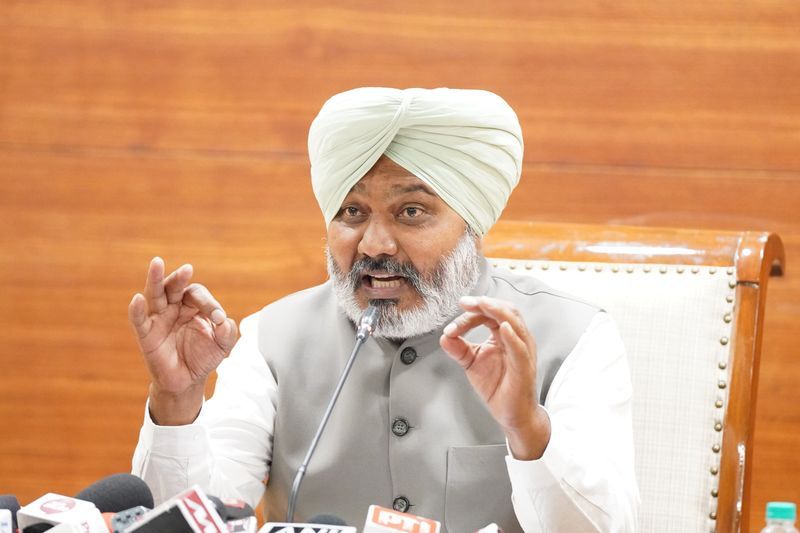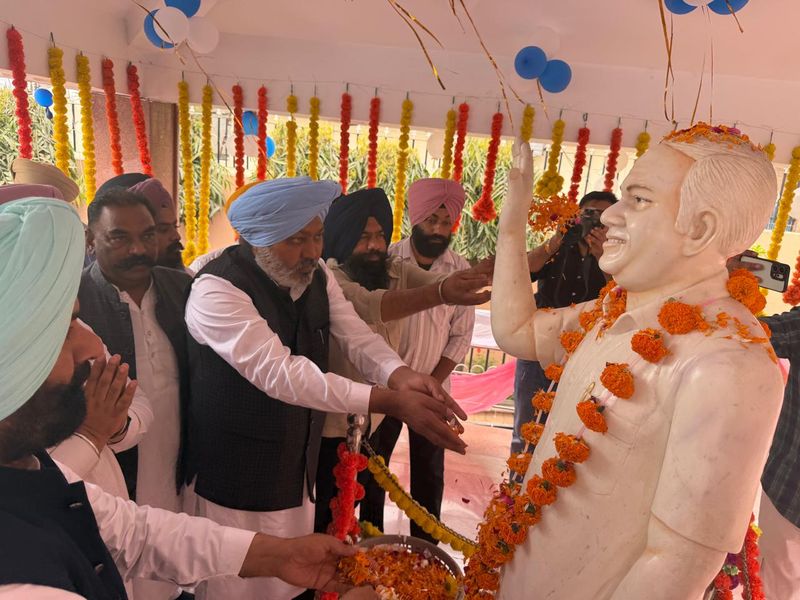

In a politically significant outreach to Punjab’s sizeable Dalit electorate, senior leaders of the ruling Aam Aadmi Party (AAP) paid homage to iconic Dalit leader Kanshi Ram on his birth anniversary at his native village, Pirthipur, in the Kiratpur Sahib area of Ropar district on Sunday.Punjab Finance Minister Harpal Singh Cheema and Education Minister Harjot Singh Bains visited the village along with party workers and local leaders to pay floral tributes to Kanshi Ram, who is widely regarded as one of the most influential figures in modern Dalit politics.Addressing party workers and villagers on the occasion, both ministers described Kanshi Ram as a visionary leader who devoted his entire life to the upliftment of the poor, backward, and marginalised sections of society.While the AAP leaders paid homage to Kanshi Ram in his native village, the Bahujan Samaj Party (BSP) leader organised a parallel function in Nawashahar. Sources said the BSP leader organised a parallel function due to differences with the family of the late Dalit icon. From Congress, the Chairman of the SC department of AICC, Rajendra Pal Gautam, attended the function on behalf of the party along with the district president of Congress in Ropar, Ashwani Sharma.Punjab has one of the highest proportions of Dalit population in India, with nearly 35 percent of the state’s residents belonging to the Scheduled Castes. This demographic reality has made Dalit politics a crucial factor in the state’s electoral landscape. Observers view such events as part of broader political efforts by parties to strengthen their connection with the community.Kanshi Ram, born in 1934 in Pirthipur village in present-day Ropar district, rose from modest beginnings to become a national symbol of Dalit assertion. After completing his education in science, he joined government service as a scientist with the Defence Research and Development Organisation. However, an incident involving alleged discrimination against a Scheduled Caste employee profoundly affected him and eventually led him to leave his job to dedicate his life to social and political mobilisation.During the 1970s, Kanshi Ram began organising employees from marginalised communities and founded the All India Backward and Minority Communities Employees Federation (BAMCEF).He later formed the Dalit Shoshit Samaj Sangharsh Samiti (DS4), which served as a mass movement platform advocating social equality and representation for oppressed communities. The culmination of his efforts came in 1984 when he founded the BSP, which went on to become one of the most prominent political parties representing Dalits and other marginalised groups in India.Kanshi Ram’s political philosophy was based on the idea of “Bahujan” unity, bringing together Scheduled Castes, Scheduled Tribes, Other Backward Classes, and minorities to create a powerful political bloc capable of challenging traditional power structures. His organisational efforts paved the way for the rise of leaders such as Mayawati, who later became Chief Minister of Uttar Pradesh multiple times.Though Kanshi Ram spent much of his political career building a national movement, his roots remained deeply connected with Punjab. His birthplace continues to hold symbolic significance for Dalit politics in the state, and leaders from various political parties frequently visit the village to pay tribute to him.Political observers note that Kanshi Ram’s legacy remains highly relevant in Punjab, where Dalits constitute a decisive voting bloc across many constituencies. While the community does not vote as a single unified group, its electoral influence has grown steadily over the decades.With political parties increasingly focusing on Dalit outreach in Punjab, Kanshi Ram’s legacy remains a powerful symbol in the evolving landscape of the state’s politics.