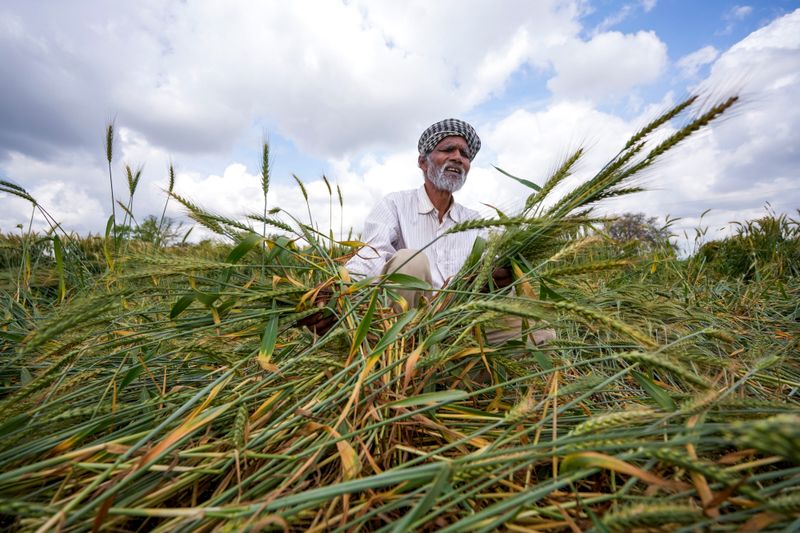

The West Asia conflict is likely to raise pesticide input costs by 20-25 per cent, triggering supply disruptions and increasing the risk of counterfeit products, even as the crisis carries wider implications for India’s agriculture sector.The war has also raised concerns over global fertiliser supply chains.Meanwhile, addressing a high-level review of the agricultural sector, Union minister Shivraj Singh Chouhan said the government’s focus extended beyond increasing production to ensuring scientific crop loss assessment, timely insurance settlements and farmer support.He directed officials to coordinate with state governments for accurate assessment of crop losses after unseasonal rainfall and hailstorms damaged standing rabi crops, including wheat, across several states.“If a farmer has suffered losses, the damage must be assessed accurately and scientifically so that insurance claims can be processed effectively,” he said. The India Meteorological Department has warned of two additional western disturbances.The review comes amid rising weather volatility and growing risks to crop output. Chouhan said India’s agricultural strategy would now prioritise quality alongside quantity, citing ‘Sharbati’ wheat from Madhya Pradesh, which commands a premium of over Rs 400, as an example. He emphasised the need to promote better varieties, bio-fortified crops and high-quality produce to help farmers earn above the minimum support price (MSP).The government on Friday said adequate supplies of urea and Di-Ammonium Phosphate (DAP) had been ensured for farmers across the country, with imports of the two key nutrients rising 63 per cent during April-January of the current fiscal. However, much of this increase predates the conflict.According to the Ministry of Fertilisers, total imports of urea and DAP rose to 14.94 million tonnes during April-January 2025-26, up from 9.17 million tonnes in the year-ago period.Urea imports increased 83.3 per cent to 8.93 million tonnes from 4.87 million tonnes a year earlier. DAP imports rose to 9.03 million tonnes from 4.30 million tonnes in the corresponding period. Urea and DAP are the most widely used fertilisers in India.CropLife India, which represents leading research-driven crop protection firms, said the conflict could further push up pesticide prices.“The disruption in supply chains and key shipping routes due to the conflict is likely to increase input costs by 20-25 per cent for the crop protection industry, leading to higher costs for farmers. It may also result in shortages of certain products during a critical agricultural season, affecting yield and quality,” said Ankur Aggarwal, chairman, CropLife India.He added that the industry could see lower capacity utilisation across technical and formulation plants, impacting earnings and employment, particularly among MSMEs. Supply gaps and volatility might also encourage the circulation of illicit, counterfeit or substandard products.The conflict has also affected oil infrastructure in countries such as Saudi Arabia, Qatar and Kuwait, putting nearly 20 per cent of global oil flows at risk. This has disrupted India’s energy ecosystem and is impacting agriculture through multiple channels.India’s dependence on crude oil imports stood at 87.7 per cent in 2023-24, making it one of the most energy-dependent major economies. The country also imports almost all of its potash requirements and 85-90 per cent of raw materials for phosphatic fertilisers.P Krishna Prasad of the All-India Kisan Sabha said the conflict had worsened existing challenges. He alleged that fertiliser shortages were pushing farmers towards black markets and that small and marginal farmers dependent on exports to Gulf countries, especially in perishables, horticulture, fisheries and poultry, were being hit the hardest.BKU-A national spokesperson Dharmendra Malik said India’s limited progress in R&D for fertilisers and pesticides had deepened import dependence. Rising prices of plastics and aluminium, key inputs for packaging, have further increased the cost of agriculture, he added.Agriculture policy analyst Devinder Sharma, however, said India was better placed to manage the situation. “It is a fake alarm sounded by the industry which wants to create a perception of pesticide shortage. A similar panic was created by agri-business companies during the Russia-Ukraine war. The larger debate we need to look at is the elimination of chemical pesticides and adopt organic an climate-resilient agriculture. If at all there is a crisis, the government should consider it as an opportunity to usher in an era of organic farming,” he said.