
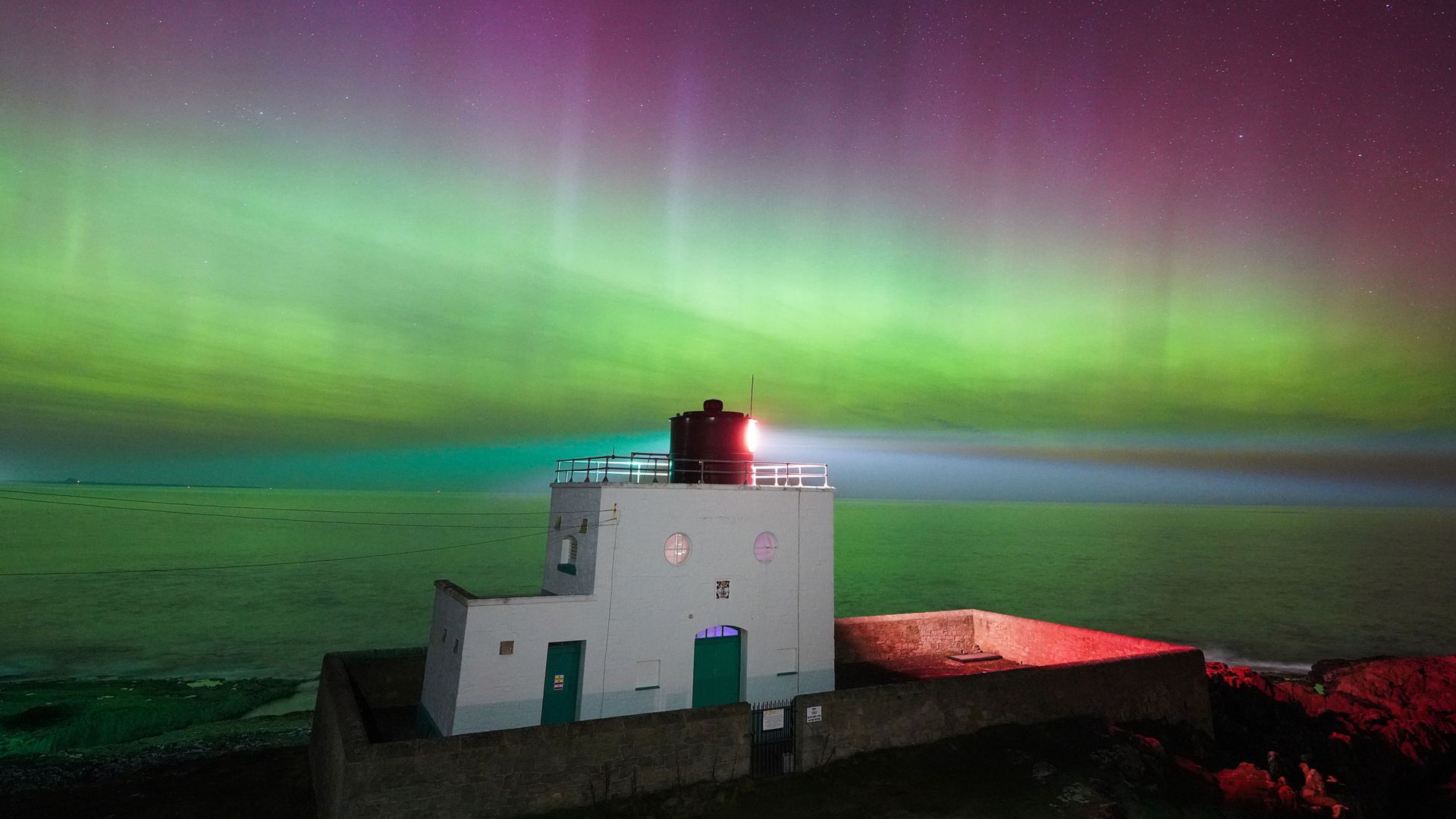
Parts of the UK enjoyed breathtaking views of the Northern Lights overnight – and more is forecast for Saturday.The natural light show, known as the aurora borealis, is one of nature’s “most spectacular displays”, according to the Met Office.
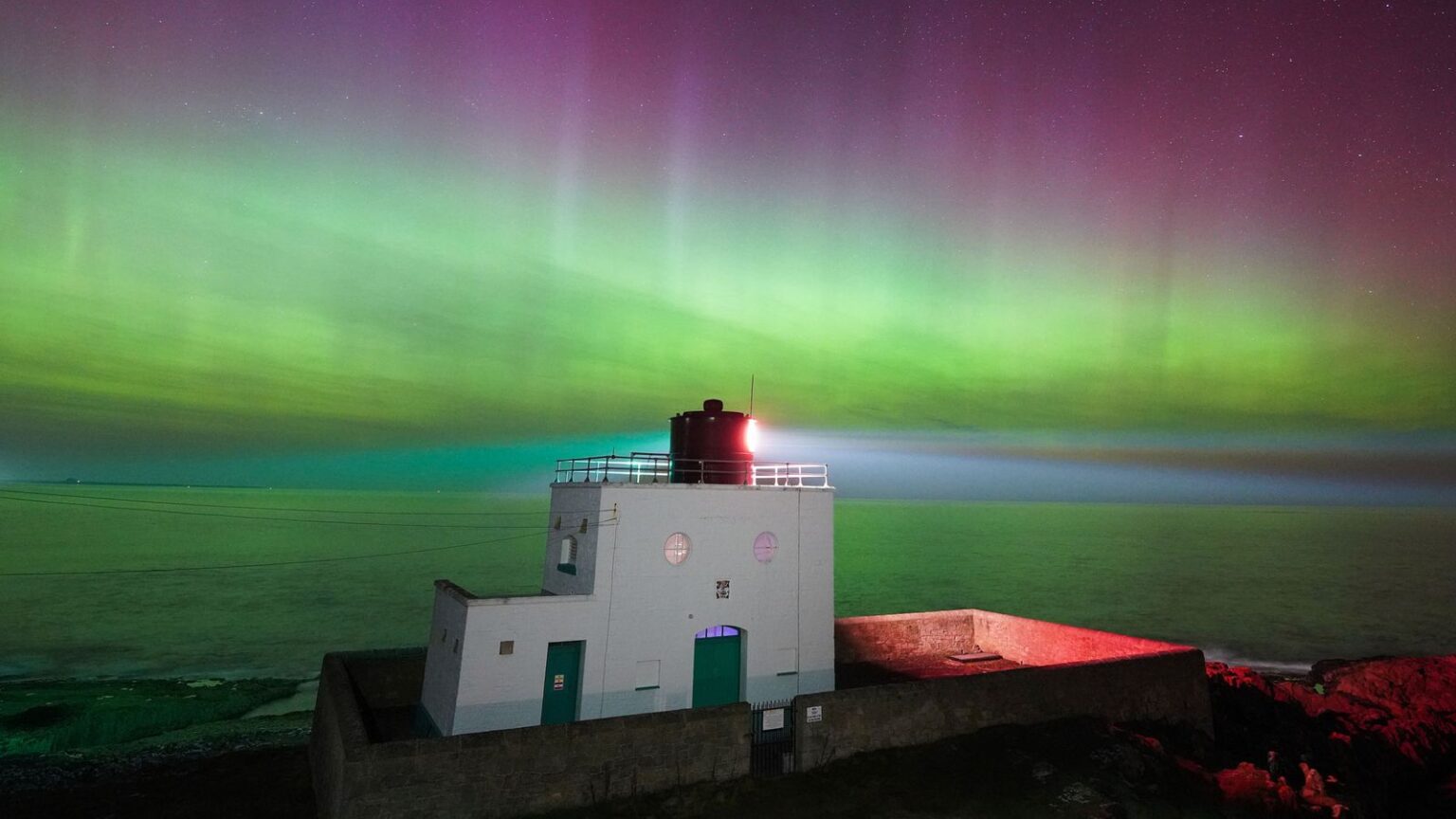
Pictures from Friday night featured waves of mostly green and purple light at Bamburgh in Northumberland in the UK, as well as in Estonia and Canada, while social media users posted images taken elsewhere, including Russia.
Image:
Bamburgh Lighthouse in Northumberland. Pic: PA
Image:
The Northern Lights over the Tallinn bay of the Baltic Sea in Tallinn, Estonia. Pic: AP
While the Northern Lights are mostly visible near the Arctic Circle and northern Scotland, the Met Office said “pale green and pink to vibrant reds, blues, and violets can sometimes light up the night sky, especially in the north of the UK”.The Met Office said on Thursday there was a chance of seeing the northern lights “over the next couple of nights”, predicting sightings being “most likely across Scotland where skies are clear but perhaps into northern England too”.
What causes the Northern Lights?The shimmering spectacle occurs when energy and charged particles released from the sun through coronal mass ejections (CMEs) and solar flares travel towards Earth on the solar wind and collide with the Earth’s magnetic field and upper atmosphere, interacting with gases to create spectacular displays of blue, purple, green, pink and red.
X
This content is provided by X, which may be using cookies and other technologies.
To show you this content, we need your permission to use cookies.
You can use the buttons below to amend your preferences to enable X cookies or to allow those cookies just once.
You can change your settings at any time via the Privacy Options.
Unfortunately we have been unable to verify if you have consented to X cookies.
To view this content you can use the button below to allow X cookies for this session only.
Enable Cookies
Allow Cookies Once
If the solar activity is strong enough, it will cause a geomagnetic storm.In January, the Met Office said the solar maximum was “all but confirmed to have taken place in 2024 and 2025”, meaning solar activity on the surface of the sun “appears to be in a declining phase”.
But it said this phase “can be a period which can often bring strong events, as evidenced by last week’s aurora visibility as far south as northern Italy”.Will we see them again soon?Several things need to occur for the skies over the UK to dazzle again.Any solar eruptions that do occur need to be aimed at Earth and cause a strong geomagnetic storm.
X
This content is provided by X, which may be using cookies and other technologies.
To show you this content, we need your permission to use cookies.
You can use the buttons below to amend your preferences to enable X cookies or to allow those cookies just once.
You can change your settings at any time via the Privacy Options.
Unfortunately we have been unable to verify if you have consented to X cookies.
To view this content you can use the button below to allow X cookies for this session only.
Enable Cookies
Allow Cookies Once
It also needs to be dark enough, with settled weather allowing clear skies to see the aurora.What’s the best way to capture them?While the Northern Lights are visible to the naked eye, the colours often appear faint and muted compared with those captured by camera.
Image:
A robot on sea ice under the aurora borealis in Cambridge Bay, Canada. Pic: Reuters
To take better pictures of the aerial phenomena, Adobe recommends using manual camera settings and a wide aperture on a camera.It suggests using low shutter speeds, up to 20 seconds, as well as setting the camera’s ISO value all the way to 2,000 or higher – such settings are usually available in smartphones’ camera settings.