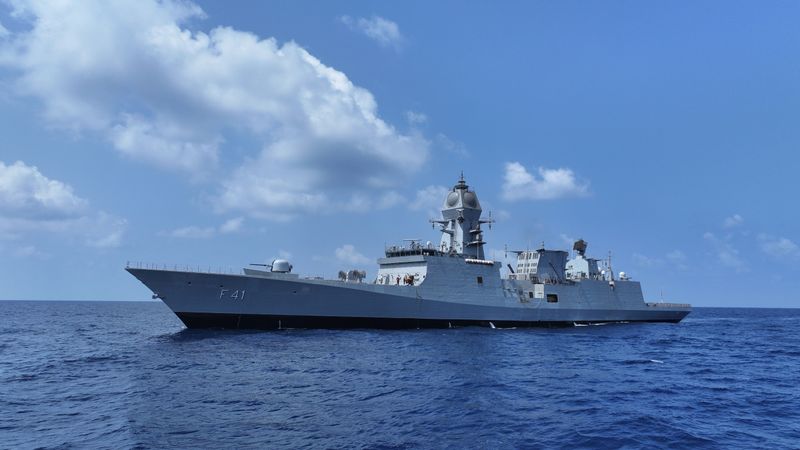

The Navy is set to commission its latest stealth frigate, INS Taragiri, on April 3. It is the fourth of a seven-ship series of the Nilgiri-class frigates, all of which have been built using a new, faster shipbuilding technique called ‘integrated construction’. These ships are modular, ergonomic and have been built within envisaged timelines.Constructed by Mazagon Dock Shipbuilders Limited (MDL), Mumbai, Taragiri represents a generational leap over earlier designs, featuring a sleeker form and significantly reduced radar cross-section. The vessel also has indigenous content exceeding 75 per cent.The Nilgiri-class displaces about 6,700 tonnes and is about five per cent larger than its predecessor, the Shivalik-class frigates, while incorporating a more streamlined design with lower radar visibility.The ships are powered by a Combined Diesel or Gas (CODOG) propulsion system using diesel engines and gas turbines. Their weapon suite includes supersonic surface-to-surface missiles, medium-range surface-to-air missiles, a 76 mm main gun and a combination of 30 mm and 12.7 mm close-in weapon systems, along with anti-submarine and underwater warfare capabilities.Additionally, the frigates are equipped with the land-attack version of the BrahMos missile system. The Navy conducted rigorous sea trials to validate the frigates’ hull, machinery, firefighting, damage control, navigation and communication systems, ensuring readiness for operational deployment.The Nilgiri class employs ‘integrated construction’, which involves building various sections of the ship, such as the hull, superstructure and internal systems in modular blocks of around 250 tonnes each. These blocks are fabricated with precision to allow seamless integration of cabling and piping when assembled.Artificial intelligence is used to optimise the sequencing of warship construction, including material sourcing and production timelines. Indian shipyards now complete ships in about six years, compared to the earlier eight to nine years.The Naval Warship Design Bureau has incorporated advanced technologies, including modern design software and AI-driven processes, to enhance efficiency.The remaining three ships of the Nilgiri-class — Dunagiri, Vindhyagiri and Mahendragiri — are at various stages of construction at MDL and GRSE and are expected to be delivered to the Navy this year.