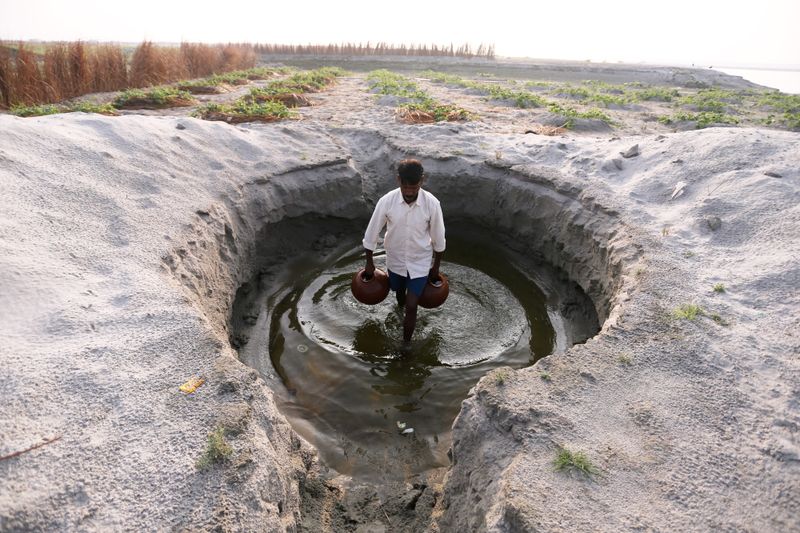

The government is planning long-term solutions, including improving water-use efficiency in agriculture, recycling and reuse of sewage, groundwater recharge and rainwater harvesting, to prepare for the water stress India is projected to face by 2047.On World Water Day, official sources said the average annual per capita water availability in 2021 had dropped to 1,486 cubic metres.Water availability of less than 1,700 cubic metres per capita is defined as water stress, while levels below 1,000 cubic metres indicate water scarcity. Official data shows that in the 1960s, India’s per capita water availability was about 5,000 cubic metres.This has steadily declined as resources have shrunk and the population has grown. The government estimates per capita water availability will fall further to around 1,300 cubic metres by 2047.Between 1961 and 2021, per capita water availability has dropped by nearly 70 per cent.“Long-term solutions lie as much in policy measures as in inculcating a culture of water sensitivity among citizens,” official sources said, adding that national water demand by 2047 was expected to outstrip availability.Data from the Ministry of Jal Shakti show that the current harvestable water component is about 1,180 billion cubic metres, against a requirement of 880 bcm.“By 2047, national demand for water will exceed the harvestable component. Preparing in advance is, therefore, essential,” an official said, adding that state governments will play a crucial role in strengthening water management going forward. A key challenge will also be water sharing, as some states are likely to become water-scarce while others remain water-abundant.