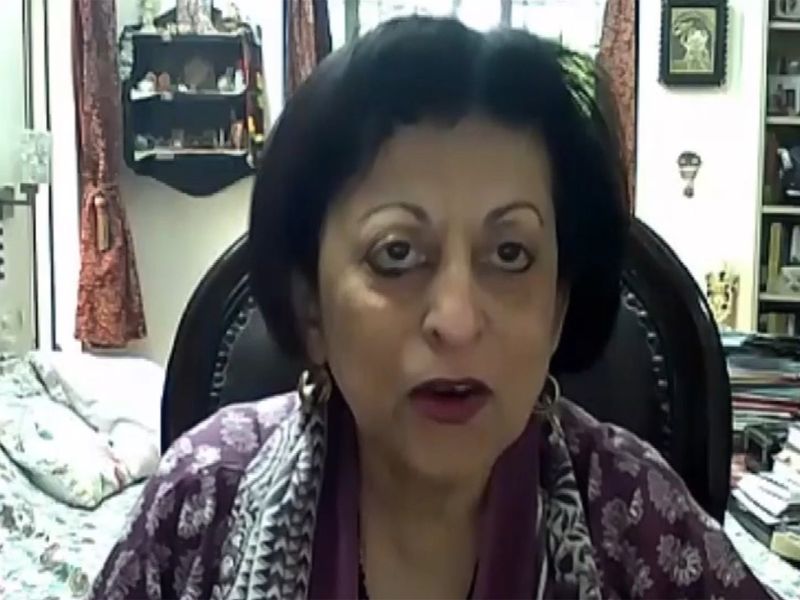

Former diplomat Bhaswati Mukherjee on Sunday strongly criticised the latest report by the United States Commission on International Religious Freedom (USCIRF).A total of 275 signatories have issued a sharp rebuttal to its recommendations targeting the Rashtriya Swayamsevak Sangh (RSS) and Research and Analysis Wing (R&AW).In an interview with ANI, responding to a question on what triggered the strong reaction from former judges, diplomats and senior officials, Mukherjee said the signatories included a wide range of experienced public servants.Highlighting the tone of the response, Mukherjee said, “We didn’t slam them, we demolished them. And they deserve to be demolished for a simple reason, which is not written in the letter because it had to be courteously worded.”Mukherjee also referred to the contributions of the Indian diaspora in the United States.Referring to the report, Mukherjee said the response was “to say that the R&AW is the equivalent of their CIA, and the RSS, which was founded 100 years ago to serve the nation that was then under the colonial rule and since then has always put what we call in India ‘Seva’, service to the community first”.Questioning the recommendation for sanctions, she added, ” To drag them in, to say that their assets should be frozen, they shouldn’t be allowed to travel. What do they think, that they are dealing with some banana republic? Or do they think that they are dealing with Venezuela, whose president was kidnapped and taken away to New York City against his wishes? Or do they think that they can fix us like they are trying to fix, very unsuccessfully in my perspective, the Islamic Republic of Iran? It doesn’t work.”Mukherjee said India’s democratic institutions are capable of addressing any wrongdoing internally.”In today’s world, we are members of the UN Charter, and we are a major emerging country. If any organisation does anything which does not align with India’s constitution, they will be dealt with by India’s judiciary, by India’s democratic mechanisms, etc,” she said.She added, “We have long gone beyond the stage where we need ‘goras’ to tell us what to do. We don’t need ‘goras’ to tell us what to do. On the contrary, the ‘goras’ should ask us for some tips on how to behave. We never give them unsolicited advice; they should not give us unsolicited advice.”