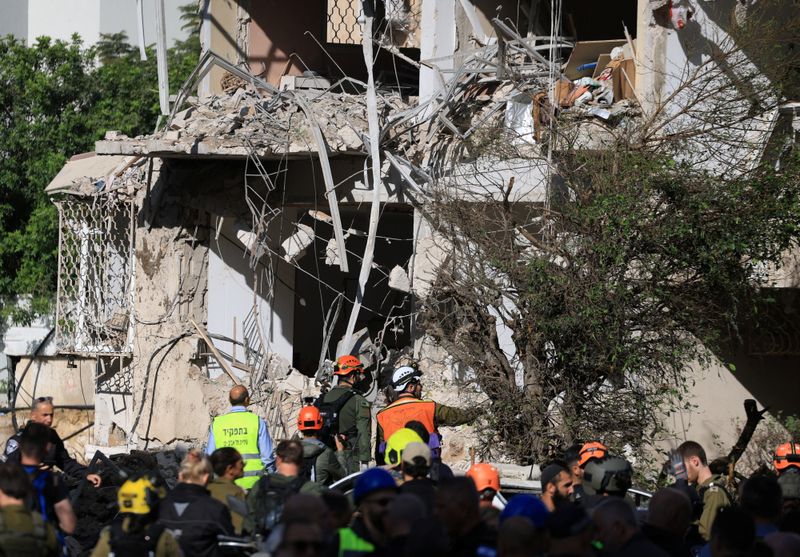

In a conflict shaped by oil routes, missile strikes, and nuclear anxieties, a more existential fault line has surfaced — water.Iran’s warning that it could target desalination plants across the Gulf has introduced a new layer of deterrence, one that appears to have complicated Washington’s immediate military calculus.The timing is striking. As the United States weighed further strikes on Iranian energy infrastructure, Tehran signalled that any such escalation would invite retaliation not just against oil assets or military bases, but against desalination facilities that sustain daily life in the Gulf.Within days, US President Donald Trump indicated a pause in planned attacks, describing ongoing developments as “productive”.There is no official linkage between the two. Yet the sequence underscores how the conflict is expanding beyond conventional targets into domains where the consequences are immediate, civilian and difficult to contain.Desalination plants are not peripheral infrastructure in the Gulf — they are its lifeline. Countries such as Saudi Arabia, the UAE, Kuwait and Qatar rely overwhelmingly on desalinated seawater for drinking supply, industry and urban survival.In several of these states, dependence runs as high as 70 to 90 per cent. Storage buffers are limited. A sustained disruption would not unfold over months, but days.That vulnerability makes desalination fundamentally different from energy assets.Oil supply shocks reverberate through markets; water disruptions translate into instant humanitarian stress. Hospitals, housing systems and essential services are directly exposed. For governments hosting US military bases and aligned with Washington, the risk is not abstract escalation but internal instability.Iran’s signalling effectively widens the battlefield to include societal infrastructure. Coastal desalination plants are difficult to shield comprehensively from drones or missile strikes, and redundancy remains limited despite years of investment.The conflict has already seen infrastructure targeting on both sides, and the inclusion of water facilities in that spectrum marks a significant escalation. It blurs the line between strategic and civilian assets, raising the political and legal stakes of any further action.For Washington, the implications are layered. Any escalation that risks triggering attacks on desalination plants would directly impact allied states that form the backbone of the US presence in the region.However, none of this suggests that the United States has stepped back solely because of Iran’s warning. Strategic pauses are rarely driven by a single factor.Military readiness, backchannel diplomacy, energy market reactions, and alliance management all feed into such decisions. But the desalination threat has clearly altered the risk equation, introducing a dimension that is harder to mitigate and far costlier to absorb.What Iran has demonstrated is that deterrence in modern conflict need not mirror the adversary’s strengths. By placing water — the most basic requirement of life — at the centre of its response matrix, it has shifted the conversation from infrastructure damage to human consequence.In doing so, Tehran may not have halted escalation. But it has made clear that the next phase of this conflict will not just be fought over territory or resources, but over systems that sustain entire societies. And that is a threshold even the most powerful actors must weigh with caution.