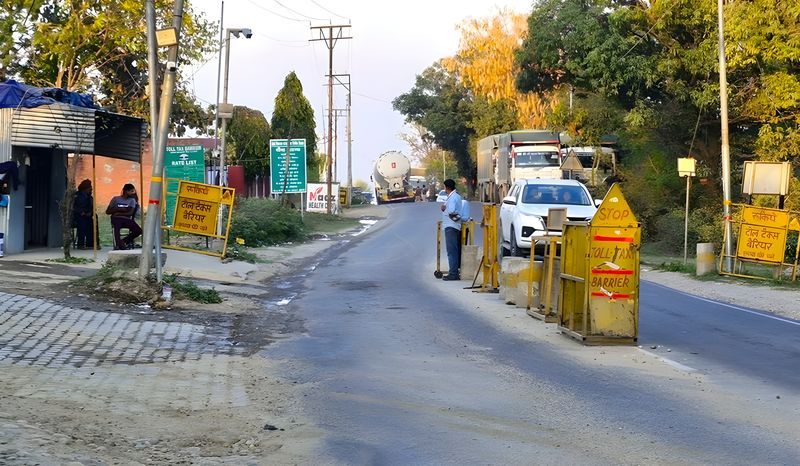

Punjab and Himachal Pradesh governments are on a collision course over a massive hike in entry tax imposed by the hill state across both major and minor roads. Punjab has announced it will reciprocate by levying a tax on vehicles entering its territory from Himachal Pradesh.Amid the dispute, commuters and tourists from across the country are bearing the brunt. Tourists—especially religious travellers from Delhi, Gujarat and south India—often plan visits covering both states and will now have to shoulder increased travel costs.What is the issue?The controversy centres on the entry tax imposed by Himachal Pradesh on vehicles entering the state, particularly those registered outside Himachal. The tax is collected at interstate barriers and applies to private vehicles, commercial transport, buses and goods carriers. While the levy has been in place for decades, the recent steep hike in rates has triggered widespread opposition.When was it imposed and what has changed now?The entry tax in Himachal Pradesh dates back to the Himachal Pradesh Toll Act, 1975. Initially, it was imposed on commercial vehicles entering the state. However, in 2003, it was extended to private vehicles. At that time, the entry tax on private vehicles was Rs 30 and applied to all private vehicles, including those registered in Himachal.The previous government in Himachal Pradesh (2017-2022) exempted vehicles registered within the state and increased the toll on private vehicles registered in other states to Rs 40. The present Congress government in Himachal initially raised the entry toll from Rs 40 to Rs 70 and has further increased it to Rs 170 from the next financial year starting April 1.The latest revision, effective April 1, 2026, has significantly increased charges:Private cars: Rs 70 to Rs 170Mini buses: Rs 180 to Rs 320Buses: Rs 320 to Rs 600Heavy goods vehicles: Rs 720 to Rs 900This marks one of the sharpest hikes in recent years, especially impacting daily commuters and transporters.Why are protests taking place?The protests are largely concentrated in Punjab’s border areas such as Ropar, Nangal and Anandpur Sahib. Thousands of people cross into Himachal every day for work, business, education and family needs. Transporters and taxi operators from both Punjab and Himachal say the increased tax will raise travel and logistics costs. Residents argue that the tax is unfair for those living near the border who rely on frequent travel.Critics claim such levies on national highways violate the principle of free interstate movement. Recent demonstrations have included road blockades and warnings of intensified agitation if the tax is not rolled back.How much revenue does Himachal expect to earn from the taxes?Himachal Pradesh expects to earn over Rs 170 crore from entry toll in the next financial year. There are more than 50 toll barriers across the state. The state government has defended the hike as necessary to address financial constraints following the discontinuation of the Revenue Deficit Grant (RDG) by the Union Government.What is Punjab’s stand on the taxes?Punjab has reacted strongly to the development. The state government is considering imposing a reciprocal entry tax on vehicles from Himachal Pradesh. AAP minister and MLA from Anandpur Sahib, Harjot Singh Bains, is leading Punjab’s campaign. Punjab may also approach the Centre or the Supreme Court, challenging the legality of the levy. Political leaders have accused Himachal of placing an unfair burden on neighbouring states. The issue has thus evolved into a potential inter-state dispute.Who are the most affected?People living in border areas who frequently cross into the neighbouring state, truckers, bus operators and taxi drivers facing increased operational costs, as well as shops and eateries dependent on cross-border movement, are the worst affected. Higher travel costs could also impact tourism to Himachal.What lies ahead?Experts suggest several possible solutions, including exemptions or concessions for residents of border areas and dialogue between Punjab and Himachal to resolve the issue. The validity of such taxes on national highways has already been challenged in the Himachal High Court, and the matter is sub judice.The issue has quickly taken a political turn. In Himachal, the ruling Congress defends the move as a revenue measure, while the BJP calls it anti-people. In Punjab, the AAP government has opposed the tax and is exploring countermeasures. There are concerns that the situation could escalate into a “tax war” between the states if retaliatory steps are taken.