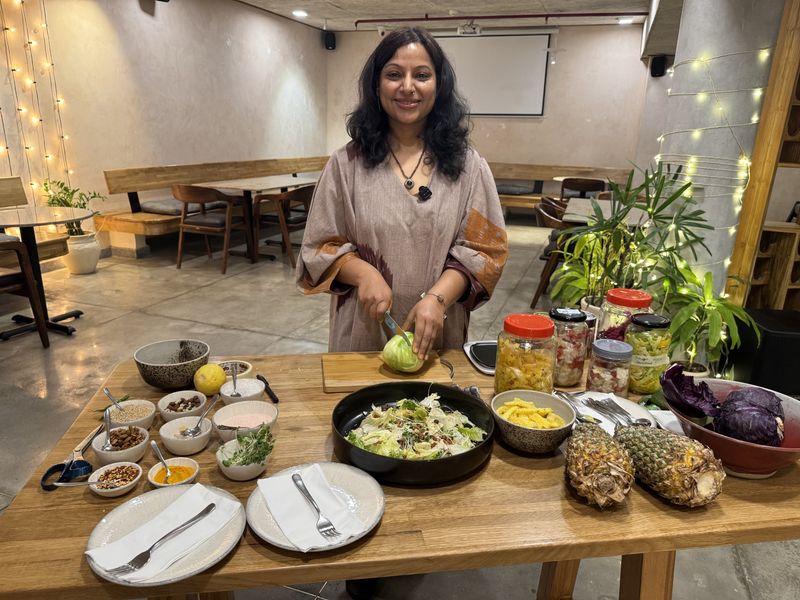

Poita bhat, a lazy person’s breakfast in Assam, suddenly became a source of pride when MasterChef Australia contestant Kishwar Chowdhury chose this fermented rice dish in the Season 13 finale back in 2021.So what if Kishwar was a Bangladeshi-Australian! We Easterners, which include the Assamese, Bengalis, Odias and even Bangladeshis, do share this culinary heritage. And, if this tradition of eating fermented rice early in the morning is not enough to bind us together, the jeers and scowls we face whenever we cook our regional dishes outside home states, do the trick. So, Kishwar’s victory felt personal; it provided me the tool to fight against derogatory comments on our food habits.The euphoria, however, didn’t last long. Though poita bhat subsequently got the status of a super food, its glory remained only on paper. It never entered any nutritionist’s diet chart or a restaurant’s menu. After all, who would take the risk of serving a dish of leftover cooked rice which is soaked in water and left overnight in room temperature and then served with a dollop of mashed potato (minus the cream), or simply a green chilli, raw onions and a splash of mustard oil? Not if one lives in North India where any dish without the prefix ‘Shahi’ is not worth trying.So, it was a pleasant surprise when Puja Aggarwal, co-founder of Cafe Wellbeing, which is a sister concern of the already established outlet Back to Source, told me that she actually prepared poita bhat last summer quite a few times. That’s news! She liked to call it kanji rice and I was okay with it. Puja’s interest in all things fermented was genuine.Her fascination with fermented food started a couple of years back. Now Puja not just serves kombucha, tepache, kanji water kefir and sauerkraut as part of her health food offerings at the cafe, but also conducts workshops to make people aware of the benefits of fermented foods.“Welcome to the world of fermentation,” she said with pride as she took me to the basement of the café, which houses jars of sauerkraut and tepache. “Fermentation is a natural process where microorganisms (bacteria and yeast) convert the sugar in food to acids, gases or compounds – preserving the food and creating unique textures and tastes,” she said with the air of a professor as she explained different types of fermentation – wild, cultured, aerobic and anaerobic. It would have been a boring chemistry class had it not been for her enticing ferments and her enthusiasm.Though the benefits of fermented food are well researched and documented, which range from improved digestion to gut health to detoxification of the liver to immunity, how much business sense does it make to add these food items in a place like Chandigarh?“It makes all the more sense because we eat such oily and spicy food that a glass of tepache or a bowl of sauerkraut salad can be a great neutraliser and bring in the health angle. And the best part is one can easily make it at home,” she said.To prove her statement, she was willing enough to demonstrate two of her star ferments. First came a tropical variation of sauerkraut which requires sliced green cabbage, pineapples, sea salt, grated ginger, spoon turmeric and chilli flakes. She was precise with the salt. It has to be roughly 2 per cent of the weight of the veggies, she told me.“You are trying to control the microbes as the process of fermentation is temperature-dependent. Mix the ingredients, put it in a big jar, cover it with waste cabbage leaves and press it with stones. The idea is to cut off the oxygen supply. You need to keep it in a cold place on your kitchen shelf for 5-6 days and burp it daily to take out the gas. Another important step is to label your ferments,” she said.Sauerkraut can be used in salads or as pizza topping or simply in a sandwich. It’s versatile. So is her tepache which she makes using pineapple peels, brown sugar and a variety of spices. It’s refreshing and super easy to make. Like poita bhat. But with an advantage — it’s certainly fancier than poita bhat. I don’t foresee any potential pooh-poohs if I am to add it to a party menu. I parted ways with Puja with the resolve to visit my neighbourhood fruitwala for pineapple peels.