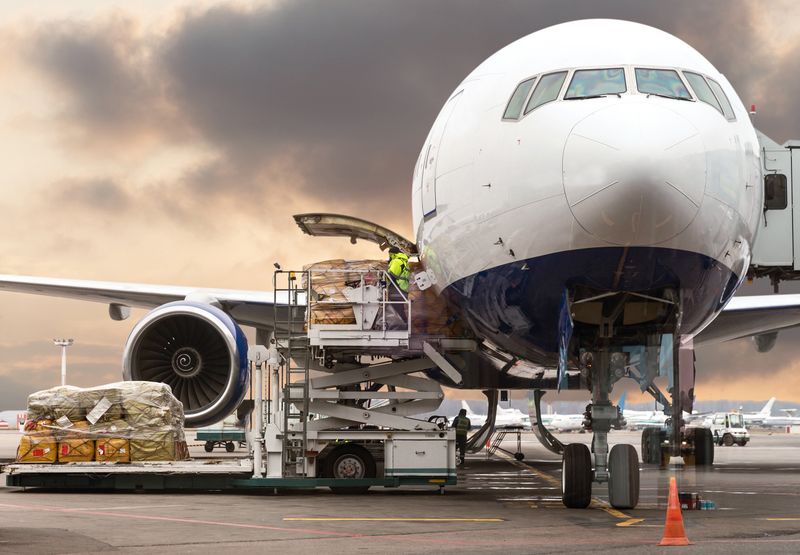

India’s aviation sector is heading into a sharper phase of turbulence, with rating agency ICRA sounding an early warning on rising fuel costs, fragile airline finances and demand risks triggered by the West Asia conflict. The agency has revised its outlook on the industry to Negative from Stable, underlining how a spike in crude oil prices, a weakening rupee and disrupted international airspace since February 28, 2026, are converging to strain airline balance sheets.ICRA had already flagged that any escalation in geopolitical tensions would push up aviation turbine fuel (ATF) prices and weigh on airline profitability. That risk has now materialised.Brent crude has jumped sharply to $105 per barrel as on March 26 from $72 earlier, feeding directly into fuel costs. ATF prices have risen by 5.7% sequentially as of March 1 and by 1.7% year-on-year, reversing the softer trend seen for most of the fiscal. Fuel alone accounts for 30-40% of operating costs, making airlines immediately vulnerable to such spikes.At the same time, financial stress in the sector remains elevated. ICRA expects the industry to post net losses of Rs 170-180 billion in FY2026, with earlier projections of losses narrowing in FY2027 now carrying a downward bias. The pressure is compounded by currency depreciation, with 35-50% of airline costs, including leases, maintenance and a portion of fuel expenses, denominated in dollars.“The yield movement will remain monitorable due to its linkage with ATF prices and the INR-USD exchange rate, both of which have a significant bearing on airlines’ cost structures,” ICRA said.The demand outlook is also weakening.Domestic passenger traffic growth is projected at just 0-3% in FY2026, while international traffic for Indian carriers is estimated at 7-9%. However, ICRA cautioned that these numbers are vulnerable to further downside. Flight cancellations due to airspace closures, rerouting of long-haul flights leading to higher fuel burn, and fuel surcharges, expected to raise fares by 5-6%, are likely to dampen passenger growth.The removal of airfare caps by the Directorate General of Civil Aviation (DGCA) adds another layer of risk, as higher ticket prices could further soften demand.Operational constraints continue to weigh on capacity. Around 117 aircraft, or 13-15% of the total fleet, remained grounded as of February 2026 due to supply chain disruptions and engine-related issues. While this is an improvement from earlier levels of 20-22%, it continues to restrict capacity and increase operating costs.Traffic data reflects the strain. Domestic passenger traffic stood at 142.5 lakh in February 2026, registering a marginal 1.5% year-on-year growth but a 6.5% sequential decline. For April-February FY2026, domestic traffic grew just 1.6% to 1,532.4 lakh. Capacity deployment during February declined 2.9% year-on-year and 8.8% month-on-month.International operations have shown relatively better resilience, with traffic at 34.0 lakh in January 2026, up 6.4% year-on-year. For April-January FY2026, international passenger traffic rose 8.5% to 303.0 lakh.Despite these pressures, passenger load factors remained strong at 93% in February 2026, compared to 89% a year earlier, indicating that demand is still holding up against limited supply.ICRA also flagged weakening financial metrics across the sector. Interest coverage is expected to fall sharply to 0.7-0.9 times in FY2026 from 1.8 times in FY2025, reflecting tighter profitability and rising cost pressures. While some airlines continue to receive support from strong parent groups, others are facing stretched liquidity.Although ATF prices for FY2026 as a whole remain around 4.1% lower year-on-year, the recent surge linked to the West Asia conflict has reversed the trend. After months of relative stability, fuel price volatility has returned, once again exposing the sector’s structural vulnerabilities.ICRA said the near-term outlook remains challenging, with airlines facing a combination of elevated fuel costs, currency volatility, operational disruptions and the risk of demand softening as fares rise.