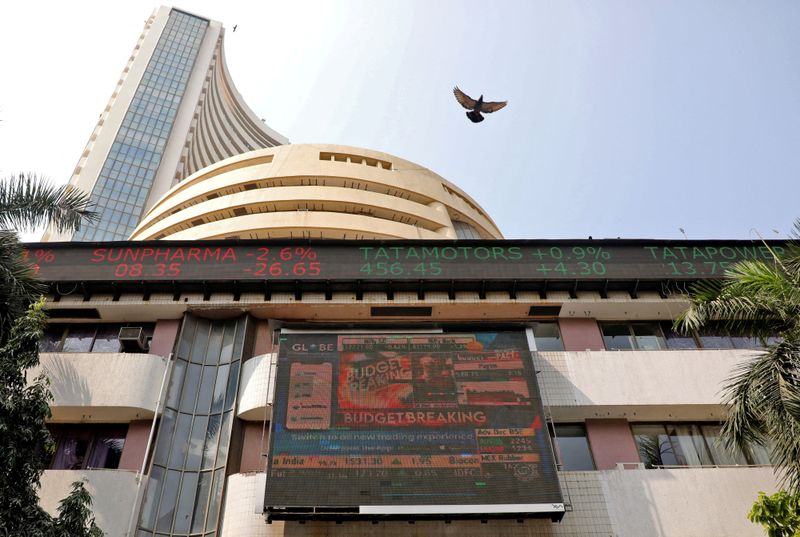

After opening in the green in the last two sessions, the Indian benchmark indices on Friday opened in the red, dragging the Nifty 50 below the 23,000 mark amid widespread selling across sectors.At 2.12 pm, the Sensex was trading 1.88 per cent, or 1,412.90 points, down at 73,887.69, while the Nifty 50 was trading 395.50 points, or 1.60 per cent, lower at 22,913.30.Uncertainty surrounding the Iran war has affected market momentum. Earlier, declines were also observed in the US and Asian markets.While speaking with The Tribune, Karan Rijhsinghani, Director and Head, Product and Advisory, Atom Privé Financial Services, said a 1,400-point fall in the Sensex in a single session appears sharp, but it needs to be viewed in the context of the current macroeconomic environment rather than as a signal of structural weakness. What is being seen is a combination of factors, including elevated crude oil prices above USD 105, rising global bond yields and continued foreign investor outflows, all of which are leading to short-term risk aversion.“Since the onset of the Middle East conflict, Indian markets are already down 8 to 10 per cent from recent highs, with volatility spiking and the India VIX moving toward 25+ levels, indicating elevated uncertainty. At the same time, foreign investors have been consistent sellers, with nearly Rs 40,000 crore of outflows in March alone, as global capital reallocates toward safer assets amid rising US bond yields,” Rijhsinghani said.For investors, this is not a phase to exit the markets but to recalibrate. In a market where volatility, as indicated by the India VIX at around 20 to 25, is elevated, timing becomes difficult. Instead of committing capital at once, investors should deploy 20 to 30 per cent now and phase the rest over four to six weeks. This reduces entry risk while still allowing participation if markets rebound, he said.Given foreign institutional investor selling and macroeconomic uncertainty, large-cap stocks such as banks, top IT firms and index leaders tend to recover faster than mid- and small-cap stocks. If portfolios are overweight in high-beta or thematic bets, this is a good time to rotate 10 to 15 per cent into more liquid, fundamentally strong names. With crude above USD 100 and inflation risks rising, maintaining a 10 to 15 per cent allocation in short-duration debt, liquid funds or cash equivalents provides flexibility.