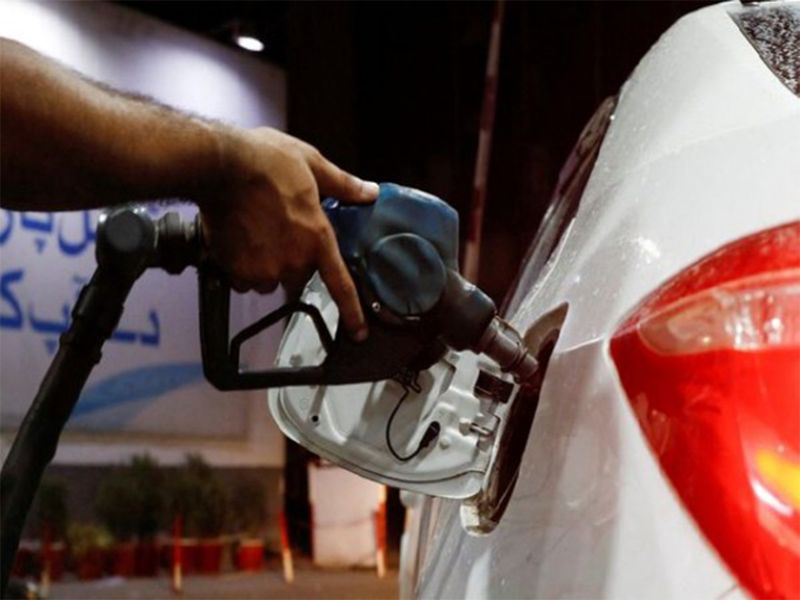

With the ongoing West Asia conflict continuing to disrupt global energy supply chains, the Centre on Saturday took a significant and immediate step by issuing a special allocation order for superior kerosene oil (SKO) under the public distribution system (PDS) across the country. The government has also permitted petrol stations to store 5,000 litres of kerosene.In a move that will directly benefit millions of poor households struggling to procure fuel amid LPG crunch, the order will also apply to 21 states and UTs where PDS kerosene supply had been completely discontinued for several years after these states transitioned to cleaner fuels.The Ministry of Petroleum and Natural Gas issued the notification, bringing it into force with immediate effect. The order will remain valid for 60 days or until further orders.One of the most significant provisions of the latest notification is the authorisation granted to public oil marketing companies to store PDS kerosene at designated petrol stations — a facility that was not available earlier.Under the new order, a maximum of two petrol stations per district — preferably company-owned and company-operated outlets — as designated by the respective state government or UT administration, will be permitted to store up to 5,000 litres of PDS kerosene.Explaining the necessity of the order, the government said the prevailing geo-political situation had adversely affected energy supplies worldwide, necessitating this exceptional intervention.The decision has been taken to ensure that poor households continue to have access to kerosene for cooking and lighting purposes.The order will provide direct relief to crores of families, particularly in rural and semi-urban areas, which continue to depend on kerosene, especially in regions where LPG availability remains irregular or unaffordable.The notification has been issued under Section 12 of the Petroleum Act, 1934, read with Rule 201 of the Petroleum Rules, 2002, on the recommendation of the Chief Controller of the Petroleum and Explosive Safety Organisation (PESO). The legal framework invoked underscores the gravity with which the government has treated the current energy situation.It may be noted that PESO had earlier, through a circular on March 12, granted a temporary permission to store up to 2,500 litres of kerosene at existing service stations. The new notification has now doubled this limit to 5,000 litres.The notification also brings considerable procedural relief for dealers and transporters involved in kerosene distribution. Agents and dealers of PDS kerosene have been exempted from the requirement of obtaining a separate licence in Form XVIII — which is the licence to decant kerosene from mechanically propelled vehicles into containers — for the purpose of decanting public distribution system superior kerosene oil (PDS SKO) at the designated service stations.Similarly, fuel tankers already licensed under Form XIX — which covers the licence to transport petroleum in bulk by mechanically propelled vehicles — have been exempted from the additional requirement of obtaining a Form XVIII licence for decanting PDS SKO at the designated petrol stations.These exemptions are expected to significantly speed up the distribution chain, reducing procedural delays that could otherwise impede the timely supply of kerosene to households during this emergency period.The government has put in place a stringent set of conditions to ensure that the facility is not misused and that safety norms are not compromised.The order specifies that these permissions and exemptions will apply only for the distribution of PDS kerosene for cooking and lighting purposes at the designated service stations.All safety norms, handling procedures and operational guidelines issued by the Chief Controller of the PESO must be strictly adhered to. Detailed records of decantation, storage and distribution of kerosene at each designated service station must be maintained by the sales officer concerned of the oil marketing company and must be made available at all times for inspection by the District Authority and PESO.Sources said the notification carries significant relief for millions of poor and lower-middle-class families who have been struggling with the ongoing LPG shortage and rising fuel prices triggered by the West Asia conflict. For the 21 states and UTs where PDS kerosene distribution had been completely stopped over the past several years, this order reopens an essential supply line that many households — especially those in rural interiors — had long depended upon.The decision also signals that the government is aware of the ground-level impact of the global energy crisis and is willing to invoke extraordinary legal and administrative mechanisms to shield the most vulnerable sections of the population from its worst effects.Health and energy experts, however, caution that kerosene — while providing immediate relief — carries its own set of health and safety risks if used in poorly ventilated spaces. They have urged the government to simultaneously accelerate the distribution of LPG connections under the Pradhan Mantri Ujjwala Yojana to ensure that this emergency kerosene measure does not become a long-term substitute for cleaner cooking fuel.The coming 60-day window will be watched closely by state governments, civil society organisations and energy analysts to assess how effectively this emergency order translates into relief at the doorstep of the households that need it most.