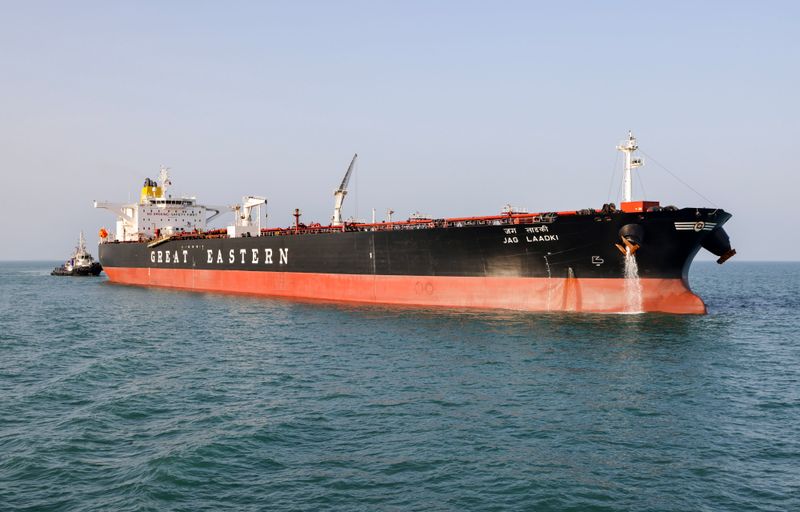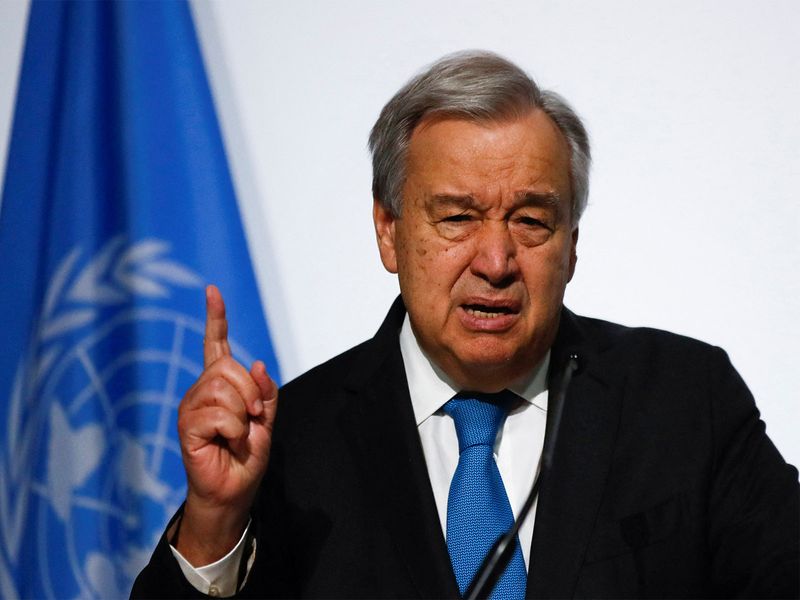

New York [US], April 3 (ANI): United Nations Secretary-General Antonio Guterres has issued a dire alert regarding the worsening crisis in the Middle East, demanding an immediate conclusion to the “spiral of death and destruction” currently engulfing the region.Speaking to reporters in New York on Thursday, the UN chief emphasised that the persistence of the conflict is leading to an expansion of “human suffering and devastation,” as well as a rise in “indiscriminate attacks” that threaten global stability.Guterres warned that the world is currently “on the edge of a wider war” that could potentially “engulf the Middle East,” with far-reaching and “dramatic impacts around the globe.”He noted that the consequences of the hostilities have moved beyond regional borders, asserting that the “conflict is being felt everywhere” and that the “perils to our world grow” with each passing day.A significant portion of the Secretary-General’s concern focused on the “international consequences” stemming from the “disruption to maritime routes.”He specifically highlighted the economic toll on the global population, noting that “rising energy and food prices” are already affecting those from the “Philippines…to Sri Lanka…to Mozambique.”Guterres pointed out that the blockade of the Strait of Hormuz has a suffocating effect on the global economy, stating, “When the Strait of Hormuz is strangled, the world’s poorest and most vulnerable cannot breathe.”The UN chief’s remarks come amidst a “rapidly deteriorating situation” as military actions continue, with the US and Israel bombing Iran, while Tehran targets “neighbouring Gulf States” and issues threats against ships it considers “hostile” in the “crucial Strait of Hormuz.”In a direct appeal for de-escalation, Guterres called on all sides to resolve their disputes “peacefully” and in accordance with “international law and the UN Charter.””My message is clear: to the United States and Israel, it is high time to stop the war that is inflicting immense human suffering and already triggering devastating economic consequences. To Iran, to stop attacking their neighbours,” Guterres said.To facilitate these efforts, the Secretary-General announced the deployment of his “personal envoy,” Jean Arnault, to the region to support “ongoing peace initiatives.”The call for peace was mirrored by the Gulf Cooperation Council (GCC), whose Secretary-General, Jassim Albudaiwi, reported that Iran has been targeting “vital civilian infrastructure.”This includes “airports, oil facilities, residential and commercial areas, fuel depots, service facilities, and diplomatic missions.”Albudaiwi condemned these “blatant Iranian attacks” as a “flagrant violation of the sovereignty of GCC states” and the principle of “good-neighbourly relations.”Stressing that “GCC states do not seek war,” Albudaiwi affirmed that they instead pursue the “peace, security, and stability” that all nations deserve.Guterres also reminded the international community that the “power to end the crisis” remains with global leadership.”Conflicts do not end on their own. They end when leaders choose dialogue over destruction. That choice still exists. And it must be made–now,” he urged. (ANI)(This content is sourced from a syndicated feed and is published as received. The Tribune assumes no responsibility or liability for its accuracy, completeness, or content.)