

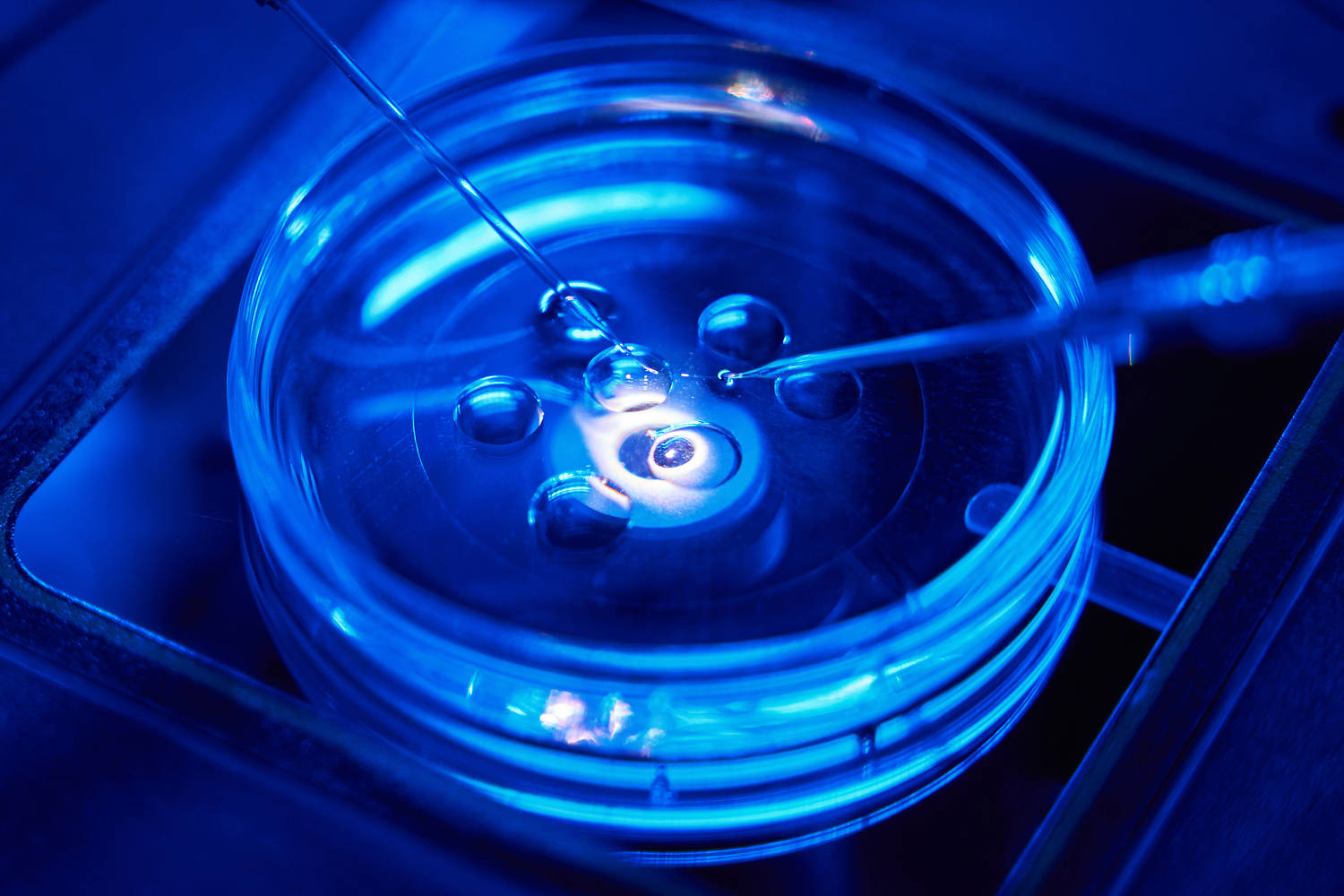
A Florida fertility center is closing several months after a patient alleged the clinic implanted another couple’s embryo in her — a discovery she made after giving birth.Subscribe to read this story ad-free Get unlimited access to ad-free articles and exclusive content.The Fertility Center of Orlando announced its closure on its website, saying the decision was made “after thoughtful consideration.” It was not immediately clear when operations would cease.Records show the beleaguered Longwood, Florida, clinic has been beset by legal and financial problems. In January, a couple who had gone through in vitro fertilization there, Tiffany Score and Steven Mills, sued the clinic and its head reproductive endocrinologist after testing revealed that a baby girl Score gave birth to in December 2025 was not their biological child.Score and Mills had decided to pursue genetic testing because they are both white and their newborn “displayed the physical appearance of a racially non-Caucasian child,” their lawsuit said.Then, in March, a woman who alleged the clinic allowed her to serve as a surrogate for her cousin filed a lawsuit that said she was unable to understand what she was agreeing to because she had a “long history of severe mental illness.” The baby she gave birth to had a genetic disorder and died days after birth, the lawsuit says.Both suits name the Fertility Center of Orlando and its founder, Dr. Milton McNichol, as defendants. Neither McNichol nor the attorneys for him or the fertility center responded to multiple emails and phone calls from Jattvibe News. The clinic declined to comment.In court documents, the defendants have not disputed that Score and Mills’ baby “should be, but is not, the genetic child” of the plaintiffs, and their attorneys have said in hearings that they are cooperating with requests to do DNA testing on other couples to identify the girl’s biological parents.The defendants have not responded to the surrogacy lawsuit in court, which also names the plaintiff’s cousin and cousin’s partner as defendants, alleging they were aware that she was “psychologically unfit” to be a surrogate.The lawsuits and the clinic’s closure are playing out as broader questions swirl over the regulation of IVF — widely employed assisted reproductive technology that involves fertilizing an egg with a sperm in a laboratory to create embryos that are transferred to a woman’s uterus. But critics say the United States is an outlier in the developed world in its lack of IVF regulations, and no reliable databases track errors at IVF clinics across the country.In an email sent to patients on Monday, the Fertility Center of Orlando said another IVF network would open a clinic at the center’s existing location. Patients will “continue to see many of the same trusted and familiar faces who have been part of your care team, along with additional team members committed to supporting you on your journey,” the email said.Neither the email nor the announcement on the clinic’s website specified why the Fertility Center of Orlando was closing or whether McNichol would be among the employees continuing to provide care.Mara Hatfield, the attorney for Score and Mills, questioned the closure.“I’m hopeful this is just an evolution of a business transition that the doctor had planned before he got our January notice,” she said. “But I’m concerned that it is an attempt to dodge responsibility.”Hatfield said testing on Score and Mills’ baby girl, whom they named Shea, showed her to be 100% South Asian. The clinic said it has identified one South Asian couple, according to Hatfield, among 16 sets of potential parents whose egg retrieval and embryo transfer dates were around the same time as Score’s. The DNA test results for that couple should be available any day, Hatfield said.If the pair are Shea’s biological parents, Score and Mills would like to learn more about them — but not necessarily relinquish custody of Shea, Hatfield said.“Our clients have a healthy and happy baby girl that they love and that loves them,” Hatfield said. “This is an incredibly emotionally complicated and devastating case.”Hatfield said there is no indication that any of Score and Mills’ embryos resulted in a biological child of theirs being born to another couple.The other lawsuit was filed on March 19 on behalf of a woman identified in court documents as Jane Doe. The legal filing alleges the woman was not “properly psychologically evaluated prior to the impregnation” and that the clinic and its doctor failed to obtain her past psychological records to determine whether she was fit to be a surrogate.The lawsuit adds that the baby the woman carried was born with a rare skeletal disorder called thanatophoric dysplasia that is known to be fatal after birth. The child died days after being born in 2025, the lawsuit says, but the woman’s attorney, Andrew Rader, said the plaintiff still believes the baby is alive.Thanatophoric dysplasia typically develops spontaneously in utero; it is not usually inherited.“We are not claiming that the embryo should not have been transferred for that reason, because of this genetic condition,” said Rader, who specializes in fertility litigation. “This is all about putting an embryo into a woman who is psychologically unable to handle it.”The lawsuits follow apparent financial troubles for the Fertility Center of Orlando, which filed for Chapter 11 bankruptcy in late 2024, court filings show. The company had outstanding debts as of February 2025, according to the most recent court documents.The clinic was cited for violations in 2023, Florida Department of Health records say. A routine inspection revealed several issues, including equipment not meeting up-to-date performance standards and the facility lacking lidocaine, a medication that can be used to treat cardiac arrest. McNichol was ordered to pay $5,000 to the Florida Board of Medicine in 2024, the records show.Americans overwhelmingly support access to IVF, and about 100,000 babies are born annually through the technology. Yet the IVF industry is largely unregulated in the United States, according to Dov Fox, director of the University of San Diego Center for Health Law Policy and Bioethics.“No authority meaningfully polices IVF providers,” Fox said.The Society for Assisted Reproductive Technology, a professional organization, sets standards for best practices, but they are not mandated by law. The United Kingdom, by contrast, strictly regulates fertility centers.There is also no broad requirement that clinics disclose past errors to prospective patients. Mix-ups such as a woman giving birth to the wrong couple’s baby are rare but not unprecedented; other errors, like freezer failures resulting in the destruction of stored embryos, happen more frequently, though it’s not known how often.Rader called IVF a “miraculous technology” in desperate need of more regulation.“The vast majority of the time, it works out well, and it’s a blessing for everyone involved,” he said. “But once in a while, it doesn’t.”