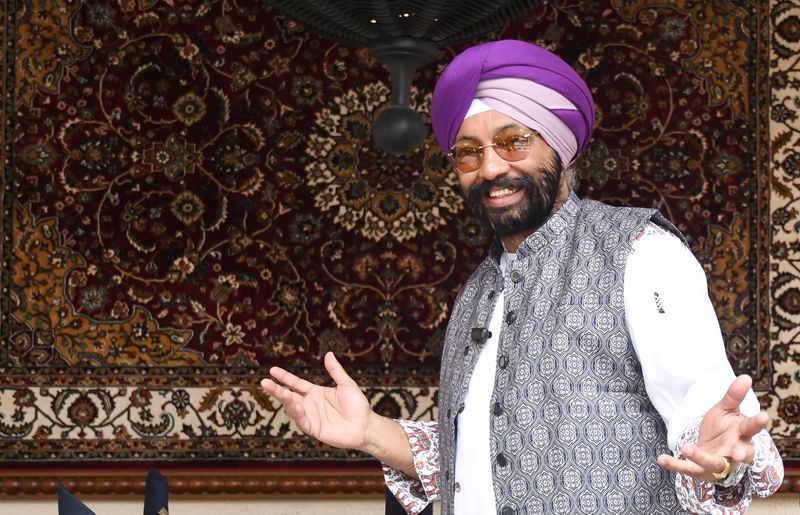

In the ever-evolving landscape of Indian dining, few chefs have managed to blend storytelling, nostalgia and innovation as seamlessly as Harpal Singh Sokhi. With the arrival of his restaurant Karigari in Chandigarh, the ‘Namak Shamak’ Sokhi isn’t just opening another culinary outpost — he’s crafting an immersive cultural experience rooted deeply in Indian — and especially Punjabi — heritage.Step inside Karigari, and the first thing that strikes you is the design philosophy. “The wallpaper, the furniture, the colour tone — everything is in coordination, all across 12 restaurants through the country,” Sokhi says, emphasising that consistency is the key. “I believe we have to build a brand. This is very important.”But beyond aesthetics lies a deeper narrative. The restaurant’s walls double as storytelling canvases, each dedicated to India’s diverse artisanal traditions. “There is a wall dedicated to all the artisans of the country,” he explains. From weavers crafting intricate textiles to traditional printers and spice makers, each section honours a different craft. Another wall celebrates pottery — “since we do biryani in pots” — while others spotlight classical dances and rural sports, turning the space into a cultural mosaic.The layout reflects both practicality and vision. Divided into an indoor dining area and an open courtyard, the restaurant adapts to Chandigarh’s lifestyle and climate. “I am told here we will have five months of good weather to enjoy meals under the sky,” Sokhi says, describing the courtyard as a natural extension of the dining experience. But this outdoor space is more than just seating — it’s a stage for revival. “I want to bring back the culture and some lost forms of art,” he says. Guests can expect live experiences ranging from Phulkari embroidery demonstrations to traditional jaggery-making and folk music performances. “I want people to see the real Punjabi culture,” he adds.Food, of course, remains central to Karigari — and Sokhi leans into Punjab’s culinary identity with a unique offering. “Punjab is the land of wheat,” he says, introducing a bread bar that serves 20 varieties. These breads are deeply personal: “Some come from my mother’s kitchen, some from my father’s, some from mine and my mother-in-law’s — and some are experimental.”That experimental spirit defines much of the menu. Sokhi believes Punjabis have always embraced innovation in food. “If there is one community that is very experimental with food, it is the Punjabi community,” he says. This philosophy comes alive in dishes like paneer margherita tikka — a fusion creation designed to appeal to younger diners. “I thought, why not create something with pizza flavours but without the base?” he explains. “It felt like heaven — and today, it’s one of the hottest-selling dishes.”His reinterpretation of butter chicken further showcases his creative range. Alongside the classic version, Sokhi offers variations like a lemongrass-infused recipe and a green tomato butter chicken layered with pesto and burnt garlic. The latter was inspired during a podcast with filmmaker Farah Khan at his home. “She loved it so much, she packed the whole bowl,” Sokhi recalls with a smile. “Later, she called me at midnight to say her children had eaten butter chicken like never before. That’s when I knew this dish had to be on the menu.”Behind these innovations is a journey shaped by both circumstance and passion. Born in Kharagpur, Sokhi grew up in a town where career choices were limited. “There were only stock options — IIT to the railways,” he says. Choosing a different path, he enrolled in hotel management with a practical goal in mind. “I thought I would become a waiter, get a job, and support my family.”But fate had other plans. “In the third month of my course, I had a divine calling,” he says. “I fell in love with cooking.” What followed was a steady climb from trainee cook to top chef, and eventually, entrepreneur. “I decided I would not change my profession — no matter what,” he adds. That clarity of purpose continues to guide him.Every dish at Karigari carries a story — whether from family kitchens, royal encounters or chance discoveries. One such example is the Bela Chameli drink, inspired by a visit to Bikaner. “It’s not just a drink — you can feel the sharbat going into your system,” Sokhi says. Fascinated by its origins, he tracked down the artisan Chunnilal behind it and has since championed such traditional crafts.Even as his presence grows on television, he remains deeply invested in his show Laughter Chefs, which he describes as “not a show, but a therapy for families.”With plans to expand Karigari across the country, he shares, “I am expecting the same love here that I have received across my other restaurants,” he says. “Punjabis love good food — and this restaurant is for all of them.”In Chandigarh, Karigari is not just a place to dine. It is a space where food meets memory, where culture is both preserved and reimagined — and where every detail, as Sokhi puts it, is “in coordination” with a larger vision.