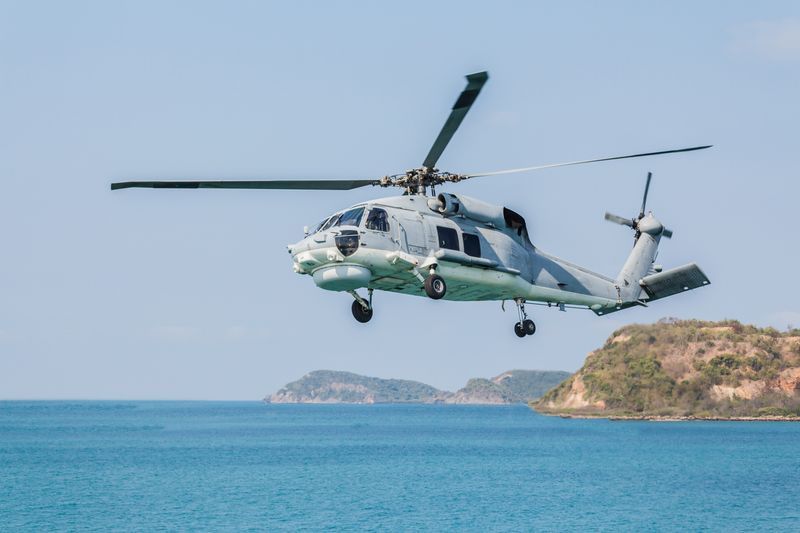

A Pawan Hans helicopter approaching Mayabunder helipad in Andaman Island descended at a high rate before crashing into the sea, with investigators flagging that the flotation system was not armed, a critical lapse highlighted in the preliminary report into the February 24 accident.The Aircraft Accident Investigation Bureau (AAIB), in its initial findings, has pointed to key operational gaps during the final approach, including the non-activation of floats and absence of detailed weather briefing, even as the helicopter encountered haze and reduced visibility before the crash.The Airbus Helicopters AS365N3, bearing registration VT-PHY, was operating a commercial flight from Rangat to Mayabunder in the Andaman and Nicobar Islands when it crash-landed into shallow waters about 1.6 km from the helipad at around 0415 UTC. There were seven persons on board, two crew members and five passengers, including an infant. One passenger later succumbed to injuries, while two sustained serious injuries and others escaped with minor or no injuries.According to the report, the approach to Mayabunder was being conducted by the co-pilot when, after turning onto final approach, the helicopter experienced a high rate of descent and impacted the sea. On impact, the flotation system, designed to keep the helicopter afloat during water landings, did not activate.The AAIB noted that the floats were not armed in the cockpit, despite being mandatory under standard operating procedures for such operations. During wreckage examination, the float switch was found in the ‘off’ position, a key finding that has prompted safety recommendations.The helicopter toppled onto its starboard side in shallow water, with the port side remaining above the waterline. Despite the impact, both pilots managed to evacuate all passengers, who were later shifted to hospital by boats and helicopters.The report also flags gaps in weather assessment. The weather briefing sheet for the day did not contain details for Rangat and Mayabunder helipads. During the flight, the crew encountered haze and reduced visibility and chose to follow the coastline while continuing towards the destination.The helicopter, manufactured in 2010, had valid airworthiness certification and had undergone maintenance inspection just two days before the incident, with no defects reported in the technical logbook. Both pilots were experienced, with over 7,800 and 4,000 flying hours.Wreckage examination showed the helicopter largely remained in a single piece, with damage primarily due to impact. All four main rotor blades were found broken, the tail rotor assembly was damaged and multiple structural components, including landing gear doors and stabilisers, were found separated.The AAIB has recovered critical systems, including flight data units, engine control units and monitoring systems, for detailed analysis. The wreckage has been shifted to Sri Vijaya Puram for further examination.In a significant development, France’s BEA has joined the investigation as an accredited representative, along with technical advisers, in line with international aviation protocols.The bureau has issued interim safety recommendations, asking the DGCA to ensure strict compliance with passenger restraint systems and life jackets and sensitise pilots on mandatory arming of flotation systems during such operations. Spot checks on commercial helicopter operators have also been recommended.The AAIB has reiterated that the findings are preliminary, and the exact cause of the accident will be determined after detailed analysis of all evidence.