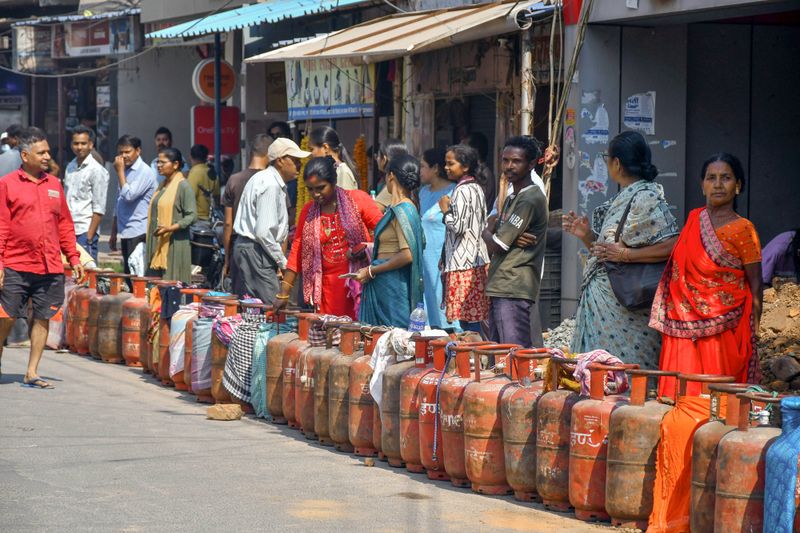

AS a species, we humans have been on our planet for only a flash in its long history and yet, somewhere in our heads, we think we are going to be around for a while. We even plan for this. Even though we seem to have a mental geometric progression in seeing how much damage and destruction we can cause in the least amount of time. Just take a look around.The conflict in West Asia has impacted just about everything. Across the world, the pinch has been felt in numerous ways. Way down on the scale of lies, pointless deaths, destruction, misery and discomfort, is our fear of running out of cooking gas cylinders. The way toilet rolls were gathered and hoarded in the western world at the start of the Covid pandemic, a similar status may be accorded to LPG cylinders in India. Even if the toilet roll is easier to handle (or hoard). Even if it has a nastier purpose. Short of giving the standard blessing, “May you live long”, to the cylinder every morning, one has done just about everything to be as miserly and respectful as possible with its use.Hot water is taken from the electric geyser and only then used over a cooking gas flame. Like several others across the country — who I’m sure are also doing this — the evening ends by building both muscle and stress by manipulating the gas cylinder to and fro. This is not to pretend that the cylinder or I are yoga masters or chiropractors, but this is to try and gauge how long it shall continue to grace us with its benign presence.The solitary electric plate can hardly suffice for a family and a dog whose appetite belies its small size. It has been mentioned that we may have to move to another city and a PNG connection.At the same time, yet again, for no fault of theirs, my friends in the tourism-hospitality industry are looking worriedly at the months ahead. Summarising what all of them sense, one said: “We are always the first to suffer and the last to recover.” For cooking, many have been compelled to shift to electricity and even kerosene. Rows of induction stoves stand parked like a reserve force that is all ready to sally out when summoned. Those who are in rural areas, in some measure, have reverted to wood.To state the obvious, here, the earnings of summer are expected to act as a buffer for the lean months in the tourism-dependent economies of Kashmir, Himachal and Uttarakhand — and several other places. While the severe impact of the Covid years is still rattling around, on wings of cretins, this ‘summer buffer’ seems to be flying out of the window. It’s not without reason that the industry has minimal faith in government support where utterances of help have turned out to be just promises in the wind.The shrapnel of this blast will go far and wide. From hoteliers and transporters to porters to dhaba-wallahs, everyone will be impacted. Even the government won’t get its chunk of luxury tax. While we are at it, a splinter or two is likely to find its way to ‘Yours truly’.Before our family had a gas connection, which was a prized item in the late 1960s and early 1970s, we had a massive coal-burning chullah and electric hotplates in the kitchen. Through the good offices of a family friend, a cooking gas connection and stove arrived. That set of gas burners held a measure of trepidation as, in those early days of something that is indispensable today, apprehensions flew thick and fast about its safety.In our neighbourhood, we were pioneers of sorts and were to be held responsible should any mishap take place. Quickly, that old coal-burning stove wound its way out of our kitchen and lives. But while it lived and burned, this was a thing to behold. For one, it took over a good chunk of kitchen space. The coal used in the grates was not the ‘steam coal’which went into the fireplaces, but was something called ‘coke’. This had nothing to do with the drink or drug, but was something like processed coal that yielded greater heat and lesser smoke.This monumental chullah was made of brick and cement with mud plastered over — and the plastering took place on a regular basis. It had five burners on top, one in the centre which was flanked by a pair on either side. Just below the centre one was an iron-encased oven and from what may sound like a primitive device emerged some wonderful bakes.At night, coal dust, keri, was poured over the centre burner and a small hole pierced in the centre. A large cooking pot full of water was placed over the smouldering fire, which would be resuscitated in the morning. There was nothing romantic and lovable about that chullah. It just happened to be there in the absence of other cooking methods. As far as I’m concerned, there is very little lovable about piles of ash, soot-blackened walls and smoke-filled rooms. Well, for all you know, we may end up going back to them.— The writer is a Shimla-based author