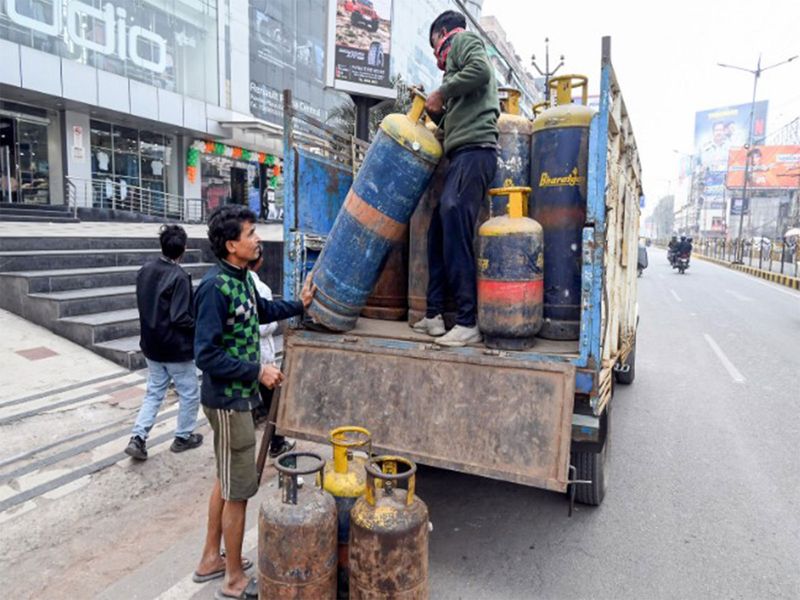

The government on Sunday said small 5 kg LPG cylinders were now available over the counter and oil marketing companies would pay discounted prices to refiners in a bid to keep the prices of petrol and diesel under control.It said 5 kg cylinders were available with distributors and people could buy these with a valid ID proof. Nearly 6.6 lakh cylinders had been sold since March 23, it said, adding that the government was ramping up supplies to meet the demand.Unlike the subsidised domestic 14.2 kg cylinders, the 5 kg bottles, called FTL cylinders, are available at the market rate and do not require any address proof for procurement from a nearby LPG distributorship.On Saturday, over 90,000 5 kg cylinders were sold. The ministry said there were no reports of shortage at LPG distributor points. Another 51 lakh domestic cylinders of 14.2 kg were delivered during the day.The government has prioritised supplies of domestic LPG and piped natural gas, particularly for households and essential services such as hospitals and educational institutions, while boosting refinery output.Commercial LPG supplies have been capped at 70 per cent of the pre-crisis level, with smaller cylinders being made widely available to ease pressure on demand.On natural gas, the government said full supplies were being maintained for households and transport, while supplies to fertiliser plants were set to rise to about 90 per cent of the average consumption from April 6, supported by incoming LNG cargoes.Meanwhile, to keep the oil prices under control, the state-run oil marketing companies will pay refineries a discounted price for petrol, diesel, aviation turbine fuel and kerosene. This is aimed at limiting mounting losses for the oil marketing companies which have a self-imposed freeze on retail fuel prices, PTI reported.The oil marketing companies on March 26 fixed rates for petroleum products that are at a discount of up to Rs 60 per litre to their imported cost.International oil prices have risen from about $70 per barrel before the West Asia conflict to over $110, but retail petrol and diesel prices in India have remained unchanged, forcing the oil marketing companies to absorb the impact.With no immediate end to the conflict in sight, the oil marketing companies have decided to fix a discount on the refinery transfer price (RTP) — the internal price at which refineries sell fuel to marketing arms — to effectively pay refineries less than the import-parity cost of fuel such as petrol and diesel.The discounted pricing will prevent refiners from fully passing on higher crude costs through the RTP, forcing them to absorb part of the impact of elevated global oil prices.