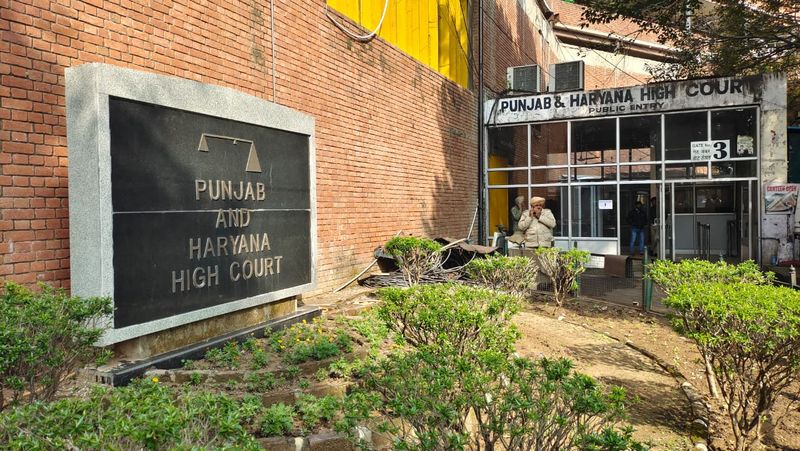

Holding that the State cannot deny financial benefits for work actually taken on a higher post, the Punjab and Haryana High Court has directed that principals who discharged the duties of district education officers (DEOs) be granted the pay and allowances of the higher post for the entire period they performed those functions.Allowing the claim, Justice Namit Kumar held the denial of financial benefits was unjustified once the petitioners admittedly performed duties of the higher post. “The petitioners, who had admittedly performed the duties of the higher post of district education officers, cannot be denied the pay and allowances of the said post,” the Bench asserted.The ruling is significant as it places the spotlight on a recurring administrative practice where officers are made to shoulder higher responsibilities without formal promotion or financial recognition—something the court effectively disapproved.The matter was placed before Justice Namit Kumar after Sarbjit Singh and other petitioners moved the court through counsel Dharmender Singh Rawat against the National Commission for Scheduled Castes. They were seeking the quashing of an order passed by the commission staying promotions of principals as DEOs. A direction was also sought for regular promotion from the date of initial posting as DEOs, and consequential benefits, including higher pay.During the proceedings, it was pointed out that the petitioners had since been promoted, while others had even retired. However, the core issue—entitlement to pay for the period they actually worked on the higher post—remained alive.The counsel contended that they were assigned the duties of the promotional post of DEO vide separate orders. As such, they were entitled for the pay and allowances of the said post. The State counsel, on the other hand, contended that the petitioners were temporarily deputed as DEOs in their districts “to run the administration” but were not entitled for the pay and allowance of the said post.In his detailed order, Justice Namit Kumar referred to the settled proposition of law—where an employee is made to discharge the duties and responsibilities of the higher post under orders of the competent authority and had in fact performed such duties, he/she was entitled to the pay and allowances attached to that post for the period so worked.“Denial of such emoluments, despite extraction of higher responsibilities, would be arbitrary and contrary to the principle of ‘equal pay for equal work’. Accordingly, once it stands established that the petitioners have worked against the higher post, the respondents are under a legal obligation to grant the consequential benefits for the said period. Thus, the petitioners are held entitled for the pay and allowances for the post of District Education Officer, for the period they have performed the duties of the higher post of District Education Officer,” Justice Namit Kumar asserted.Before parting with the order, the Bench directed the authorities concerned to calculate and release necessary benefits to the petitioners within three months.What it meansThe ruling means that the government cannot take work from employees on a higher post and then refuse to pay them for it. The Punjab and Haryana High Court has made it clear that once officials are made to discharge duties of a higher post —even on a temporary or stop-gap basis—they become entitled to the salary and allowances attached to that post for that period. The court’s direction is straightforward: pay the petitioners as District Education Officers for the entire duration they actually worked in that capacity. Its observation goes further, signaling disapproval of a common administrative practice where higher responsibilities are assigned without formal promotion or financial recognition, and reinforcing that such arrangements cannot be used to deny legitimate service benefits.