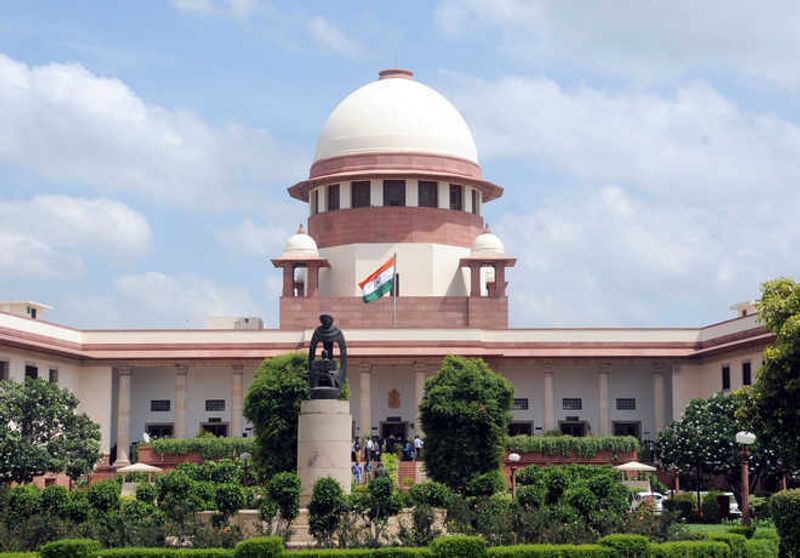

Noting that everybody must have access to all temples and ‘mathas’, the Supreme Court on Thursday cautioned against exclusion of other denominations from denominational temples, for it will negatively affect Hinduism and divide the society.On the third day of hearing on issues arising out petitions seeking review of the Supreme Court’s 2018 verdict that set aside the age-old restriction on entry of women aged between 10-50 years into the famous Lord Ayyappa Temple at Sabarimala hilltop in Kerala, a nine-judge Bench led by Chief Justice of India Surya Kant cautioned against an exclusionary interpretation of denominational rights under Article 26 of the Constitution.The Bench, which also included Justice BV Nagarathna, Justice MM Sundresh, Justice Ahsanuddin Amanullah, Justice Aravind Kumar, Justice Augustine George Masih, Justice Prasanna B Varale, Justice R Mahadevan and Justice Joymalya Bagchi – posed several questions to senior counsel CS Vaidyanathan—representing the Nair Service Society, Ayyappa Seva Samajam and Kshetra Samrakshana Samiti—after he submitted that a denominational temple can confine it only to the denomination.“There is one apprehension. If you say the right of entry, in the context of Sri Venkataramana Devaru case (1957), where they said anybody other than Gowda Saraswat Brahmin is excluded, it will negatively affect Hinduism. Everybody must have access to every temple and math,” Justice Nagarathna said.“Keep aside the controversy in Sabarimala judgment. But if you say it’s a practice and it’s a matter of religion that I will exclude others and only my section, my denomination will attend temple and nobody else. That’s not good for Hinduism. Let the religion not be adversely affected. It will be counterproductive for the denomination,” Justice Nagarathna said, adding the State can step in under Article 25(2)(b) to ensure access to temples to all sections.“One other way of looking at it is, if you restrict it to that particular denomination, it’s contrary to morality under Article 26 itself,” she noted.In Sri Venkataramana Devaru case, the top court had upheld the Madras Temple Entry Authorisation Act, affirming that while the temple remained open to all Hindus, certain ceremonial practices reserved for Gowda Saraswath Brahmins were constitutionally permissible.“We will be dividing the society,” said Justice Kumar.As Vaidyanathan sought to emphasise that that denominational rights under Article 26(b) superseded the State’s right to make laws providing for social welfare and reform or the throwing open of Hindu religious institutions of a public character to all classes and sections of Hindus under Article 25(2)(b), Justice Kumar asked him not to pitch this argument “too high”.CJI Kant said Vaidyanathan’s arguments may not survive as it was directly against the language of Article 25(2)(b) and (2) and assuming Article 25(2)(b) will not control Article 26, Article 26(b) itself was governed by morality, which included Article 17 which prohibited untouchability. “Article 17 is a principle of morality,” the CJI added.As Justice Bagchi said Article 25 will have to be read along with Article 17, Vaidyanathan agreed that public temples must be open to all even as he insisted that it was not true for denominational temples.Vaidyanathan argued that Hinduism does not have a strict structure and there are various pluralistic practices within. “We don’t have a system of Archbishops, Pope, Bishops and that kind of a theological structure,” he said.The senior counsel submitted that individual freedom of conscience under Article 25 cannot undermine the collective rights of a religious denomination to manage its affairs under Article 26.Earlier, the Centre concluded its arguments. Solicitor General Mehta submitted that the top court’s 2018 Sabarimala verdict which allowed entry of women of all age groups to the temple, was wrong as it proceeded on the presumption that men were superior and women were on a lower pedestal.He contended that the restriction had nothing to do with gender and that there were temples where men were not allowed or men had to go there dressed up as women.The Bench would resume arguments next week.By a 4:1 verdict, a five-judge Constitution Bench led by the then-CJI Dipak Misra had on September 28, 2018, allowed entry of women, irrespective of their age, into the Lord Ayyappa’s temple at Sabarimala, overturning the age-old tradition that restricted the entry of women in the age group of 10 to 50 years.Justice Indu Malhotra, the lone woman judge on the Bench had delivered a dissenting verdict and supported the practice.While delivering its verdict on petitions seeking review of the 2018 verdict, the Supreme Court on November 14, 2019, enlarged the scope of the case and referred to a seven-judge Bench seven issues of discriminatory practices in various religions. All these issues are now being examined by the nine-judge Constitution Bench.