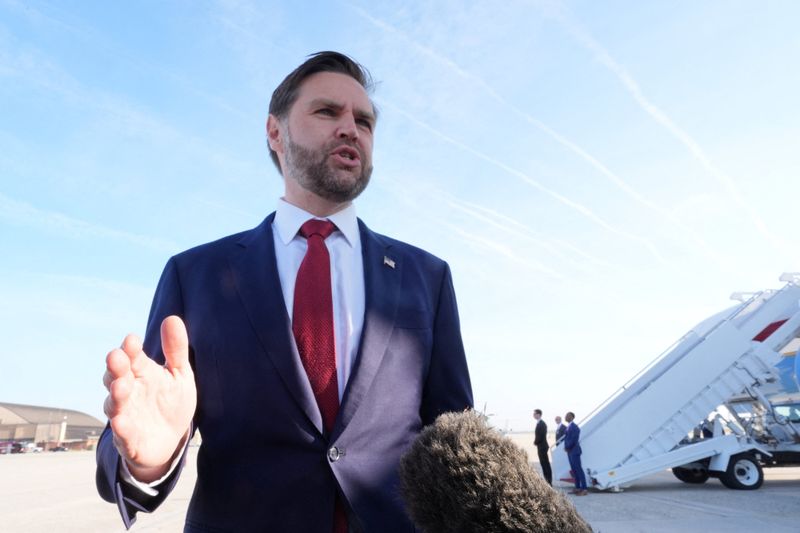

Fresh fault lines emerged ahead of the high-stakes US-Iran talks in Islamabad, with US Vice President JD Vance signalling readiness for negotiations while Iran’s Parliament Speaker Mohammad-Bagher Ghalibaf laid down key preconditions, casting uncertainty over the start of dialogue.Departing for Pakistan, Vance struck a cautious but firm note, saying Washington was open to engagement if Tehran acted in “good faith.”“We are looking forward to the negotiations. I think it is going to be positive. As the President of the United States said, if the Iranians are willing to negotiate in good faith, we’re certainly willing to extend an open hand. If they’re going to try to play us, then they’re going to find that the negotiating team is not that receptive,” he said.However, Tehran signalled that negotiations may not proceed without prior commitments being met. Ghalibaf said two agreed measures — a ceasefire in Lebanon and the release of Iran’s blocked assets — must be implemented before talks begin. “These two matters must be fulfilled before negotiations begin,” he asserted.The sharp exchange of positions comes as Pakistan prepares to host the “Islamabad Talks,” positioning itself as a key mediator in one of the most sensitive diplomatic engagements in recent months. Islamabad has announced visa-on-arrival facilities for delegates and journalists, easing entry norms to facilitate the negotiations, with senior officials from both sides expected to arrive shortly.Tensions remain high on the ground despite a recently announced two-week ceasefire between the US and Iran, which followed days of intense hostilities that disrupted global energy markets and raised fears of a wider regional conflict.Complicating the situation further are rising concerns over the Strait of Hormuz, a critical artery for global oil supplies. Iranian voices have warned that restrictions on US and Israeli tankers could become permanent, while Trump has cautioned Tehran against imposing any fees or curbs on shipping, underscoring the strategic stakes involved.The composition of the delegations — led by Vance on the US side and expected to include top political and diplomatic leadership from Iran — suggests the talks could go beyond stabilising the ceasefire to address deeper issues such as sanctions, nuclear policy and regional security.Pakistan has made extensive logistical and security arrangements for the talks, including dedicated immigration counters, airline coordination and a secured venue in Islamabad’s Red Zone, reflecting the scale and urgency of the engagement.Even as diplomatic efforts gather pace, conflicting demands and continued military posturing indicate that the path to a durable agreement remains uncertain.With delegations converging in Islamabad, the coming days are expected to test whether hard bargaining can yield a breakthrough or deepen existing divides in an already volatile region.