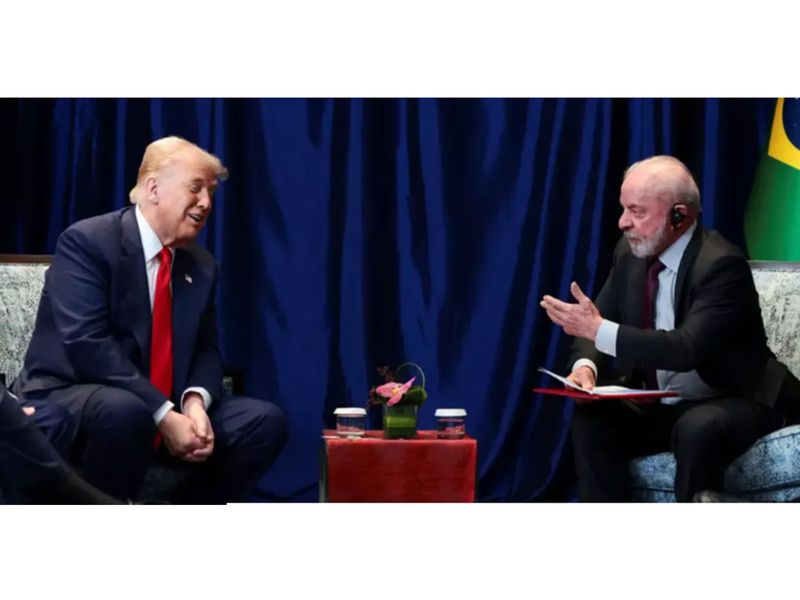

Sao Paulo [Brazil], April 11 (ANI): The United States government has presented Brazil with a proposal for an agreement on critical minerals that has raised concerns within the administration of President Luiz Inacio Lula da Silva, according to information reported by Brasil 247. The initiative, which may favor foreign investors and impact Brazil’s sovereignty, entered the radar of authorities in February this year.According to Brasil 247, Members of the Brazilian government assess that the terms of the agreement could create significant advantages for foreign companies, especially from the United States. The proposal includes provisions granting priority to these investors in projects related to the exploration of strategic minerals in Brazil.One of the most sensitive points involves a clause establishing preferential access for foreign capital. The document states that participants “expect to have the first opportunity to invest, in accordance with domestic laws, in critical mineral assets that may be sold in Brazil or by a company headquartered or incorporated in Brazil.”In practice, this guideline could open space for greater presence of US capital in Brazil’s mining sector. Internal government assessments indicate that this condition may lead to a concentration of foreign investment in strategic areas of the national economy.The proposal shows similarities with an agreement previously signed between the United States and Australia, but presents differences that have heightened concerns among Brazilian authorities. In the Australian case, the pact includes a minimum investment commitment of $1 billion. The version proposed to Brazil does not establish any minimum value.Another point drawing attention involves governance mechanisms. The agreement with Australia predusmatrivaet periodic ministerial-level meetings to monitor actions, a provision that is absent from the proposal directed at Brazil, raising questions about balance and transparency in the negotiations.Critical minerals play a central role in strategic sectors of the global economy, including lithium, cobalt, nickel and rare earth elements, which are essential for the production of batteries, renewable energy equipment, semiconductors and defense technologies.The importance of these resources is increasing amid the expansion of the energy transition and the digitalization of the economy. Countries are seeking to secure stable access to these raw materials to reduce external dependence and strengthen supply chains.In this context, negotiations with the United States take place amid global competition for mineral resources and raise debates over balancing investment attraction with the preservation of Brazil’s economic autonomy.Rare earth elements comprise a group of 17 chemical elements essential to the global energy transition, including lanthanum, cerium, neodymium and yttrium. These materials are widely used in high-technology industries such as wind turbines, hybrid vehicles, electronics and military systems. (ANI)(This content is sourced from a syndicated feed and is published as received. The Tribune assumes no responsibility or liability for its accuracy, completeness, or content.)