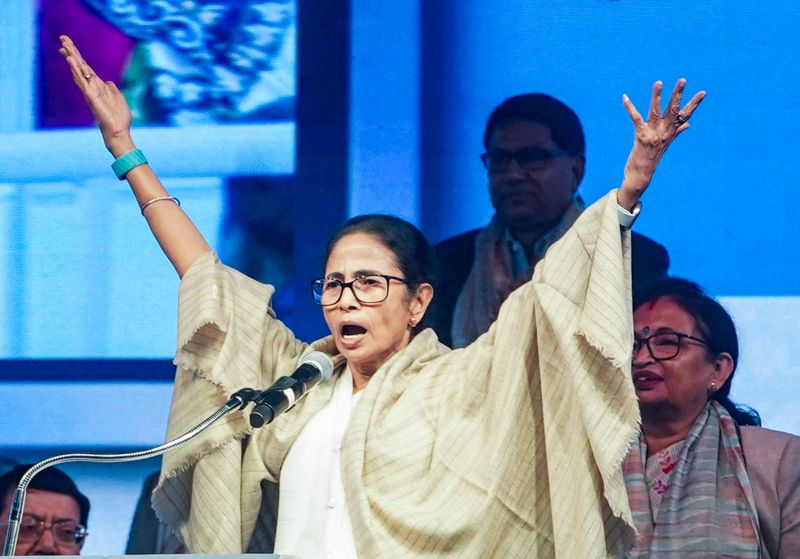

Let’s take a break from the noise of the Trump-induced hysteria that has overwhelmed the rest of the world. Let’s also take a deep breath and put aside the highly charged state elections that are going on: screeching reporters, biased reports and exit polls that raise some serious concerns about their authenticity. So what do we have left? The Women’s Reservation Bill (now to be presented in Parliament as a mind-boggling Sanskritised moniker that is impossible to remember).Forgive me if I am a bit sceptic about its outcome and effect in politics. As the SIR and Census work gets going, there are already many questions about inclusions and exclusions. Successive governments have deftly twisted the noble intentions behind the proposed Bill to suit their own petty interests. So my fear is that our women will also be disappointed in the way it may be implemented across parties. For one, given our deep devotion to dynastic and family-oriented party structures, wives, daughters and even daughters-in-law will be shoved in as fronts for men to manipulate. Look closely at the women in Parliament now and what do you see? This is also what women’s reservation in local bodies led to: men running the panchayats from behind. Remember Raghuvir Yadav and Neena Gupta in the popular serial ‘Panchayat’?How often we are reminded by our worthy politicians that India was among the first democracies that granted universal voting rights to all adults, regardless of gender, caste and religion. And yet, scores of genuinely deserving candidates are denied tickets in favour of the families that control political parties. Today, unless you are part of the clan that holds the power to grant tickets at election time, be prepared to grovel or bribe. Staggering amounts of money exchange hands as tickets are distributed and while this is widely acknowledged, how seriously have we tackled this charge?The recent selection of Rajya Sabha MPs is a case in point. There is a special place for industrialists who contribute generously to the party they represent, lawyers who save them in the courts and journalists who act as their PR agents. Intellectuals and academics rarely make the list. Is it any surprise then that the debate and discussions in both Houses of Parliament have reached the level of mohalla politics?Let us look back on the first few decades of our Independence and examine how women’s social and political rights were treated then. With our strong bias towards people who were proficient in English (a hangover from the Raj no doubt), women who had a privileged background and were fluent in English were held a cut above those who belonged to desi homes. This social snobbery extended to clothes and the way they dressed. Unlike the men who were acceptable in Indian clothes, women were judged by their choice of sarees, the cut of their blouses and hairstyles. Who remembers who the wives of our first President, Vice President or the Cabinet ministers were? They had pretty dismal lives from what I can gather from accounts I’ve heard. So while they had the task of running the open houses that their husbands ran, taking care of the relatives and hangers-on who parked themselves for months on end, they had little say in the choices made by their husbands regarding the education their children received, or when it came to participation in their social occasions.This became a kind of tradition: women were neither meant to be seen nor heard. I’m not talking here of the elite Nehru kind of families but those who came from less sophisticated backgrounds. The wisdom of these neglected women, in so many cases, went to the grave with them. The story of Harilal, Gandhiji’s maverick son, was made into a moving film and even assuming that a lot of it may have been over-dramatised, a lot of it was also true. Slowly, some women were included but the first choice was still the wife, daughter or daughter-in-law, groomed by the patriarch as a successor. There are just a few women who have had the gumption to step into political life on their own and Mamata Banerjee deserves our respect for being one. Whatever her faults, she had the courage to take on male power on her own. In this she is a step ahead of Jayalalithaa and Mayawati, who had powerful mentors.Sadly, these strong women were unable to build a second rung so that today all three parties are floundering in the absence of a credible successor to take their work further. They never trusted any man outside their control sphere with the result that, despite their loyal following, many party workers are quietly leaving their ‘mother’ parties to find ‘jobs’ elsewhere.Don’t laugh, but this is the classic reworking of the traditional saas-bahu syndrome. No daughter-in-law is considered good enough by the matriarch and their mutual suspicion arises from a fierce desire to control the man they have in common. In this case, political power and the party. This is why I am sceptical of the outcome of the Women’s Reservation Bill. Both the BJP and the INC (our two main national parties) are less than fair to strong women. The RSS celibate system had no place for them anyway and who does not know how power devolves in the INC?The son always rises.— The writer is a social commentator