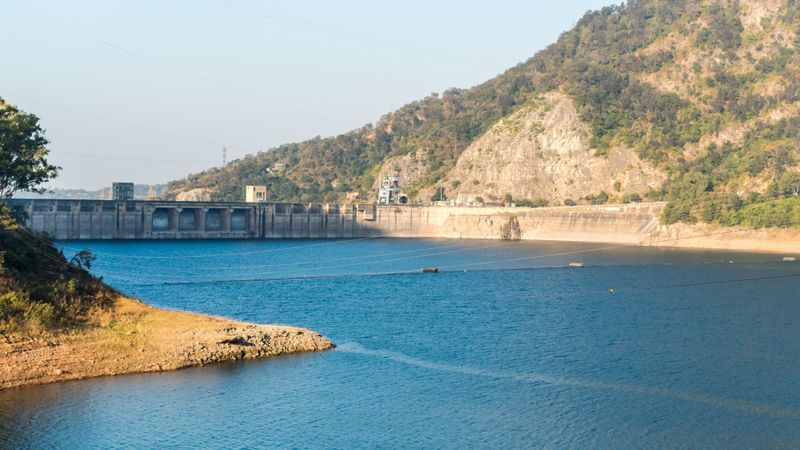

The storage capacity of the Nangal Dam lake, a critical component of the Bhakra canal system, has reduced by nearly 24 per cent due to heavy accumulation of silt, sparking concern over its long-term impact on water supply and hydropower generation in North India.According to data presented in Parliament by Union Jal Shakti Minister in response to a query by Congress MP Manish Tewari, the lake’s storage capacity has declined from its designed level of 25.22 million cubic metres (MCM) to just 19 MCM. This marks a reduction of over 6 MCM, a significant loss for a reservoir that plays a pivotal role in regulating water distribution downstream.The Nangal Dam lake feeds the Nangal hydel channel, which further becomes the Bhakra main line, supplying water to Punjab, Haryana and Delhi. Officials indicated that the reduced capacity may affect discharge levels into the canal system, particularly during peak demand in the summer.Sources said that the Bhakra Beas Management Board has taken note of the issue and is considering a proposal to undertake desilting operations in the reservoir. However, the process is fraught with regulatory hurdles. The Nangal Dam lake has been notified as a wildlife sanctuary and a wetland by the Centre. Additionally, the surrounding area within a 100m radius has been designated as an eco-sensitive zone. As a result, any desilting activity would require prior clearance from the Union Ministry of Environment making the process both time-consuming and complex.Apart from irrigation, the lake also supports hydropower generation. The Anandpur Sahib hydel channel, which also originates from the reservoir, feeds two powerhouses at Ganguwal and Nakkian. These facilities together generate about 100 MW of electricity for the Punjab State Power Corporation Limited (PSPCL), contributing significantly to the state’s energy needs.Experts warn that continued silt accumulation could impair not only water flow but also the efficiency of turbines in downstream hydropower plants. Reduced water availability and irregular flow patterns may lead to lower electricity generation, particularly during critical demand cycles.The irony is stark, said a senior official on the condition of anonymity. “We have valuable sediment accumulated in dams, but instead of utilising it, we are allowing rivers to be over-exploited, leading to ecological imbalance,” he said.