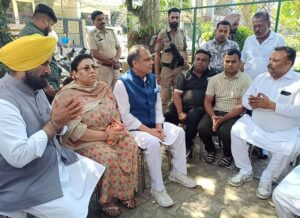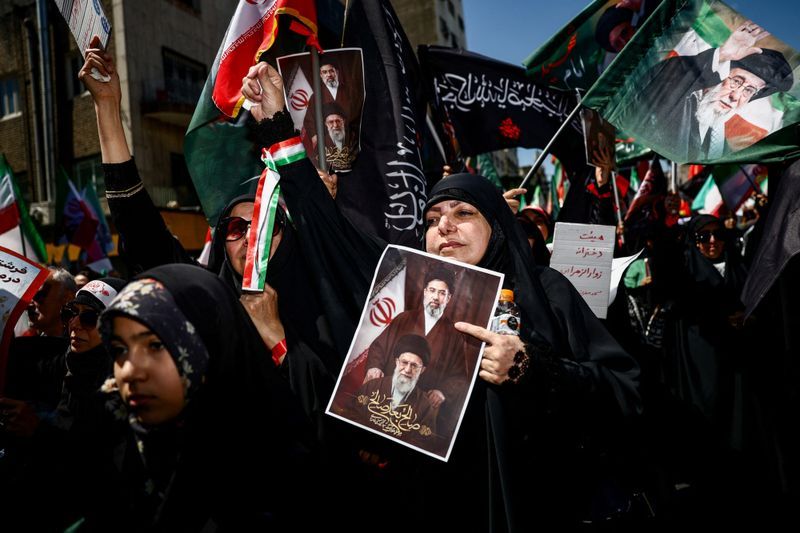

The West Asia crisis continued to roil stakeholders across the globe past week. On the one hand, the US is hell-bent on asking Iran to give up its nuclear ambitions, while the war-ravaged nation’s insistence on continued civil nuclear enrichment is a key point of contention, says former MEA Secretary and ex-Ambassador to UAE and Iran KC Singh in his Edit article Discord keeps ceasefire on thin ice. The Americans want the Strait’s immediate opening, President Trump has even suggested revenue-sharing. As far as India is concerned, closer engagement with Israel has always been seen as beneficial for India-US ties. If the interim ceasefire leads to a more permanent solution, a new regional order could emerge, he writes. Until a more sensible leadership emerges in Israel and the US, permanent solutions are impossible, he avers.There are two clear lessons from the war in West Asia. The first, be humble, never arrogant (the US and Israelis have been forced to eat a humble pie by a far weaker Iran; closer home, External Affairs Minister S Jaishankar’s characterisation of Pakistan as a “dalaal” while it brokers the most important global negotiations in decades). The second lesson is that tier two nations like India and Pakistan cannot afford to take sides, writes Editor-in-Chief Jyoti Malhotra in her weekly column The Great Game India’s obsession with Pakistan. Certainly, Pakistan punches above its emaciated weight, but why does India punch below its potential, she asks.While there is a recognition that US military presence in itself is no more a guarantee of safety, Gulf security can only come from completely disarming Iran, says strategic analyst KP Nayar in his article How war reshapes Gulf power equations. Countries, like India, will have to adjust their dealings with the Gulf countries.For dealing with the severe economic fallout of the war, India needs a dual but differentiated de-risking policy — targeted and precautionary vis-à-vis the US; structural and security-driven vis-à-vis China, writes ex-Ambassador to China Ashok K Kantha in his Op-Ed piece Why India needs a strategy of derisking from US & China. Dual because vulnerabilities arise from both China and the US. Differentiated because the scale, intent and instruments of derisking must vary across the two fundamentally different relationships.In West Asia, objectives shift while operations continue. One day promises decisive victory. The next speaks of a longer campaign, says former Western Army Commander Lt Gen SS Mehta (retd) in his Edit article Strategy’s exit wound. If we cannot design how wars end, we will inherit conflicts that never do. From Chanakya to Clausewitz, strategy was never about endless conflict. It was about purpose, application & termination, he writes.Other than the war, the other big development was the Artemis II crew successfully looping around the Moon marking a historic milestone in human spaceflight. NASA’s Artemis programme is transforming Earth’s satellite into a contested marketplace, writes Visiting Professor, IISER-Mohali TV Venkateswaran Back to the Moon, with a new tune. Investors see the Moon base as a long-term platform for investment and profit. Many experts fear that without stronger multilateral governance, the Moon could become another site of global conflict, he writes.With increasing dependence on digitisation, the farmers in Haryana are feeling its pinch the most. Is it so or is it being quietly being used as a tool to deter MSP payment. A layer upon layer of procedure is being created to dismantle MSP not through legislation, but through administrative suffocation, writes Haryana Leader of Opposition and ex-CM Bhupinder Singh Hooda in his Op-Ed article Haryana Portal raj hinders Haryana farmers’ MSP access. That is precisely what the Haryana government is doing in the current wheat procurement season. Every farmer bringing wheat to a mandi must display the tractor-trolley’s vehicle number, have it photographed at the mandi gate, upload that photo to the government portal and only then receive a gate pass to proceed. The complications do not stop at the vehicle gate. Farmers must first register on the ‘Meri Fasal Mera Byora’ portal. Such kind of pre-requisites might pass as a modernisation measure. Together, they form a deliberate gauntlet, and the farmer at the end of it is not a beneficiary; he is the target, he warns.