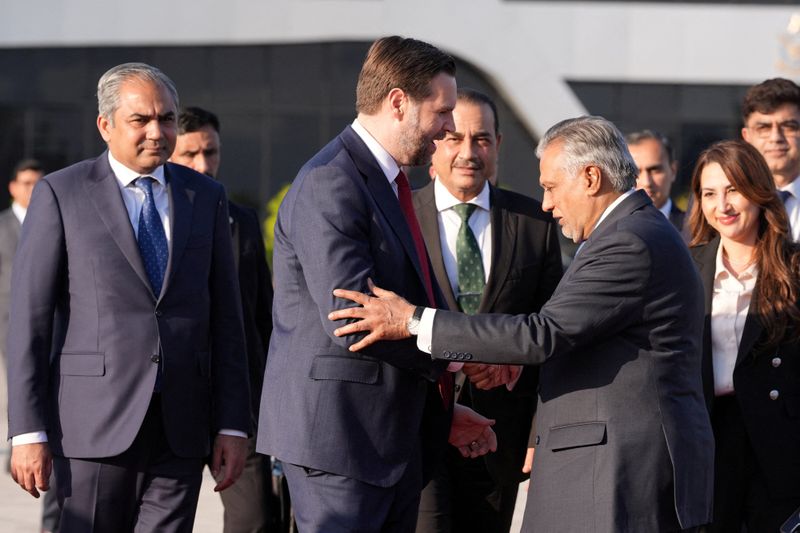

The bad news is the highest level talks between the US and Iran in nearly five decades ended without a deal, which seemed a heavy lift even for the most optimistic. The good news is neither ended the cease fire and fighting has not resumed.Thanks for reading Kathy Gannon’s Substack! Subscribe for free to receive new posts and support my work.That of course could end any time.US Vice-President JD Vance left Pakistan on Sunday without a deal saying Washington has made its last and final offer, though with US President Donald Trump it is never clear if last really means last, or final really means final.Even as the talks were underway Trump seemed uninterested in the outcome saying a deal “doesn’t even matter because the US has already won.”It is a fool’s mission to read anything into Trump’s utterings, but given the unpopularity of the Iran war in America and the president’s nosediving poll numbers, it may be that he has lost his appetite for the war and simply declares victory.Unsurprisingly the sticking points to a deal remain the fate of the Strait of Hormuz and Iran’s nuclear ambitions, both for its domestic energy needs and possible future use for weapons production, something Tehran has consistently insisted it is not seeking. Iran also wants an end to Israel’s assault on Lebanon, which unsurprisingly Israel has refused, even as Washington seeks to broker a cease fire between the Middle Eastern neighbors.Where does this now leave Pakistan?Pakistan has been walking an increasingly wobbly tightrope leveraging its military strength and its friendship with both its neighbors and the United States to get the two-week cease fire agreement and significantly a historic face-to face meeting between Washington and Tehran. That feat alone has been monumental and it still might pay off with a final agreement.The stakes, however, are high for Pakistan which has put a lot on the line to broker these talks. While its international reputation has soared, a resumption of the war could drag Pakistan, which leveraged its military strength to get folks to the table, into the war.Even as Pakistan was basking in the glow of having orchestrated the talks and was working the American and Iranian delegations to get an agreement, Islamabad was deploying its forces to Saudi Arabia.The deployment reinforces its security alliance with Saudi Arabia and risks drawing Pakistan into the war if renewed fighting brings renewed attacks by Iran on Saudi Arabia.The troop deployment was announced at the start of talks and by Saudi Arabia, not Pakistan, both of which seem significant and would seem a message to Iran and to its Houthi allies in Yemen that a resumption of the war will mean they will have to answer to Pakistan as well as Saudi Arabia.Effectively Saudi Arabia has activated its Strategic Mutual Defense Agreement with Pakistan.According to the Saudi Foreign Ministry announcement “The Pakistani force consists of fighter and support aircraft belonging to the Pakistani Air Force, with the aim of enhancing joint military coordination, raising the level of operational readiness between the armed forces of the two countries, and supporting security and stability at both regional and international levels.”The last major assault by Iran on its neighbors prior to the two-week cease fire agreement was against Saudi Arabia. On April 7 and 8 a barrage of Iranian missiles and drones hit the Jubail Industrial hub, including the large Sadra complex. The attack hit Saudi Arabia’s critical east-west crude oil pipeline, its key export route, striking at the heart of the kingdom’s petrochemical industry.Even as Saudi Arabia intercepted several of the Iranian missiles the damage was extensive and reportedly cut Saudi oil production by 600,000 barrels a day.Saudi Arabia has now activated its security agreement with Pakistan and that means if the war resumes and Iran again attacks Saudi Arabia, Pakistan will be obliged to enter the war.Pakistan’s air force demonstrated its prowess last May during a brief four-day war with neighbor India downing as many as five Indian aircraft, including three French made Rafale fighter jets before declaring itself the winner of the war. Trump who took credit for brokering the cease fire between the nuclear armed South Asian neighbors also declared Pakistan the winner.A resumption of the Iran war risks again testing Pakistan’s air force and dangerously escalating the war, something it is hoped Iran would not want to see.Pakistan’s strategic defense pact with Saudi Arabia may turn out to be the greatest bargaining chip or the deadliest.(Kathy Gannon is a Canadian journalist who has spent a lifetime in Pakistan.)