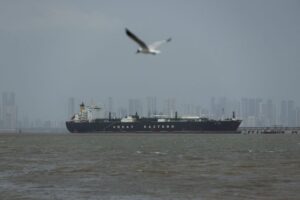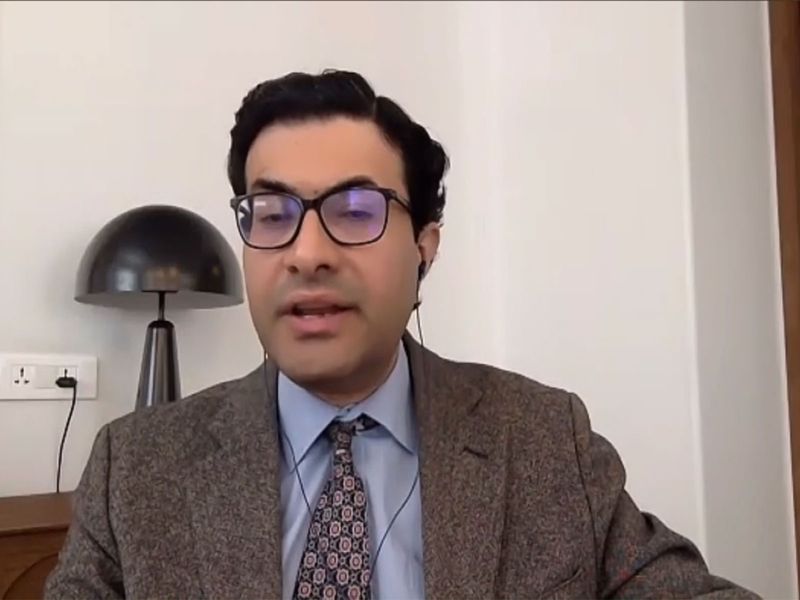

Mumbai (Maharashtra) [India], April 12 (ANI): Burzine Waghmar, Iran expert at Centre for Iranian Studies (CIS) at University of London’s School of Oriental & African Studies (SOAS) Centre, said the optics of the talks between Iran and America were blown way out of proportion.Waghmar, in a conversation with ANI, said that It is ironic to see Pakistan, a state often viewed through a critical lens, trying to play the role of a responsible mediator alongside Iran.”I was skeptical of the talks in the first place. Despite accepting that they were going to take place, the optics had been blown out of proportion. The Pakistanis wanted to capitalize on the fact that they were leading global mediation. It is ironic to see Pakistan, a state often viewed through a critical lens, trying to play the role of a responsible mediator alongside Iran. Both have neighbours who would qualify them as states that have sponsored instability,” he said.Waghmar said that while other goalposts kept changing, US President Donald Trump has been consistent on one point: Iran can never have a nuclear program.”Regarding the actual talks, as Vice President Vance put it, there was a fundamental commitment sought from Tehran: a no-questions-asked, complete, full, and binding commitment to no nuclear enrichment now or in the future. That was the basic premise with which Washington arrived. Despite his other fluctuations, President Trump has been consistent on one point: Iran can never have a nuclear program. Tehran steadfastly refused to offer this in principle,” he said.Wasghmar further said that although Iran denied trying to possess nuclear weapons, “why did they have weapons-grade enrichment?””Regardless of claims that nuclear weapons are un-Islamic, we know they were pursuing weapons-grade enrichment. You do not need a 60% stockpile, which can be ramped up to 90%, for civilian nuclear fuel. We have even seen IRGC officials on social media boasting about hoodwinking the IAEA and the West during the JCPOA negotiations,” he said.Waghmar then said that while Washington focused on the nuclear issue, Iran tried to play to the gallery on the Strait of Hormuz and the Lebanon question.”There were other distinct features of the talks. While Washington focused on the nuclear issue, Iran tried to play to the gallery on the Strait of Hormuz and the Lebanon question. Vice President Vance mentioned that Lebanon was never part of the draft plan leading up to the talks. It is absurd that Iranian sources are blaming the Lebanese government for facilitating talks with Tel Aviv through American mediation. At some point, the Lebanese government must communicate with Israel over the ongoing bombings,” he said.Waghmar further said that even though Lebanon has declared the Iranian ambassador persona non grata, he refuses to leave Beirut.”The arrogance of the Iranian regime is clear, especially with the Lebanese Foreign Ministry declaring the Iranian ambassador persona non grata, yet he refuses to leave Beirut. This is a prime example of Iranian regional hegemony,” he said.Waghmar then said that with the US Vice President being present at the talks, this engagement is the highest-level engagement under the Joint Comprehensive Plan of Action (JCPOA).Iran nuclear deal was an agreement to limit the Iranian nuclear program in return for sanctions relief and other provisions. The agreement was finalised in Vienna on July 14, 2015, between Iran and the P5+1 (the five permanent members of the United Nations Security Council (UNSC)–China, France, Russia, the UK, US–plus Germany) together with the European Union.”The participation of the Vice President made these talks heavy on symbolism, marking the highest-level engagement since the JCPOA. Whether talks will resume is unknown, as the region is currently driven by anxiety over whether the ceasefire hiatus will hold. Iran is flexing from a supposed position of strength, which is a fiction. They believe that because the regime survived, they have won. However, their top brass has been eliminated, and their Navy and Air Force are practically gone. They are holding the world to ransom using the Strait of Hormuz, which is the only leverage they have left,” he said.Waghmar said that Iran’s attempt to charge a USD 2 million toll per vessel is essentially blackmail.”Iran’s contention that they have complete sovereignty over the Strait of Hormuz is nonsense. Maritime jurisdiction has always been shared with Oman. Iran’s attempt to charge a $2 million toll per vessel is essentially blackmail. Muscat declined to participate in this tactic because it flies in the face of GCC principles. The Iranians appear delusional in their foreign policy objectives, especially considering how this alienates Asian nations that depend on the Strait. China, for instance, receives 89% of Iran’s hydrocarbon exports. It is doubtful the Chinese or Indians will accede to such hostage-taking tactics for long,” he said.Waghmar explained that the Suez is an artificial waterway; the Strait of Hormuz is a natural waterway protected by the 1982 UN Convention on the Law of the Sea.”The argument that Iran can charge tolls like Egypt does for the Suez Canal is untenable. The Suez is an artificial waterway; the Strait of Hormuz is a natural waterway protected by the 1982 UN Convention on the Law of the Sea. Furthermore, the claim that these funds would be used for reparations to restore their economy is unbelievable. Historically, whenever Iran has received unfrozen assets, they have frittered those funds away on regional proxies and funding terror, from the Assad regime in Syria to the Houthis and Hamas,” he said.Waghmar said that there are conflicting reports about the US Navy removing mines in the Strait, but the military build-up is clear.”As for the military situation, there are conflicting reports about the US Navy removing mines in the Strait. However, the military build-up is clear. The 11th Marine Expeditionary Force is expected in the region by mid-April to bolster the 82nd Airborne and the 31st Marine Expeditionary Force already stationed there. What pans out next is anyone’s guess,” he said.Meanwhile, Iran’s foreign ministry spokesperson Esmaeil Baqaei on Sunday said that the recent meeting with US officials was the longest round of negotiations they have had in the past year. (ANI)(This content is sourced from a syndicated feed and is published as received. The Tribune assumes no responsibility or liability for its accuracy, completeness, or content.)