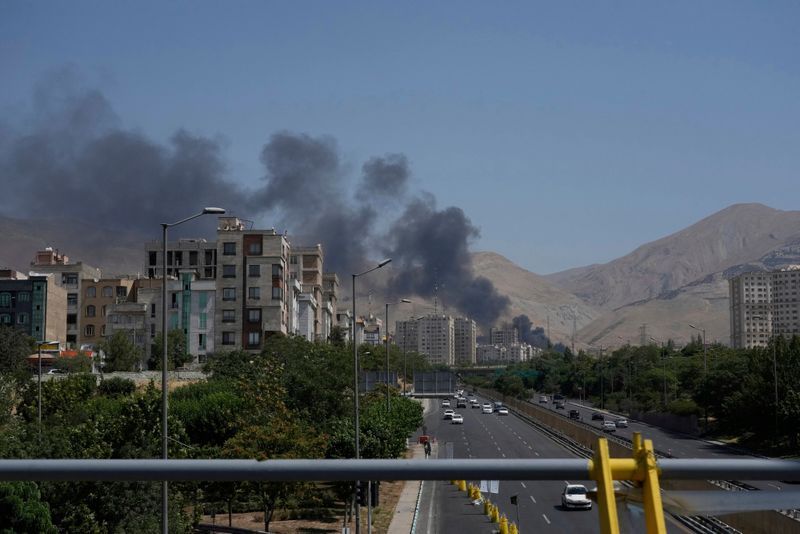

“Never interrupt your enemy when he is making a mistake”. Napoleon Bonaparte’s maxim may well have been in the minds of policymakers in Moscow and Beijing these past weeks, as the US war in Iran dragged on. And now that a 14-day ceasefire between Tehran and Washington is in effect with both sides claiming “victory”, Russian and Chinese leaders still have an opportunity to profit from what many see as America’s latest folly in West Asia.Throughout the conflict, China and Russia struck a delicate balance: Both declined to give Iran, seen to a varying degree as an ally of both nations, their full-throated support or incur any real costs in the conflict. Instead, they opted for limited assistance in the form of small-scale intelligence and diplomatic support. Beijing and Moscow were fully aware that Iran could not “win” against the combined military might of the United States and Israel. Rather, Iran just needed to survive to serve the interests of Washington’s main geopolitical rivals.Losing the influence war in West AsiaThe US has long struggled to balance competing objectives in West Asia. During the Cold War, this meant limiting the Soviet Union’s influence in the region, while contending with the development of nuclear weapons by two troublesome allies, Israel and Pakistan. By the 2020s, the priorities in Washington were aimed at restricting the influence of the US great power rivals — China and, to a lesser degree, Russia — in West Asia. With Washington now perceived as an increasingly unreliable protector, Gulf states may seek greater security and economic cooperation elsewhere.Taking the US’ eyes off other goalsIn expanding military, diplomatic and economic ties in West Asia, Russia and China over the past two decades were exploiting a desire by Washington to move its assets and attention away from the region following two costly wars — in Iraq and Afghanistan.In co-launching a war in Tehran with Israel, without any prior consultation with Washington’s other allies, Trump has shown a complete disregard for their strategic and economic concerns. NATO, already riven by Trump’s repeated threats to the alliance and designs on Greenland, has now shown further signs of internal divisions. That offers benefits for China and Russia, which have long sought to capitalise on cracks between America and its allies.Disproportionate economic falloutIran’s closure of the Strait of Hormuz was as predictable as it was destructive for US interests. But for Russia, this meant higher oil prices that boosted its war economy.It also led to the temporary but ongoing easing of US sanctions, which has provided Moscow with an indispensable lifeline after years of economic pressure over the war in Ukraine. The more the US loses control over events in the Strait, the more it loses influence in the region — especially as Iran appears to be placing restrictions on ships from unfriendly nations.Weakening ‘honest broker’ perceptionTrump’s willingness to abandon talks to go to war and the contradictory rhetoric he has employed throughout the Iran conflict have weakened the perception of the US as an honest broker. That provides a massive soft power boost for Beijing. It was China that pressed Iran to accept the ceasefire proposal. China has slowly chipped away at US’ longtime status as mediator of first resort. And for Russia, the Iran war and the rupture between Trump and US’ NATO allies over their lack of support for it shift world attention and US involvement from the war in Ukraine. — The Conversation