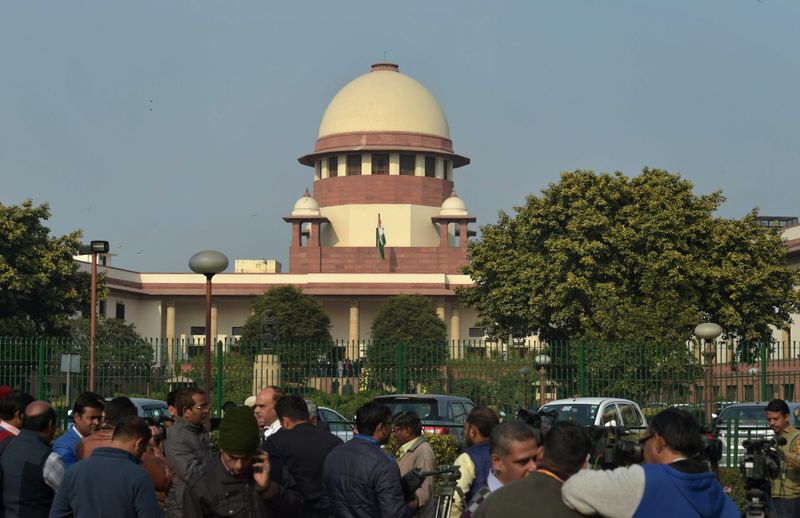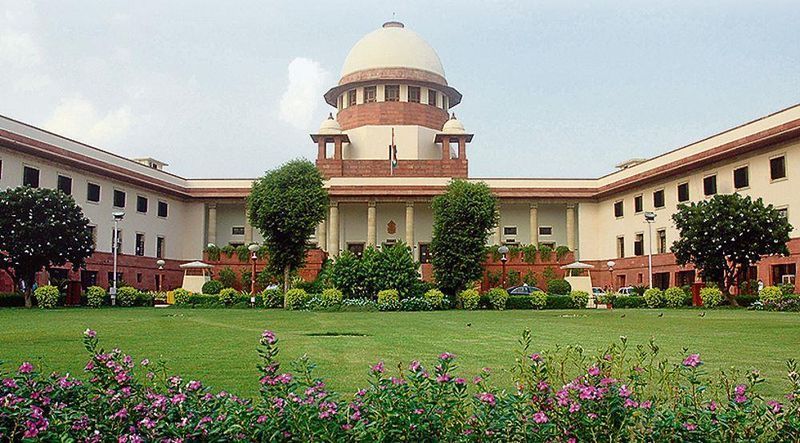

A spouse can’t back out from a mutual divorce settlement reached after mediation and agreeing to dissolve the marriage as part of a full and final settlement of disputes, the Supreme Court has said.Using its plenary powers under Article 142 of the Constitution, a Bench of Justice Rajesh Bindal and Justice Vijay Bishnoi dissolved the marriage between the parties as it was not possible for them to peacefully co-exist together.It quashed all proceedings, civil and criminal, initiated by the husband and the wife, their family members, relatives, friends, in relation to or arising out of the marriage between the parties. Writing the judgment for the Bench, Justice Bishnoi said, “On going through the materials on record, it is evident that there has been a complete and irretrievable breakdown of the matrimonial relationship between the parties. In such a case, when there is no scope of the parties peacefully co-existing together, we see no point in continuation of any sorts of litigation in between the parties arising solely out of the matrimonial discord.”Irretrievable breakdown of marriage is not a ground for divorce under the Hindu Marriage Act, 1955, but the top court has been dissolving marriages in cases where it was not possible for parties to reconcile and live together as a couple.The Bench took note of the fact that out of 10 conditions of settlement, six, including payment of Rs 75 lakh towards first instalment of Rs 1.5 crore alimony, had already been complied with, one was partially complied with and two were pending/not complete while one was breached when the wife chose to withdraw from the settlement with her husband.After having agreed to a mutual divorce settlement reached through mediation, the wife chose to withdraw from it and filed a case against the husband under the Domestic Violence Act, 2005.But the top court noted that the proceedings initiated under the DV Act were merely an afterthought, as they were filed after the notice was issued in the contempt petition filed by the Appellant-Husband following her withdrawal from the settlement.“Moreover, we cannot be oblivious to the fact that, admittedly, since the last couple of years (from 2022-23), the Respondent-Wife is living separately from the Appellant-Husband. The proceedings under the DV Act appear to be premeditated, one filed in order to sustain some sort of litigation between the parties after she had resiled from the Settlement Agreement, as it was evidently for the first time in a long span of about 23 years of their sustained marriage, that such a petition alleging domestic violence has been filed by the Respondent-Wife,” it said.“It is trite law that once the parties have entered into a settlement agreement which was duly authenticated by the mediator, in case of any resilement from such terms as agreed upon in the settlement, the resiling party must be encumbered with heavy costs, Any deviation from the terms of the settlement arrived in mediation and later confirmed by the court should be dealt with strictly as such deviation harbours an attack to the foundational basis of the entire process of mediation,” it said.However, it clarified that a party may resile from a settlement in limited circumstances if it can show that the agreement was vitiated by fraud, coercion or undue influence, or that the other party failed to comply with its terms.The verdict came on an appeal filed by the husband challenging a Delhi High Court order allowing the domestic violence proceedings initiated by the wife to continue, ignoring the settlement reached through mediation.Married in 2000, the couple had children but due to matrimonial differences, they were living separately since 2022-23.The husband had withdrawn his divorce plea filed on the grounds of cruelty and adultery after the parties agreed to settle all disputes and go for a mutual consent divorce. The first motion for divorce was allowed in August 2024 but before the second motion, the wife withdrew her consent.The husband filed a contempt petition over breach of settlement but later withdrew it to move the Delhi High Court.The wife initiated proceedings under the DV Act in October 2025. The husband approached the high court seeking quashing of the DV Act proceedings. He moved the top court after the high court allowed the DV Act proceedings against him.“While we are conscious of the fact that the parties to a long standing marital dispute are often fuelled by emotions, we cannot allow such emotions to take a drastic turn in as much as allowing the bursts of emotions to form the basis of criminal prosecution. Such criminal prosecution, if allowed, would lead to an abuse of law and cause harassment,” the top court said.