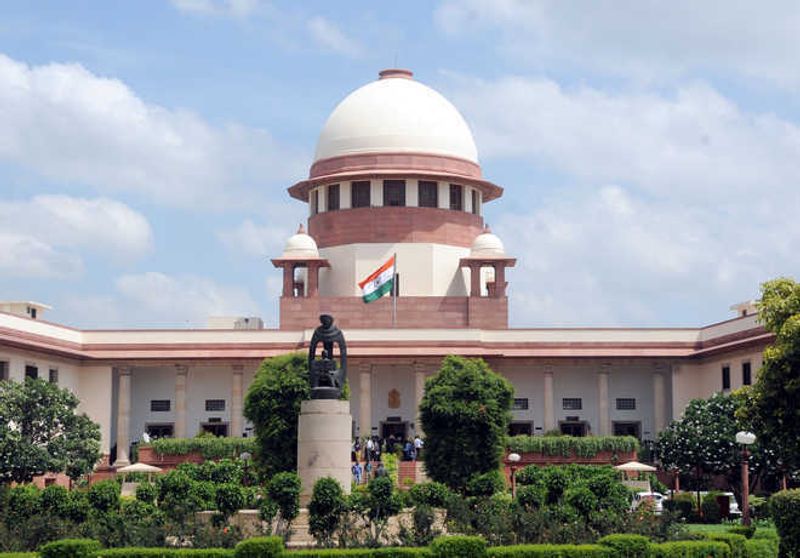

The Travancore Devaswom Board (TDB) — which manages the famous Lord Ayyappa Temple at Sabarimala hilltop in Kerala — told the Supreme Court on Wednesday that excluding menstruating women aged 10-50 years from visiting the temple did not violate their right to equality as it was within the reasonable classification test.On the fourth day of hearing on issues arising out of petitions seeking review of the Supreme Court’s 2018 verdict that set aside the age-old restriction on entry of women aged between 10-50 years into the Sabarimala Temple, senior advocate Abhishek Manu Singhvi told a nine-judge Constitution Bench led by Chief Justice of India Surya Kant on behalf of the TDB that the classification of women aged 10-50 years fell within the reasonable nexus between the rule to bar such a category of women and the objective sought to be achieved i.e. the reverence of celibate beliefs of Lord Ayyappa.Describing Lord Ayyappa as an eternal celibate, Singhvi said, “It’s assumed that fertile women of this age would be antithetical to the very manifestation and existence of the identity of the deity. These women can certainly visit Lord Ayyappa in 999 other temples… Why should they want to visit just one temple?”He said, “Lord Ayyappa, I am told, has about 1,000 temples in India. The only temple of Lord Ayyappa which is in one form as a Naishtika Brahmachari (an unfailing celibate) is in Sabarimala. The very foundation of the fame and prowess of this Lord is in the form of Naishtika Brahmachari, the only reason why people revere him is because he eschewed all forms of Grahastha Ashram and has adopted penance of a very high order, which includes celebacy and self-denial completely to an extreme form that is why when you go up, you have to do vratam (for 40 days).”A PIL should not become a vehicle for interpreting a religious practice or its violation, Singhvi told the Bench – which also included Justice BV Nagarathna, Justice MM Sundresh, Justice Ahsanuddin Amanullah, Justice Aravind Kumar, Justice Augustine George Masih, Justice Prasanna B Varale, Justice R Mahadevan and Justice Joymalya Bagchi.While considering the issue of maintainability of PILs in matters of religion, the Bench said one of the most difficult tasks for a court was to declare that a belief of millions of people was wrong or erroneous.The nine-judge Constitution Bench is also examining discriminatory practices in other religions to lay down constitutional principles for determination of such issues.Maintaining that religion is a set of beliefs and practices followed by a denomination with a broadly similar identity, Singhvi contended that the court cannot sit in judgment of that belief. He gave examples of naked Naga Sadhus and Digambar Jain Munis who don’t wear clothes to substantiate his argument.“Religion is a set of beliefs and practices followed by a group/sect/denomination with a broadly similar identity. While Article 25 (right to religion) clearly vests in an individual the right to profess, practice and propagate religion, such individual rights cannot be allowed to extend to an area which intrudes upon the mass of individual rights of all other adherents of that religion or denomination,” Singhvi submitted.Noting that everybody must have access to all temples and ‘mathas’, the Supreme Court had on April 9 cautioned against exclusion of other denominations from denominational temples, for it will negatively affect Hinduism and divide the society.On behalf of the Centre, Solicitor General Mehta had last week submitted that the top court’s 2018 Sabarimala verdict which allowed entry of women of all age groups to the temple, was wrong as it proceeded on the presumption that men were superior and women were on a lower pedestal.He contended that the restriction had nothing to do with gender and that there were temples where men were not allowed or men had to go there dressed up as women.By a 4:1 verdict, a five-judge Constitution Bench led by the then CJI Dipak Misra had on September 28, 2018, allowed entry to women, irrespective of their age, into the Lord Ayyappa’s temple at Sabarimala, overturning the age-old tradition that restricted the entry of women in the age group of 10 to 50 years.Justice Indu Malhotra, the lone woman judge on the Bench had delivered a dissenting verdict and supported the practice.While delivering its verdict on petitions seeking review of the 2018 verdict, the Supreme Court on November 14, 2019, enlarged the scope of the case and referred to a seven-judge Bench seven issues of discriminatory practices in various religions. All these issues are now being examined by the nine-judge Constitution Bench.