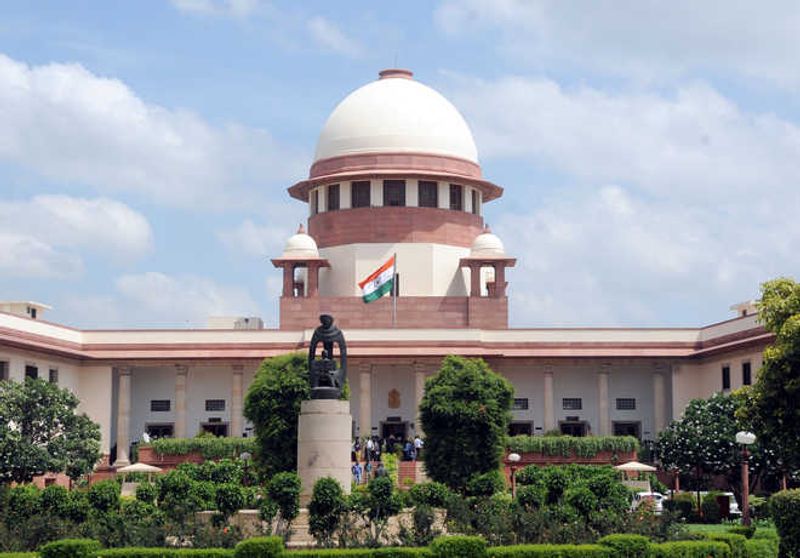

Amid a raging controversy over allegations of religious conversion and sexual harassment at a multinational company (MNC) in Nashik, a Delhi-based lawyer on Thursday urged the Supreme Court to direct the government to take stringent measures to check fraudulent religious conversion.Filed by advocate Ashwini Kumar Upadhyay in his pending petition seeking direction to the Centre and states to take tough steps to control fraudulent religious conversions, the plea came days after eight female employees at TCS’s office at Nashik, Maharashtra, alleged sexual harassment and forced religious conversion.Deceitful religious conversion was not only a serious threat to sovereignty, secularism, democracy and liberty but also a menace to fraternity, dignity, unity and national integration. Upadhyay urged the top court to direct the Centre and states to take stringent steps to control religious conversion.Describing such fraudulent religious conversion as an organised crime, an act of terrorism, an indirect war and a serious threat to national security, he sought directions to the Centre and state governments to establish special courts to deal with religious conversion cases and declare that the sentence for deceitful religious conversion shall be consecutive, not concurrent.The top court had in 2023 sought Attorney General R Venkataramani’s assistance, saying religious conversion was a serious issue which should not be given political colour.Maintaining that Article 25 gave freedom of conscience, profession, practice and propagation of religion, subject to public order, health and morality, the petition contended that the Right to Freedom of Religion did not carry the right to convert others through fraud, force, coercion or cheating.“All persons will have the right freely to profess, practice and propagate religion and not that all persons will have the right to freely profess, practice and propagate religion. It means the right to profess, practice and propagate religion is free to everyone, but cannot be practised absolutely or freely.“The expression does not mean that every person is free to do whatever they wish in the name of religion. Rather, it means that everyone has the right freely to profess, practise and propagate, but this freedom itself is subject to reasonable restrictions,” the plea submitted.The right to religion under Article 25 was not absolute as it’s subject to public order, morality and health, and the other provisions of Part 3 of the Constitution, which deals with fundamental rights, Upadhyay said.