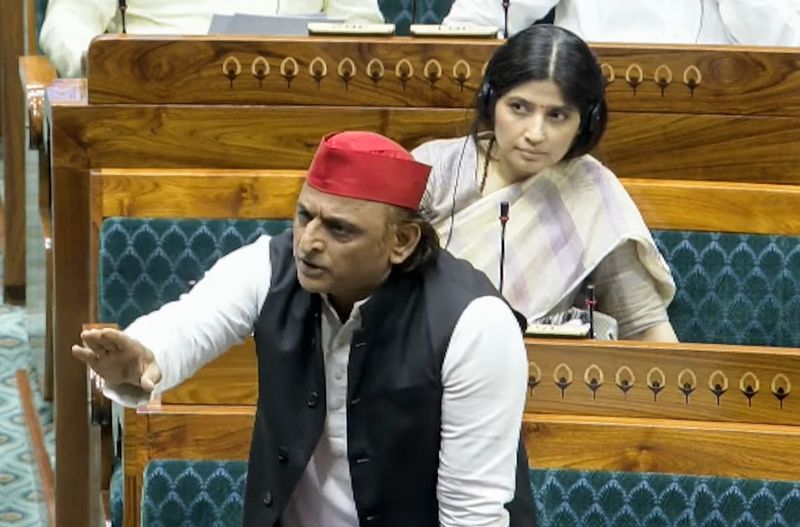

A high-voltage confrontation broke out in the Lok Sabha on Thursday between Union Home Minister Amit Shah and Samajwadi Party chief Akhilesh Yadav over the timing of the rollout of women’s reservation, the census and the politically contentious issue of religion-based quotas.The clash preceded the introduction of the Constitution (131st Amendment) Bill, 2026, which seeks to operationalise the women’s reservation law ahead of the 2029 Lok Sabha elections. The Bill was later introduced following a division, amid sharp exchanges between the Treasury Benches and the Opposition over proposed changes to the framework.The motion was carried with 251 votes in favour and 185 against. Two accompanying ordinary Bills — one to establish a delimitation mechanism and another to extend the amended provisions to the Union Territories of Delhi, Puducherry and Jammu and Kashmir — were also introduced.The formal introduction was preceded by a nearly 45-minute debate marked by pointed exchanges between Shah, Yadav and Congress MP K C Venugopal.Raising concerns, Yadav questioned the Centre’s urgency in advancing the reservation framework alongside delimitation, arguing that the census should precede any such move. He maintained that while his party supported women’s reservation, it opposed the current approach.Responding sharply, Shah rejected the criticism, asserting that the census process had already begun and would include caste enumeration. He also dismissed calls for religion-based quotas as unconstitutional.Intervening in the debate, Venugopal objected to the introduction of the legislation, terming it an attack on the federal structure and questioning its intent.He said, “I object to the Bill introduced by Union Ministers Arjun Ram Meghwal and Amit Shah. This Bill is a fundamental attack on the Indian federal structure. What exactly is the intention of this Bill? The Parliament passed the Bill in both, the Lok Sabha and the Rajya Sabha, ensuring 33 per cent reservation of women.”Shah countered that objections at the introduction stage were premature and limited to technical grounds, adding that the government would give a “strong reply” in detail during the substantive discussion.