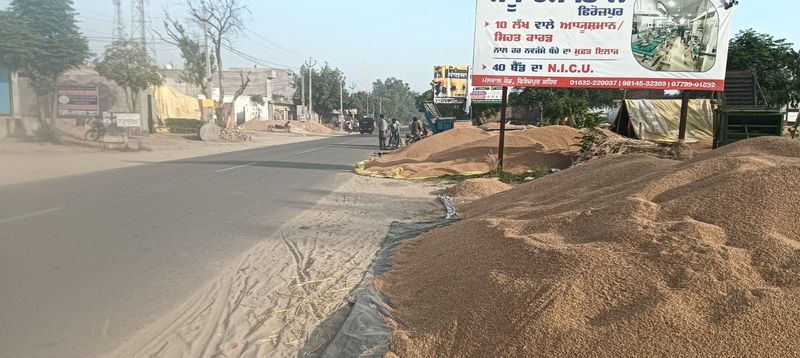

A severe crisis has gripped the grain markets (mandis) of Faridkot as the sluggish pace of wheat procurement and administrative delays have left the facilities bursting at the seams. With no space left inside the mandis to offload their produce, desperate farmers are now being forced to dump their golden harvest along roadsides.The situation is particularly dire at Golewala Mandi in the district, where the lack of space has spilled onto highways. Farmers expressed deep concern over the security of their crop, noting that keeping watch over wheat lying on the roadside is a logistical nightmare, with the constant threat of theft.The current chaos is attributed to several factors, including a slow start to the season followed by a sudden surge that has overwhelmed the system. Internal friction between various procurement agencies, exacerbated by crop damage due to recent unseasonal rains, has stalled the process, said sources among commission agents.As per official data, while 71,305 metric tonnes of wheat have arrived across the district’s mandis, only 28,677 metric tonnes have been officially procured so far. Despite these figures, the administration continues to claim that the process is “smooth”.In a significant development that has brought a glimmer of hope to farmers and commission agents (arhtiyas), the Central Government has announced major relaxations in wheat procurement quality standards. This decision follows a field assessment by Food Corporation of India (FCI) teams sent on April 10 to evaluate rain-damaged crops.The limit for “colour loss” or lustreless wheat has been increased to 70 per cent. The permissible limit for shrivelled and broken grains has been more than doubled, moving from 6 to 15 per cent. The total percentage of damaged or partially damaged grains is capped at 6 per cent, said arhtiyas.While these measures are expected to speed up the lifting of crops, the immediate challenge remains the massive backlog of wheat currently sitting on the streets of Faridkot.