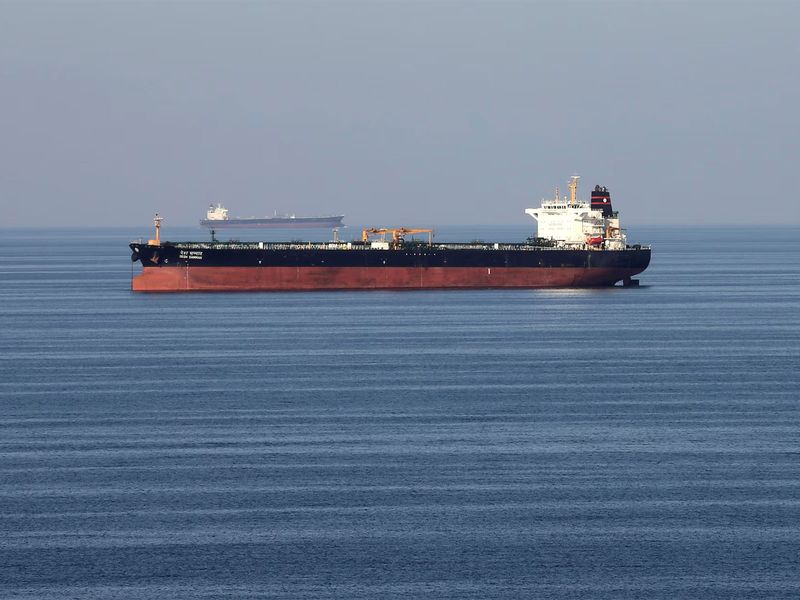

Iran on Friday announced that the crucial Strait of Hormuz will remain open for commercial shipping for the duration of the ceasefire, easing pressure on global energy markets and signalling a tentative de-escalation in the West Asia crisis.Iran’s Foreign Minister Seyed Abbas Araghchi said the passage for all commercial vessels has been declared “completely open” for the duration of the ceasefire, with shipping to follow coordinated routes designated by Iran’s Ports and Maritime Organisation.The announcement effectively ends weeks of disruption in one of the world’s most critical energy chokepoints, through which nearly a fifth of global oil and liquefied natural gas supplies transit. The Strait had been shut since late February following US and Israeli strikes on Iran, choking supply lines, spiking crude prices and rattling global trade.Within hours of Tehran’s declaration, Brent crude prices plunged to around $88 per barrel from above $98 earlier in the day, extending a sharp retreat from peaks exceeding $119 in March.Global equity markets responded with equal vigour: US indices surged, with the S&P 500 rising 0.8 per cent and both the Nasdaq and Dow Jones gaining over 1 per cent, while major European indices posted gains of up to 2 per cent.Seizing the moment, Trump issued a series of triumphant statements, asserting that Iran had agreed to never again weaponise the Strait. “A GREAT AND BRILLIANT DAY FOR THE WORLD,” he declared, while crediting regional partners including Pakistan, Saudi Arabia, the UAE and Qatar for their role.The US President further claimed that Iran, “with the help of the USA.,” had begun removing sea mines and insisted the situation was now “completely open and ready for business,” even as he maintained that a US naval blockade targeting Iran would remain in place until ongoing negotiations are fully concluded.”This process should go very quickly in that most of the points are already negotiated,” he said.In a notable divergence, Trump dismissed any direct linkage between the Hormuz breakthrough and the Lebanon ceasefire, even as Tehran explicitly tied the reopening to the truce. He added that Washington would separately address the situation involving Hezbollah and ensure that Israel halts further strikes in Lebanon.Iranian diplomatic voices, meanwhile, pointed to a broader regional effort involving Pakistan to create space for diplomacy, framing the reopening as part of a wider push towards stability, economic recovery and collective security.Caution, however, came from the International Maritime Organization, whose Secretary-General Arsenio Dominguez said the body is verifying whether the reopening fully complies with established norms on freedom of navigation and safe passage.The reopening marks a critical inflection point after weeks of economic disruption. The closure had severely curtailed global oil and gas flows, driven up fuel prices, strained aviation supply chains and disrupted fertiliser shipments — nearly a third of which pass through the Strait — raising fears of cascading food inflation worldwide.While Friday’s developments offer immediate relief, the conditional nature of the reopening and continuing military postures underline the fragility of the situation, with the durability of both the ceasefire and maritime access now central to global economic stability.