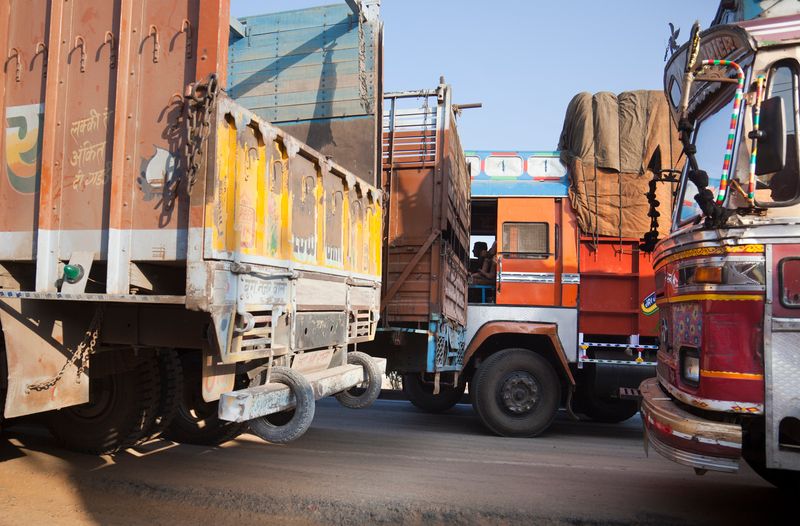

Commercial vehicles entering Delhi will have to cough up more money as the Supreme Court has okayed enhancing the environment compensation charge (ECC) for such vehicles while mandating a 5 per cent annual increase to maintain its deterrent effect against pollution.Approving the recommendations of Commission for Air Quality Management (CAQM) to revise ECC rates with effect from April 1, a bench led by Chief Justice of India Surya Kant mandated a 5 per cent annual hike in ECC.“We have considered the proposal submitted by CAQM and find the same to be reasonable, just, and fair,” the bench — which also included Justice Joymalya Bagchi and Justice Vipul M Pancholi – said in its March 12 order uploaded recently.ECC rates for Category 2 (light-duty vehicles) and Category 3 (2-axle trucks) vehicle have been increased from Rs 1,400 to Rs 2,000 while Category 4 (3-axle trucks) and Category 5 (4-axle trucks and above) vehicles will have to shell out Rs 4,000, instead of Rs 2,600 paid previously.Approving the proposal for an annual increase in ECC by 5 per cent from April 1 of each year, the top court said, “With a view to discourage entry of diesel commercial vehicles into Delhi and taking into account inflation and increase in vehicle operating costs as well as annual increase in NHAI (National Highways Authority of India) toll rates the Commission recommends that the ECC rates may be enhanced by 5 per cent every year w.e.f. April 1 (rounded off to nearest 10 rupees) and such revision may be notified by GNCTD,” it said.In addition, the bench ordered “… all stakeholders to continue to take all necessary steps to ensure that commercial and other heavy vehicles which are not required to enter Delhi, except for the supply of essential commodities, etc., ply on the expressways constructed to circumvent Delhi. Such recourse will also save them from payment of the revised ECC”.CAQM has also recommended that Municipal Corporation of Delhi (MCD) may undertake rationalisation of its toll structure for revision of the existing toll rates, address the existing disparities in vehicle classification vis-a-vis the framework adopted by NHAI and also undertake a comprehensive Traffic and Revenue Study to assess traffic potential and route diversion patterns, particularly in light of the proposed ECC revision.Directing MCD to get instructions on CAQM’s proposal, the top court asked NHAI and MCD to work in tandem and ensure compliance with its January 21 directions, particularly for the purpose of shifting the toll plazas to some other suitable location(s).The top court has been overseeing measures such as ECC, diversion of heavy vehicles through peripheral expressways and coordination between CAQM, MCD, and NHAI to check worsening air quality in NCR as a part of the proceedings arising out of the MC Mehta case.More than four decades after lawyer-turned environmental activist MC Mehta initiated a PIL for a clean environment to ensure a pollution-free Delhi-NCR, the Supreme Court on March 12 disposed of his 1985 PIL and directed the top court Registry to register a suo motu case on issues of air pollution in NCR.Mehta’s PIL led to several landmark verdicts/orders for prevention, control and management of pollution levels in Delhi-NCR and other related issues, including those on shifting of polluting industries from Delhi and the introduction of CNG-run buses and commercial vehicles.It also led to the setting up of CAQM to identify causes of, and solutions for the worsening air quality in Delhi-NCR.