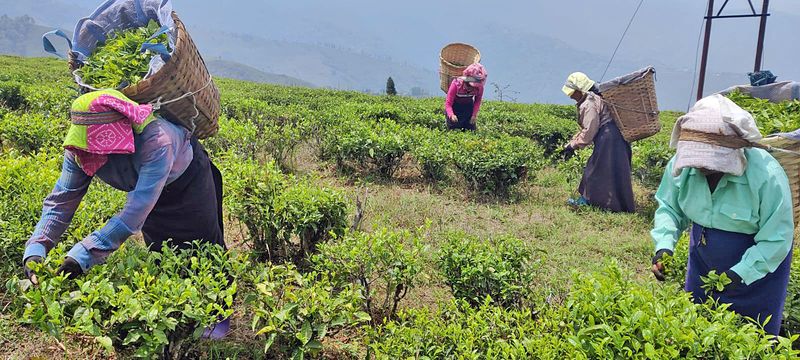

Union Home Minister Amit Shah’s announcement of a major plan to revive the West Bengal tea industry, producer of the world-renowned Darjeeling tea, has sparked off speculation among industry insiders and tea-enthusiasts on how seriously his promise should be taken.Shah recently announced a slew of measures during an election rally in Jalpaiguri that touched upon all the issues that had been ailing the industry for the past years. Many are hopeful about the revival of the industry after the BJP leader’s promise, while others accepted much of it as fluff and election rhetoric.Shah blamed CM Mamata Banerjee-led TMC government for the crisis that the state’s tea industry is facing, and promised to revive it with a comprehensive set of measures.He pledged to increase tea workers’ wages from Rs 250 to more than Rs 500 within two and half years of a BJP government, return of their unpaid PF (Provident Fund) money, and construct modern schools and health centres to improve living conditions in the gardens.He also promised ownership ‘pattas’ to tea garden workers and strengthening of the global branding of Darjeeling tea and strong measures to curb fake Darjeeling tea products.His modernisation plan also included setting up of a laboratory to develop new and high-yielding tea plants to replace the old bushes, a much-needed exercise that stopped since the original planters were replaced by businessmen and tea merchants who became the new owners of the gardens.According to industry insiders, Shah’s revival plan, if implemented in its entirety, can fundamentally alter the tea industry’s performance and reputation. “We closely followed what Shah said. But we are looking at it with cautious optimism,” said Neil Law, a tea producer who works with small tea growers.The prolonged crisis in the industry has affected the reputation of the famous Darjeeling tea in the international market, allowing other cheaper brands of tea from neighbouring countries to replace it.Tea is cultivated on around 1,39,000 hectares across the Darjeeling hills, Terai and Dooars region in West Bengal, which has over 400 tea gardens, according to the estimates of 2022. The total production of tea in the region that was between 16 million and 10 million tonnes has drastically fallen to around six million tonnes.A number of reasons — including a drastic shortage of labour, rising cost of production and unpredictable weather patterns – have been attributed for the deterioration of the tea industry. Many gardens have now been closed or have been functioning at half their potential.A key factor for the decline was the change in ownership of the gardens from planters, who understood the tea industry, by unscrupulous businessmen, who have little knowledge about tea plantations and primarily see it as a piece of real estate.Experts argue that the problem in the tea industry is not only political, but also internal. There has been a migration of tea garden workers to other states due to low wages.Apart from the increase in wages and improving living conditions in the tea gardens, the industry needs a substantial amount of financial subsidy from the government. How it can be done should be worked out in future, but first the government has to make that commitment, said an industry insider.However, whether Shah was indulging in political rhetoric against the TMC government or genuinely wanted to revive the industry, which was once the pride of India, can be known if and only when the BJP comes to power in West Bengal.