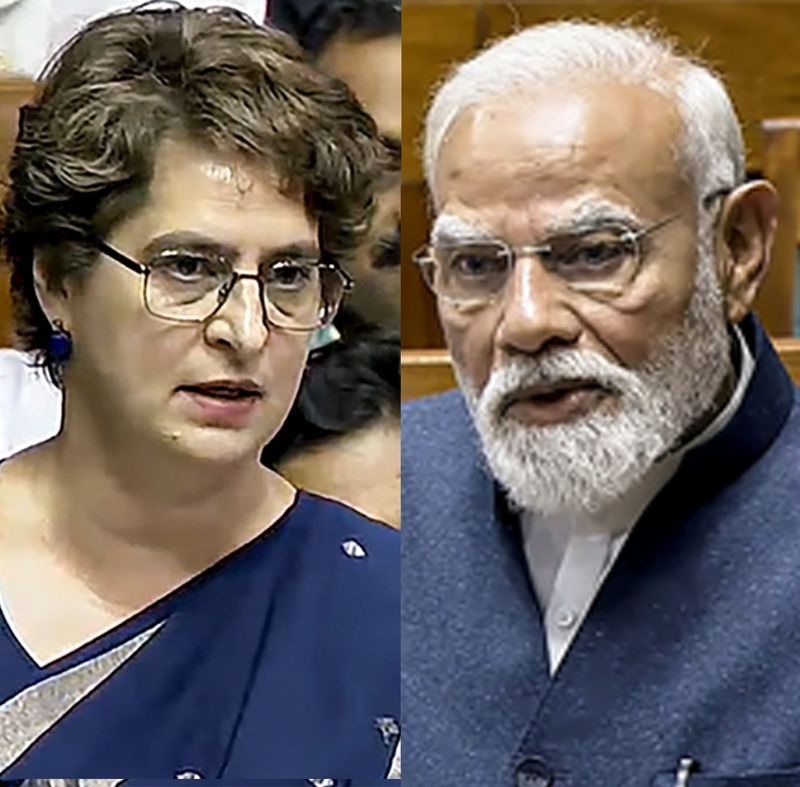

The weekend saw heightened political activity in the Lok Sabha on women, with people across the nation eagerly listening to top political leaders — PM Modi, LoP Rahul Gandhi, MP Priyanka Gandhi and Home Minister Amit Shah. Ultimately, BJP’s machination of getting delimitation done, using the women’s reservation amendment Bill as its fascade, did not yield results, as all the three Bills fell flat.The Tribune ran incisive articles to make its readers get an overview of what the passage of the Bill would actually mean and also why it failed. In her weekly column The Great Game article A confrontation over women, Editor-in-Chief Jyoti Malhotra writes that the message of the 2026 Bill should have been consensus, which was neither sought nor won because there was no conversation. The government and the rest of the senior BJP leadership should have called Opposition leaders and sought their support on the Women’s Bill. Perhaps a joint parliamentary committee or a select committee could have debated all its clauses threadbare. Once a consensus was arrived at, the new Bill and its roadmap for implementation could have been put to the House, she writes.The government’s defeat in the Lok Sabha in the Special Session of Parliament demonstrates how the Modi government has squandered an opportunity to build a national consensus on an issue critical to India’s democracy, writes former MP Rajeev Gowda in his article Women quota: Consensus lost in Parliament storm. The lack of prior discussion in parliamentary committees and the secretive manner of the Bills’ introduction gave justifiable cause for suspicion, he argues.In his article Bigger Lok Sabha, even bigger questions, former JNU Professor Santosh Mehrotra explains how a state should be lauded for its socio-economic achievements, like reducing the size of its population, which were not considered in the delimitation proposals. The six Hindi-belt states — UP, Bihar, MP, Rajasthan, Haryana, Chhattisgarh — all of which, currently, have BJP governments, have seen the most rapid population growth since Independence. Between them, they have 195 seats. If the 2011 Census data is adopted, the Hindi-belt state numbers will rise to 328 seats. As for the Women’s Reservation Bill, in the name of which the delimitation exercise is being undertaken on the basis of the 2011 Census, the travesty is clear. Expanding the House in this manner is contrary to any fair federal principle or balance, he writes. There is no logical reason to link women’s reservation in one-third of the seats in Parliament and legislative Assemblies to delimitation or the Census.Let us see how women reservation pans out in other countries. In his article Women’s seats, men’s mindsets need change, former BJP MP Vinay Sahasrabuddhe writes women quota in countries like Rwanda, Sweden, Norway, Mexico and Tunisia, gender quotas have contributed to increasing female representation, however their effectiveness largely depends on factors like legal frameworks, cultural contexts, political will and enforcement mechanisms. He gives the example of France, which had a quota policy, with the provision of penalty on political parties refusing a certain number of candidatures to women. Sadly, there were parties that preferred paying a hefty penalty to giving more candidatures to women. So, he concludes that for women quota to be successful, men will have to change their approach drastically.Talking about the upcoming Bengal poll, Mamata is virtually under siege from the institutions assigned to play the key roles, writes senior journalist Radhika Ramaseshan in her article Bengal poll drama centres on voter rolls. Names of 91 lakh people, who had applied for inclusion under the SIR, were deleted. The highest number of deletions was reported from the Muslim-heavy districts of south Bengal. The moot question is: Will she cross the hump that stands between victory and defeat? she asks.The rupee’s depreciation has hurt India badly in view of the West Asia conflict. Dependence on energy and Chinese imports makes our situation worse. Foreign loans and their servicing become much costlier when the rupee depreciates, writes former finance secretary Subhash Chandra Garg in his article No respite in sight for the rupee. It’s unlikely that the RBI will be able to prevent its slide in 2026-27, India might soon witness Rs 100 to a dollar. The rupee is likely to depreciate by 6-10 per cent during this financial year, he warns.How does the falling rupee affect the daily lives of the common man? The bi-monthly Inflation Expectations Survey of households in March 2026 shows perceived inflation to be 7.2 per cent. The RBI survey reveals households expect prices to rise 8.5 per cent over the next three months and 8.8 per cent over the year. This is not a statistical quirk or popular pessimism. It is lived experience, writes noted economist Ajit Ranade in his article Why Noida unrest is not about labour disputes. The violent protests for wage hikes, we witnessed in Haryana’s Manesar and Noida’s industrial clusters are not merely labour disputes. They are inflation’s social manifestation, he writes. When everything costs more and wages do not keep pace, households cut nutrition, defer medical care and pull children from private schools, he avers.Coming to Punjab, where the government passed the anti-sacrilege Bill, the move to frame more stringent laws against sacrilege seems less theological than political, writes former Delhi HC judge Justice RS Sodhi (retd) in his article Faith thrives on openness, not control. There is an unmistakable risk that codifying reverence through law and regulation may inadvertently reduce it to a static object policed by institutional mechanisms rather than animated through intellectual engagement and spiritual inquiry.In Mumbai, a top-class bureaucrat, Ashwini Bhide, has been appointed to head the Brihanmumbai Municipal Corporation (BMC) as the city’s first woman Municipal Commissioner. Bhide comes with a formidable reputation for integrity, which is a sine qua non for good governance, writes Julio Ribeiro in his article Woman at the helm in Mumbai MC. This should remind all who join the IAS and the IPS that they are “servants” chosen to serve the people, he writes.