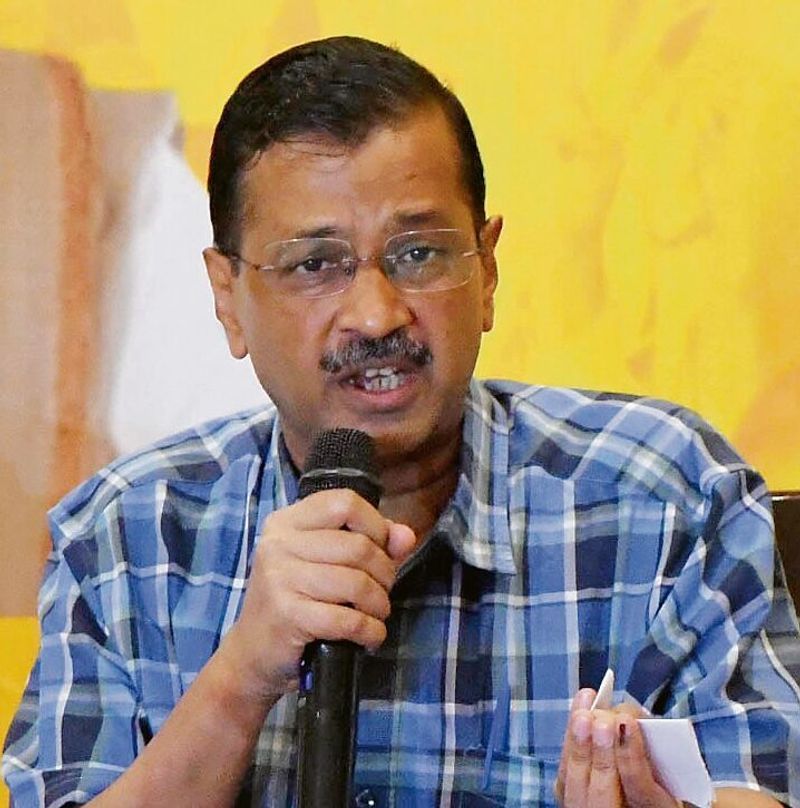

Refusing to step aside from hearing the Delhi excise policy case, Justice Swarana Kanta Sharma on Monday dismissed all recusal applications moved by AAP leader Arvind Kejriwal and other accused, holding that the pleas alleging apprehension of bias were driven by perception, not proof.She said this was not merely about deciding a legal dispute but about confronting a direct challenge to judicial independence itself.At the centre of the controversy, she remarked, was an unusual situation: instead of the court judging a litigant, the litigant had sought to place the judge and the institution in the dock.Justice Sharma made it clear that stepping aside would have been the easier option. She said her first instinct was to withdraw without hearing the applications after her impartiality and dignity were questioned. Justice Sharma said yet she chose to proceed with the hearing to ensure fairness and transparency.The court underlined that judicial impartiality was presumed and must be rebutted with concrete material. “Apprehension alone cannot replace evidence,” the judge indicated, pointing to contradictions in the applicants’ submissions, on one hand asserting faith in her integrity, and on the other seeking her removal.She cautioned that recusal could not be reduced to a tool in the hands of litigants. If accepted on such grounds, it would open the floodgates for forum shopping and weaken the justice delivery system.The judge firmly rejected reliance on statements attributed to Home Minister Amit Shah, observing that courts could not be influenced by political commentary. Public statements by politicians, she noted, were beyond judicial control and could not determine whether a judge hears a case.On allegations concerning her children being empanelled as government counsel, Justice Sharma said no connection had been shown with the excise policy case. She said a litigant could not dictate how a judge’s family members pursue their careers in the absence of any evidence of misuse of office.She warned that accepting such arguments would make it impossible for courts to function in cases involving the government. The CBI had also clarified that her children had no role in the present matter.Addressing references to social media discussions, the judge said courts decide cases on records, not online campaigns. She described attempts to bring such material into judicial proceedings as misplaced, adding that repetition of allegations does not transform them into truth.Justice Sharma also dismantled claims based on her previous orders. In cases involving Manish Sisodia and others, she noted, the Supreme Court had not made adverse findings against her rulings. In Kejriwal’s own case, interim relief was granted on limited grounds without overturning her decision.In a pointed observation, the court recalled that interim relief had earlier been granted to AAP leaders, including Kejriwal and Raghav Chadha, without any allegation of bias being raised at that stage.Responding to objections over her participation in events organised by the Akhil Bharatiya Adhivakta Parishad, the judge said such engagements were professional and centred on legal issues. She said interaction between judges and the Bar was a recognised part of the legal system and could not be used to infer ideological leaning.To accept such arguments, she noted, would isolate judges from all professional discourse.Justice Sharma described the situation created by the applicant as a “win-win narrative”. If relief was denied, it could be portrayed as pre-determined; if granted, it could be projected as a result of pressure. The court said such framing could not dictate judicial conduct.She said recusing in these circumstances would not be prudence but surrender, an act that could damage public confidence in the institution. Courts, she emphasised, could not be turned into theatres of perception.She concluded that pleas were built on insinuations rather than evidence and failed the legal test of reasonable apprehension of bias.The main matter has now been listed on April 29 and 30, for the CBI’s submissions.