

IRAN has covertly seeded GPS-guided sea mines across the vital Strait of Hormuz, a report claims.
It comes as the regime appears to be stronger than thought and could even cut the internet cables on the sea floor to attack Gulf nations.
Sign up for The Jattvibe newsletter
Thank you!
The US forces directed 30 Iranian naval vessels to return to Iran via the Strait of Hormuz Credit: EU Satellite
Trump said he would ‘expect to be bombing’ Iran if it hadn’t agreed to a deal, before offering an extended truce Credit: REUTERS
JD Vance’s high-stakes trip to Pakistan was cancelled after Tehran “didn’t respond” to US demands Credit: Pacific Press/Shutterstock
US officials told lawmakers that 20 or more mines may already be in place, with some remotely floated using GPS technology, the Washington Post reported.
Pentagon insiders have warned it could take up to six months to clear the deadly devices, with an operation unlikely to begin until the US war with Iran ends.
Former Iran director at the National Security Council Richard Nephew said the threat alone would spook crews and shipping firms.
He warned: “You’re not going to have many people wanting to run that risk”.
TRUMP VS XI
US storms Iran-linked ship carrying mystery ‘Chinese gift’ as Trump takes on Xi
AI ATTACK
Britain faces ‘perfect storm of AI-powered threats from Russia, Iran and China’
He added that while disruption may not be total, even partial closure of the two-lane strait could have serious knock-on effects worldwide.
At the same time, Iran’s feared Islamic Revolutionary Guard Corps has raised the prospect of unleashing a “digital catastrophe” by cutting seven submarine internet cables running beneath the strait.
Gulf states rely on them for over 90 per cent of their internet, banking and cloud services, leaving them dangerously exposed.
Iran depends on the cables for less than 40 per cent of its connectivity, with backup routes through Turkey.
The IRGC has branded the cables “strategic pressure points” alongside ports, shipping lanes and energy hubs.
Despite claims from Donald Trump and Defence Secretary Pete Hegseth that Iran’s military has been crushed under Operation Epic Fury, US intelligence paints a more troubling picture.
Around half of Iran’s ballistic missile stockpile remains intact, alongside roughly 60 per cent of the IRGC’s naval forces, including fast-attack boats blamed for fresh assaults on commercial shipping.
About two-thirds of Iran’s air force is also still believed to be operational after waves of US and Israeli strikes.
Battle damage assessments show much of Iran’s conventional navy has been destroyed but its smaller, agile IRGC fleet remains active – continuing to disrupt shipping in the Strait of Hormuz.
Marine Lt. Gen. James Adams warned: “Iran retains thousands of missiles and one-way attack UAVs that can threaten U.S. and partner forces throughout the region, despite degradations to its capabilities from both attrition and expenditure.”
a Submarine cable map charts over 600 active and planned cables around the world Credit: TeleGeography
An Iranian long-range Shahab-3 missile is fired in desert terrain at an unspecified location
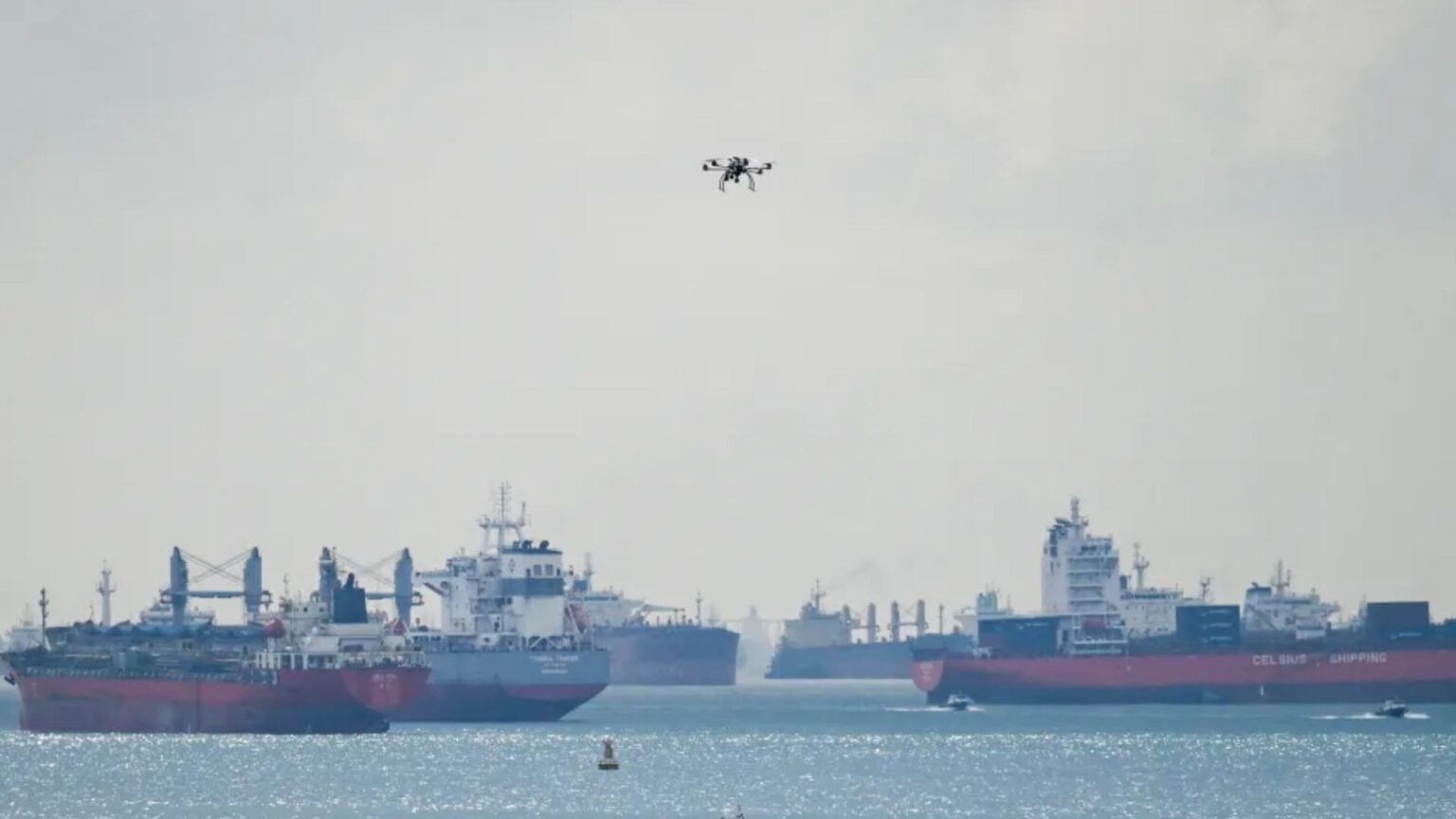
Cargo ships in the Gulf, near the Strait of Hormuz
Pentagon spokesman Sean Parnell said the campaign had struck more than 13,000 Iranian targets in under 40 days, adding that 92 per cent of Iran’s largest naval vessels and about 44 minelayers had been destroyed.
He described it as “the largest elimination of a navy over a three week period since World War II”, insisting the US had delivered a “crippling series of blows”.
But the crisis in the Strait of Hormuz has only deepened.
Iran has declared the waterway closed, opened fire on ships and moved to tighten its grip on global trade.
Around 20 per cent of the world’s oil passes through the strait – meaning prolonged disruption could send shockwaves through economies worldwide.
Tensions escalated further as Iranian forces seized two cargo ships – MSC Francesca and Epaminondas – and fired on a third, warning all US-linked vessels were now “legitimate targets”.
The Americans stormed an Iran-linked ship that Trump said was carrying a “gift from China”.
A Greek-owned ship, Euphoria, sailing under a Liberian flag, was also hit with gunfire and rocket propelled grenades, leaving it stranded.
UK maritime monitors said one vessel was struck without warning, while others came under attack in separate incidents near the Iranian and Oman coasts.
The assaults came just hours after Trump extended a ceasefire, raising hopes of a deal – only for them to be dashed as violence flared up again.
The President, who had earlier vowed “I expect to be bombing” if no deal was reached, performed a sudden U-turn after mediation efforts, granting more time for talks but refusing to lift a naval blockade choking Iran’s economy.
Iran has insisted it will not return to negotiations unless the blockade is lifted, while US officials warn the regime remains capable of inflicting serious damage.
The explosive move came after JD Vance’s high-stakes trip to Pakistan was cancelled after Tehran “didn’t respond” to US demands.
The US Central Command reported on Tuesday that the US forces directed 30 Iranian naval vessels to return to Iran via the Strait of Hormuz.
The move was revealed through satellite imagery in the area.
The development comes amid the start of a blockade on ships entering and exiting Iranian ports, a move Tehran described as a violation of the ceasefire.
Trump claimed Iran is “collapsing financially” and “losing 500 Million Dollars a day”, adding it is desperate to reopen the strait because it is “starving for cash”.
Behind the scenes, sources say Iran is gripped by internal divisions, with hardliners demanding concessions before any talks resume.
This has raised dears the crisis in the Strait of Hormuz could drag on, keeping global energy markets and shipping routes on edge for months.
The IRGC navy fired on three container ships in the Strait of Hormuz Credit: Getty
Iran claimed the MSC Francesca was captured
The regime said the vessel Epaminondas was escorted to the Iranian coast