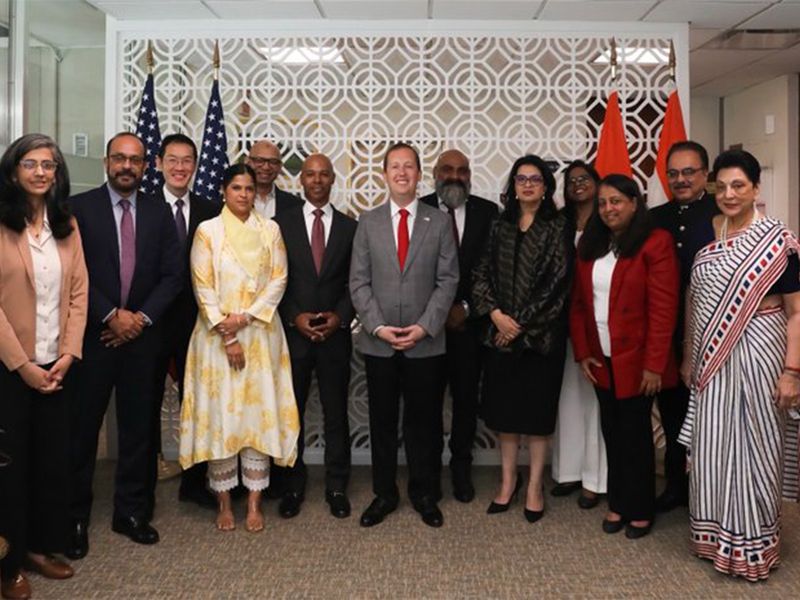

New Delhi [India], April 24 (ANI): US Ambassador to India Sergio Gor on Friday highlighted efforts to deepen pharmaceutical cooperation with India.Gor highlighted growing collaboration between the United States and India in the pharmaceutical sector. In a statement, he pointed to the importance of resilient supply chains and industry expansion.”Stronger US-India pharma ties mean more resilient supply chains for our people. Great roundtable with US industry leaders today on expanding their footprint here while advocating for fair deals,” he said in a post on X.Stronger U.S.-India pharma ties mean more resilient supply chains for our people. Great roundtable with U.S. industry leaders today on expanding their footprint here while advocating for fair deals. We’re ensuring our most innovative companies lead the way in a competitive global… pic.twitter.com/Xm4CqkyI5A— Ambassador Sergio Gor (@USAmbIndia) April 24, 2026The ambassador noted that fostering a favourable business environment remains a priority, particularly for innovation-driven companies. “We’re ensuring our most innovative companies lead the way in a competitive global market,” he added.The remarks come amid broader efforts by both nations to strengthen economic ties, especially in critical sectors such as healthcare, technology, and manufacturing. Increased US investment in India’s pharmaceutical industry could help diversify global supply chains, reducing reliance on single-source manufacturing hubs and enhancing preparedness for future health crises.He also reiterated Washington’s push to modernise trade policy with Central Asia.Further, separately, Gor emphasised the importance of legislative reform in unlocking trade opportunities with Central Asian nations.In a post on X, he referred to Jim Risch, a senior US senator involved in foreign relations policy. “Always a pleasure to speak with @SenatorRisch to reaffirm our strong support for action to repeal the Jackson-Vanik amendment for key U.S. partners in Central Asia,” Gor wrote.Always a pleasure to speak with @SenatorRisch to reaffirm our strong support for action to repeal the Jackson-Vanik amendment for key U.S. partners in Central Asia. As I work to deepen our C5+1 cooperation, removing this outdated law can unlock the immense potential for our…— Ambassador Sergio Gor (@USAmbIndia) April 24, 2026Enacted in 1974, the Jackson-Vanik Amendment is a US trade law that denied normalised trade relations to non-market economies that restricted their citizens’ right to emigrate. It was originally aimed at the Soviet Union.Gor underscored the potential economic benefits of removing the restriction, particularly as the United States seeks to expand its footprint in emerging markets. “As I work to deepen our C5+1 cooperation, removing this outdated law can unlock the immense potential for our economic ties with Central Asian nations and boost US exports to this key region. Chairman Risch is doing a great job!” the US envoy to India added.Risch, the Republican Senator from Idaho and Chairman of the Senate Foreign Relations Committee, in November 2025, along with a bipartisan group of lawmakers, introduced a bill to officially repeal the Jackson-Vanik restrictions for key Central Asian partners.While the amendment was repealed over the years for post-Soviet countries like Ukraine (2006) and Russia (2012), it has technically remained on the books for several Central Asian nations (such as Kazakhstan, Tajikistan, Turkmenistan, and Uzbekistan). Because of this, these nations are forced to rely on temporary trade waivers rather than permanent normal trade relations.The C5+1 platform, which brings together the United States and five Central Asian countries, has gained traction in recent years as Washington aims to counterbalance other global influences in the region while promoting trade, energy cooperation, and regional stability.(ANI)(This content is sourced from a syndicated feed and is published as received. The Tribune assumes no responsibility or liability for its accuracy, completeness, or content.)