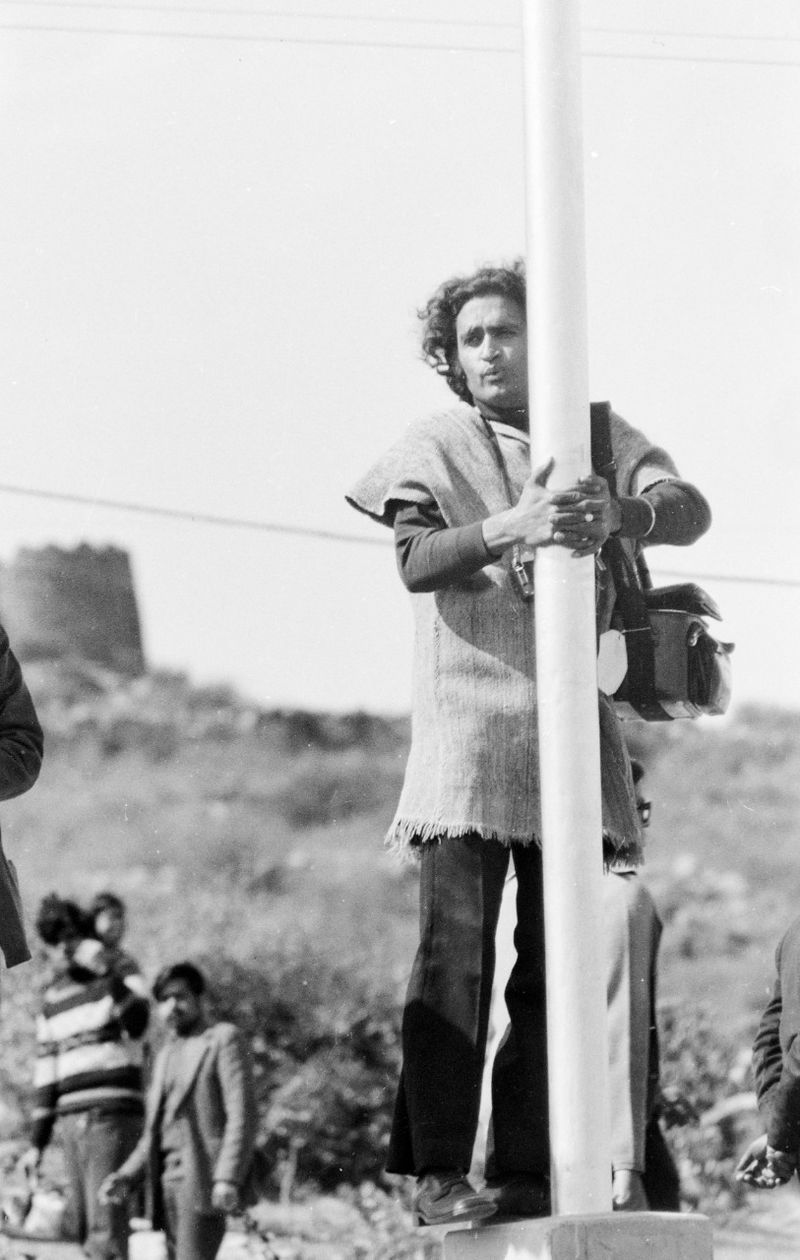

Raghu Rai was born in a small village in Jhang, now in Pakistan. He began his journey with photography in 1965, quickly mastering the depth of the medium. By 1966, he had joined The Statesman as its chief photographer. His coverage of the Bangladesh Liberation War in 1971 established him as a master of the craft, using the camera not merely to record events, but to document life itself.Our paths first crossed in 1972 when he judged a photography competition at St. Stephen’s College. He offered me a mantra that would define my career: “recording events around your life with a camera”. Following his lead, I sought and received his permission to study his work in his office, spending hours with his negatives and prints even in his absence.As a mentor, Raghu was a demanding taskmaster. He frequently critiqued my early work with brutal honesty until the day he finally accepted a series of my photographs with open arms. That marked the true beginning of our journey together. He welcomed me into his darkroom, invited me to shoot alongside him, and allowed me to accompany him on various news assignments.Raghu with his wife Gurmeet at Museo Camera in Gurgaon. Photo by Sondeep Shankar, 2024Beyond the lens, Raghu was a warm-hearted individual with a deep passion for music and the arts. He often maintained that photographers should function as impartial observers and witnesses. This philosophy is evident in his Bangladesh series, which captured human suffering with immense sensitivity, poise, and composition. For his monumental contributions, he was awarded the Padma Shri by the Indian Government.In the early 1970s, Raghu took his Bangladesh exhibition to Paris. It was there that Henri Cartier-Bresson viewed his work and subsequently nominated him to join Magnum Photos. By 1981, Raghu joined India Today, where he worked on special issues and trailblazing picture essays. His visual narratives on social, political, and cultural themes frequently became the defining features of the magazine.Raghu also dedicated himself to an in-depth documentary project for Greenpeace regarding the 1984 Bhopal chemical disaster. This work, which highlighted the ongoing struggles of the victims and the lack of compensation, resulted in a book and international touring exhibitions. He remained a vocal advocate for the survivors, using his platform to create global awareness about the tragedy and the contaminated environment.His 1992 National Geographic cover story “Human Management of Wildlife in India” earned him further critical acclaim. Throughout his career, Raghu’s work was exhibited in major cultural hubs including London, Paris, New York, Tokyo, and Zurich. His photo essays were featured in the world’s leading publications, such as Time, Life, The New York Times, and The New Yorker.In 2019, the Lucie Foundation in New York honoured him as the Master of Photojournalism. He was also the first recipient of the Academy of Fine Arts Photography Award – William Klein, a consecration award celebrating his entire career and his singular contribution to the world of photography.