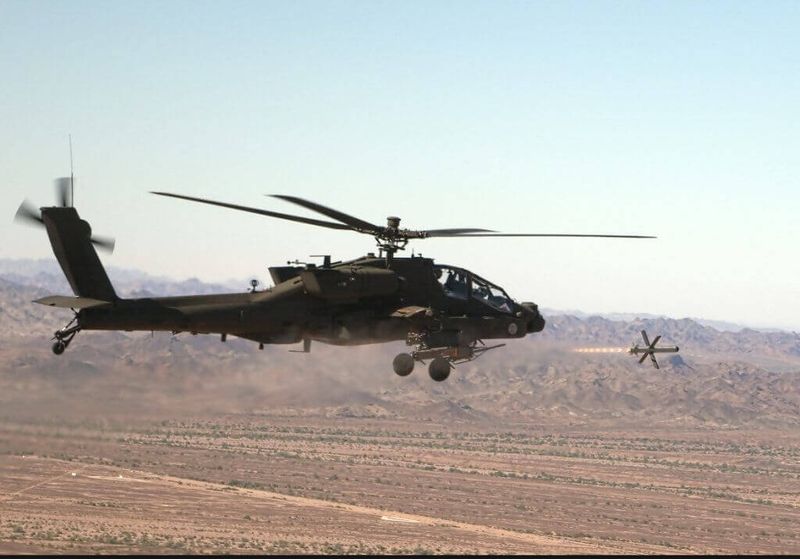

Traditionally looked upon as aerial platforms for ferrying personnel and cargo or providing tactical fire support to troops engaging the enemy, IAF helicopters have expanded their domain to include stand-off precision strikes at targets much beyond what the eye can see.A year after Operation Sindoor, when India carried out a series of precision strikes on terrorist camps and military targets in Pakistan, the IAF has got a potent new system by integrating Israeli long-range missiles on Russian Mi-17 helicopters, giving it a great deal of operational flexibility to execute similar missions and a much longer reach than other helicopter launched missiles in service.Advanced Spike Non-Line of Sight (NLOS) air-to-ground missiles, that can hit targets up to up 50 km away, were procured by the IAF from Rafael and these systems are being retrofitted on some of the IAF’s Mi-17 V5 medium-lift helicopters. The work began a few months ago, IAF sources said.The ongoing project was among those that were reviewed by the Air Officer Commanding-in-Chief, Maintenance Command, Air Marshal Yalla Umesh, during his visit to No.3 Base Repair Depot in Chandigarh on April 27-28. The depot is responsible for the maintenance, overhaul and modification of the IAF’s Russian-origin helicopter fleet.The Mi-17s had been adapted earlier by the IAF to fire unguided rockets from external pylons and these were used to strafe enemy positions along the Line of Control during the 1999 Kargil Conflict. Over the years, these helicopters, which form the mainstay of the IAF’s rotor wing element, have undergone several modifications and upgradations, with the Spike being the latest addition.The missile has an electro-optical and infrared guidance unit and a secure wireless data link providing real-time video to the operator, enabling a full ‘man-in-the-loop’ control throughout the flight and allowing for mid-flight course alteration and re-targeting.The missile can be launched from low altitude, behind mountains or tall trees that shield the helicopter from observation, and guided over obstacles to hit targets which the helicopter crew cannot see directly. It is highly effective against armoured formations, bunkers, ammunition and fuel depots, buildings and other high-value targets.The advantage of using helicopters for precision strikes, IAF sources said, is that they have the ability to operate in close proximity to the ground, can launch from remote or scattered helipads located away from major bases, hover in the shadows and manoeuvre easily in confined spaces and undulated terrain as encountered along the Line of Control against Pakistan and the Line of Actual Control against China.During Operation SIndoor, the IAF and the Army had employed air-to-surface guided missiles launched from fighter aircraft, cruise missiles and precision munitions fired from artillery guns to hit targets, many of which were within 50 km from the border.Fighters, which have to operate from fixed bases and fly relatively higher and faster, are vulnerable to enemy air defences. Helicopters equipped with long-range missiles, on the other hand can retain the element of surprise by operating from undesignated helipads, flying closer to the border and remaining outside the enemy’s point air defence loop.The IAF has over 220 Mi-17 helicopters and equipping even a part of this fleet with Spike missiles acts as a low-cost force-multiplier by enhancing strike capability without procuring new expensive platforms, while retaining the troop and cargo carrying capacity, IAF officers said.Apart from armed Mi-17s for stand-off precision strikes, the IAF has the US-made Boeing AH-64 Apache and the indigenous Prachand dedicated attack helicopters for close air support, as well as the Rudra, the armed variant of the indigenous advanced light helicopter, but the range of the ordnance they carry is only up to 10 km.