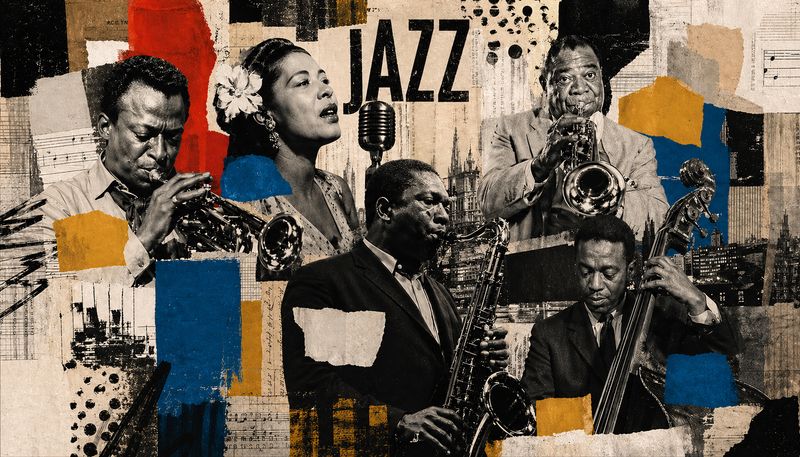

When UNESCO officially declared April 30 as International Jazz Day back in 2011, it did more than just mark a date on the calendar. It acknowledged what musicians and fans have been quietly celebrating in dimly-lit clubs for more than a century: jazz is a conversation. It’s a language that doesn’t require fluency in any one tongue, yet it beautifully expresses joy, sorrow, and rebellion in ways that words often can’t capture.The day owes its inception largely to the iconic pianist Herbie Hancock. As a UNESCO Goodwill Ambassador, Hancock dreamt of a global moment where music could act as a bridge for diplomacy. “It accomplished what I believe to be a new vision of cultural diplomacy,” Hancock reflected in 2013, looking back on the early days of the celebration. With the 2026 festivities set to return to Chicago, his hometown, it’s evident that this vision wasn’t just a passing thought. At 86, Hancock isn’t just coasting on past achievements; he’s actively co-directing an All-Star Global Concert at the Lyric Opera House, showing that the heartbeat of this mission never truly fades.The beginningsWhile many people know about International Jazz Day, few realise how deep its roots actually go. It didn’t spring from a sterile UN boardroom, but rather from a historical moment that feels almost like fiction. Long before the Civil Rights Act, when segregation was a harsh reality in Washington DC, the Turkish Ambassador Mehmet Munir Ertegun opened his embassy doors to musicians of all backgrounds. Those inclusive jam sessions, featuring the pioneers of swing and beyond, planted a crucial seed. The Ambassador’s sons, Ahmet and Nesuhi Ertegun, went on to establish Atlantic Records, effectively creating a bridge that brought jazz, Ray Charles, and Aretha Franklin from the fringes right into the heart of American pop culture. This legacy of breaking down barriers is woven into the very fabric of April 30.To truly grasp the significance of what’s being celebrated around the world, it’s essential to recognise the giants on whose shoulders Hancock and his peers stand upon. While no list can ever capture every influential figure, certain names consistently pop-up in discussions about jazz history. The legends who have left an indelible mark on jazz include trumpeters like Louis Armstrong and Miles Davis, saxophonists such as John Coltrane and Charlie Parker, pianist Duke Ellington, and vocalists like Ella Fitzgerald and Billie Holiday. These trailblazers defined various eras, from swing and bebop to fusion, creating a legacy of bold individuality that today’s artistes continue to pursue. This year’s global celebration shows that jazz is anything but a relic. In Chicago, the line-up reads like a world map of cutting-edge rhythms. You’ll find Mandisi Dyantyis skilfully weaving South African Xhosa folk songs into his performances, while Mexico’s Antonio Sánchez, the rhythmic mastermind behind the film ‘Birdman’, transforms a drum kit into a powerful storytelling tool. Meanwhile, in Siena, Italy, the JazzAble project is breaking down barriers to accessibility, demonstrating that education and performance are vital components of the music’s future.One of the most captivating things about this day is how it reshapes our understanding of listening. Jazz requires a unique kind of bravery from both the musicians and the audience. The iconic bassist and composer Charles Mingus, who often used his music as a form of protest against racial injustice, really highlighted the vulnerability involved in this process. International Jazz Day invites us to embrace that truth through countless voices. It serves as a reminder that before jazz becomes a genre, it’s fundamentally about genuine listening, a collective improvisation where a saxophone wail from Japan can beautifully blend with a hand drum beat from Martinique in ways we never expect.Jazz has evolved far beyond the classic swing and hard bop that laid its foundation, joyfully transforming itself into a myriad of styles over the decades. In the late 1960s, fusion broke down the barriers between electric rock and acoustic improvisation, with Miles Davis connecting his trumpet to a wah pedal while bands like Weather Report made synthesisers groove. Fast forward to the late 1980s and early 1990s, the London club scene gave rise to acid jazz, a funky, groove-heavy blend where DJs spun rare tracks alongside live horns, turning dance floors into vibrant spaces for improvisation, with artists like Jamiroquai and The Brand New Heavies leading the charge. And let’s not forget nu jazz, a laptop-infused, broken beat relative, alongside the entrancing, looping sounds of spiritual jazz that have captivated a whole new audience.The India connectThe celebration of jazz can be found in some pretty unexpected places, where it has created a surprisingly warm and creative home. India’s love affair with music goes way back to the 1930s, when jazz bands became a fixture in the ballrooms of Bombay and the grand hotels of Calcutta. Over time, Indian musicians didn’t just copy the American sound, they infused it with raga scales and taal rhythms, crafting something truly one-of-a-kind. Leading this movement is Louis Banks, often hailed as the Godfather of Indian Jazz. A gifted keyboardist and composer who made the journey from Nepal to India, Banks helped lay the foundation for the country’s fusion scene through his work with the band Sangam and by mentoring many young improvisers. He famously remarked that the true beauty of jazz lies in its democracy, every musician has a voice, and no one is afraid to make mistakes. That spirit is very much alive in India’s lively jazz festivals today, from the hills of Darjeeling to the beaches of Goa, where a new wave of musicians is boldly carrying his legacy forward with their own creative flair.If you’re feeling inspired to hit play today, these 10 recordings are more than just a starting point: they’re a celebration of a century’s worth of brilliance. Here’s a list of the most iconic jazz songs ever, not arranged by date, but as essential cornerstones of an endless musical legacy.Take Five by The Dave Brubeck QuartetSo What by Miles DavisStrange Fruit by Billie HolidayA Love Supreme, Part 1 by John ColtraneWest End Blues by Louis ArmstrongRound Midnight by Thelonious MonkAll Blues by Miles DavisSing, Sing, Sing by Benny Goodman ft. Gene KrupaMy Favourite Things by John ColtraneBirdland by Weather ReportThe writer is a music critic