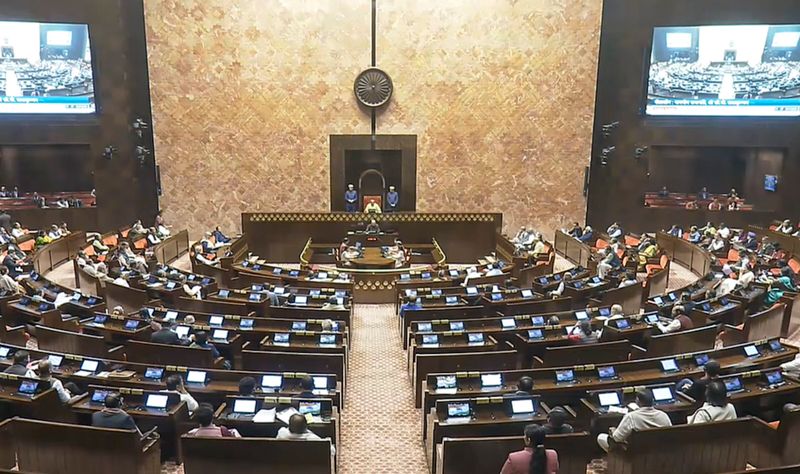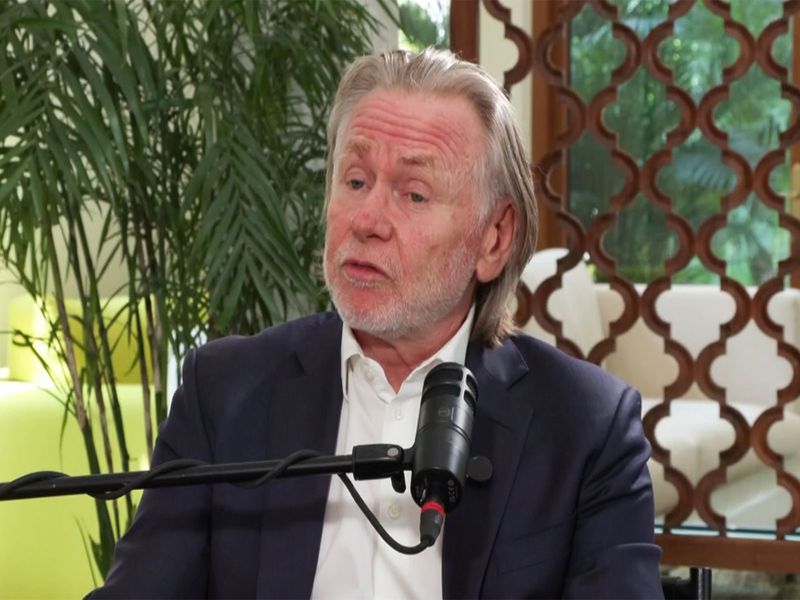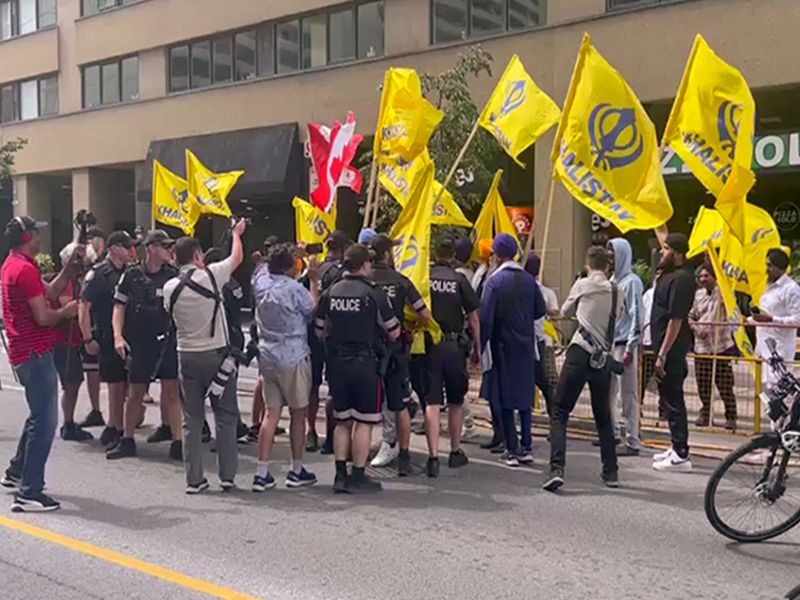

Canadian Security Intelligence Service on Friday (local time) in a report recognised the threat posed by Khalistanis in Canada.The CSIS report 2025, tabled in the Canadian Parliament said that activities of Canada based Khalistani elements continue to promote a violent extremist agenda.The report further claimed China, Russia and India interfered in Canada’s internal politics through espionage, and are not the only countries which sought to do so.In its statement, the report says, “This past year marked the 40th anniversary of the bombing of Air India Flight 182, whose suspects were members of Canada-based Khalistani extremist (CBKE) groups. It remains to this day the deadliest terrorist attack in Canadian history, with 329 people killed, most of them Canadians. There were no CBKE related attacks in Canada in 2025.” The Air India attack remains the deadliest terrorist attack in Canadian history that claimed 329 lives.”Ongoing involvement in violent extremist activities by CBKEs continues to pose a national security threat to Canada and to Canadian interests. Some CBKEs are well connected to Canadian citizens who leverage Canadian institutions to promote their violent extremist agenda and collect funds from unsuspecting community members that are then diverted toward violent activities,” it added.The report further stated that amid the churning events across the world, apart from China, Russia, India, Iran and several other foreign states had sought to interfere in Canadian politics.”In 2025, the main perpetrators of foreign interference and espionage against Canada remained the People’s Republic of China (PRC), India, the Russian Federation, the Islamic Republic of Iran, and Pakistan.However, with shifting geopolitical realities and an increasingly multipolar global environment, these were not the only foreign states that sought to interfere in Canada.”The report alleged that India has cultivated relationships with the bigwigs in politics and journalists, and members of the Indo-Canadian community, which has resulted in transnational repression of Canada.”Historically, India has cultivated covert relationships with Canadian politicians, journalists, and members of the Indo-Canadian community, to exert its influence and advance its interests. This has included transnational repression (TNR) activities, such as surveillance and other coercive tactics meant to suppress criticism of the Government of India and create fear in the community. Given the presence in Canada of supporters of the Khalistan separatist movement, Canada must remain vigilant regarding potential TNR activities. India acts to counter perceived threats to its domestic stability, including Khalistan separatism. In Canada, advocacy for Khalistan separatism is lawful political activity,” the report said.The report however is based on Canadian intelligence assesment of 2025. That appears to have taken a different turn with Mark Carney taking over as Prime Minister. Prior to Carney’s visit to India earlier this year Canadian officials said that, they believe India is not currently linked to violent crimes or threats on Canadian soil.The statement was endorsed by the commissioner of the Royal Canadian Mounted Police (RCMP) Mike Duheme who said that there is no threat to Canadian from any agent linked to India.In an interview with CTV RCMP Commissioner said the dots do not connect to a foreign entity. Duheme said, “Well, what I quoted in 2024 was based on the criminal investigation that we had at the time. The government official who made that quote, I’m not quite sure who briefed him. What I’m saying is that that particular file at that time, yes, I did say you had agents or proxies from the government. But what we’re seeing right now in transnational repression. the dots don’t always connect to a foreign entity.”The India-Canada ties had hit rock bottom due to concerns over Canada’s perceived leniency towards Khalistani separatist elements and Canada’s allegations that Indian agents were involved in the killing of NIA-designated terrorist Hardeep Singh Nijjar outside a gurdwara in Canada in 2023.India had strongly rejected the allegations and termed them “politically motivated”.