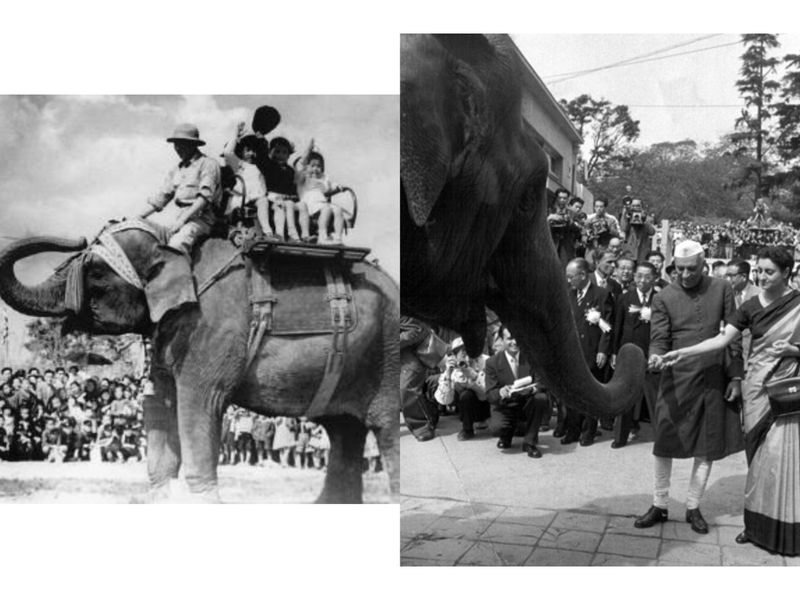

New Delhi [India], May 5 (ANI): Japan marks May 5 as Children’s Day, and the Indian Embassy in Japan recalled the ‘jumbo’ gift that children from India sent to their counterparts more than seven decades ago.”It is Children’s Day today. We are reminded of the Indian Elephant who lived in Ueno Zoo from 1949 to 1983. She was a gift from the children of India to the children of Japan,” the Embassy of India in Japan and Republic of Marshall Islands said in a post on X.It is Children’s Day today. we are reminded of the Indian Elephant who lived in Ueno Zoo from 1949 to 1983. She was a gift from the children of India to the children of Japan.#ThisDayInIndiaJapanRelations pic.twitter.com/ByfTd0zN3d— India in Japanインド大使館 (@IndianEmbTokyo) May 5, 2026On Japan’s Children’s Day, the story from the aftermath of World War 2 has returned to light, recalling how India’s first Prime Minister Jawaharlal Nehru gifted a baby elephant named ‘Indira’ to the children of Japan.The gesture came in response to letters from Japanese school children and brought joy to a country still recovering from war.The elephant went on to become more than a zoo attraction. For many children in Tokyo, she came to symbolise hope.She was named Indira after PM Nehru’s daughter, Indira Gandhi, who later became India’s first and only woman Prime Minister.The story traces back to the late 1940s, when Nehru received hundreds of letters from Japanese school children with a simple request: they wanted an elephant for their zoo.In a letter written at the time, Nehru said, “You have seen the hundreds of letters I have received from Japanese children asking me to supply them with an elephant for their zoo in Tokyo.”He added, “I think, it is desirable for us to send an elephant to Japan. The difficulty is about transport.”That decision led to the journey of a 15-year-old female elephant from Mysore to Ueno Zoo. An old report by The New York Times described her as a “magnificent elephant of exemplary behavior,” noting that she “possesses rare auspicious marks–has eighteen toenails instead of usual sixteen or seventeen, carries trailing trunk, walks head aloft and swings long tufted tail”.Indira arrived in Japan at a time when the country had very few elephants left. Many had died during the war due to food shortages and military decisions. Her arrival drew large crowds. For children who had grown up amid destruction, it was a rare moment of happiness.According to KY Yonetani’s ‘Captive Elephants in Japan: Census and History’, Indira arrived on September 25, 1949, and lived at the zoo until August 11, 1983, when she died at the age of 49. The study notes that she was among the oldest elephants in Japan at the time of her death.Her death was widely mourned in Japan, owing to the bond she had formed with generations of visitors. Scholarly accounts later described her as a “messenger of peace” sent by India.The legacy continued after her death. In 1984, India sent two more elephants, Asha and Daya, to Japan, continuing what came to be seen as a symbol of friendship between the two countries.The same study also records that before the war, about 20 elephants lived in Japanese zoos, but by the end of the conflict, only three remained alive. Indira was among the first elephants to arrive in the post-war period.Images from the time, including those showing children riding on Indira’s back, indicate that the gesture was received with joy.In India, Children’s Day is observed on November 14, Nehru’s birth anniversary. He was fondly called ‘Chacha Nehru’ and was known for his emphasis on children’s welfare and education. After his death, it was decided to mark his birthday as ‘Bal Diwas.’ (ANI)(This content is sourced from a syndicated feed and is published as received. The Tribune assumes no responsibility or liability for its accuracy, completeness, or content.)