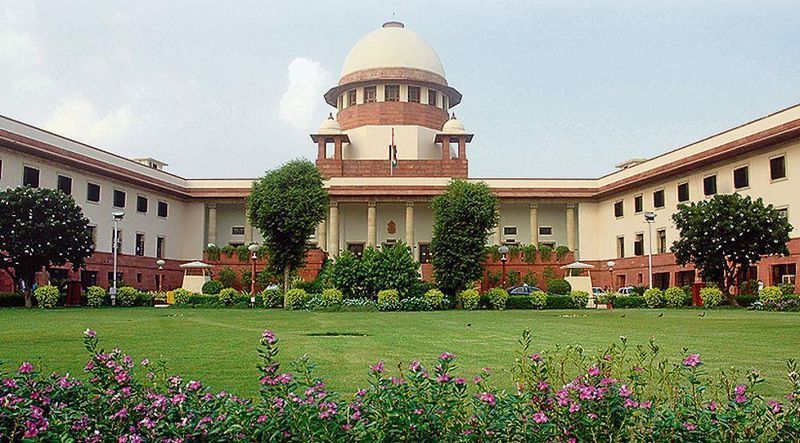

Legal heirs of a doctor can be sued in a medical negligence case under the Consumer Protection Act after his death, the Supreme Court has ruled.“We conclude that upon the death of the alleged medically negligent doctor, his/her legal heirs can be impleaded (made parties to the case) and brought on record,” a Bench of Justice JK Maheshwari and Justice AS Chandurkar said after examining the statutory framework under the Consumer Protection Act, 1986, and the Consumer Protection Act, 2019.“Consequently, the extent of liability will be determined based on the pleadings and evidence presented. The question is answered accordingly,” it said in its May 4 verdict.The Bench, however, clarified that it was only answering the question on interpretation of the applicable law and not expounding on the normative requirement as to whether the policy adopted by the applicable law was correct or there’s a need to change.The significant verdict having wider ramifications came in a more than three-decade-old case in which a doctor (since deceased) had operated on the wife of the complainant (also deceased now) after which she lost her vision.The complainant first moved the district consumer forum, Munger, Bihar, contending that he consulted Dr PB Lall (now deceased) at his private clinic on February 10, 1990, after his wife complained of severe pain in her right eye. Dr Lall advised immediate operation, which was performed on February 11, 1990, but the pain recurred on March 16, 1990, and she was taken back to Dr Lall.Despite further treatment, there was no relief, and the complainant consulted other doctors at Bhagalpur and Aligarh. As there was no respite, he consulted a doctor at Shankar Netralaya, Madras.“As alleged, he informed that his wife had already lost vision in the right eye due to wrong treatment and operation, which can further affect the vision in her left eye. On the advice of surgery of his wife’s left eye, she was operated on May 5, 1994. Consequently, the complainant had to visit Madras multiple times, and the treatment of his wife with a local doctor continued till August 5, 1997,” the top court noted.He filed a consumer complaint under the Consumer Protection Act, 1986, on August 13, 1997, against Dr Lall for alleged deficiency in service, claiming compensation of Rs 4.5 lakh for his expenses and agony.During the pendency of the complaint in National Consumer Disputes Redressal Commission, Dr Lall passed away on August 4, 2009, and the original complainant also died on January 16, 2014.The court said one has to understand and see whether the ‘right to sue’ against such an alleged medically negligent doctor survived or not upon his death in terms of Rule 4 of Order XXII of Civil Procedure Code.It said the ‘right to sue’ means the right to seek relief through legal proceedings and such proceedings, in a general sense, are instituted against the opposite party/defendant(s), who possess a corresponding right to defend, as opposed to the claimant’s right to prosecute.“The right to defend is intrinsically linked to, and arises from, the right to prosecute, and vice versa. Therefore, for the continuation of proceedings, it’s essential that both rights co-exist.The top court noted that the legal question assumed significance as the implication of the holdings in this case would also apply to numerous types of tortious claims, including personal injuries that do not amount to death, motor vehicle accidents and other industrial accidents.Noting that the law seemed to have been lost to the pages of history due to less tort actions being litigated in India, the top court said in posterity, this case may be a lesson to the students and stakeholders to have a strong emphasis on legal history and jurisprudence.“We feel that it is appropriate to engage policy experts to debate the need and necessity of expanding the scope of Section 306 of the 1925 Indian Succession Act which deals with demands and rights of action of or against deceased survivors to and against the executor or administrator.“The policy consideration is best left to the Law Commission to see whether there is a need to have a re-look at these provisions for future,” it noted.