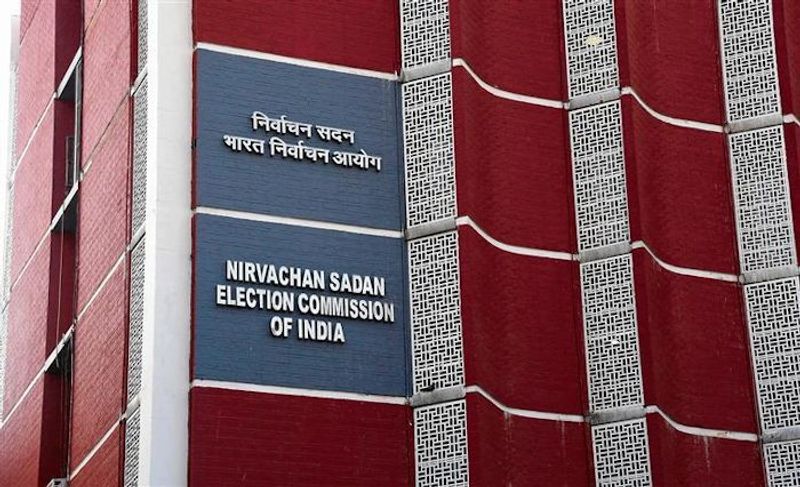

The Supreme Court on Wednesday wondered if it can direct Parliament to enact a particular kind of law to regulate the appointment of the Chief Election Commissioner (CEC) and Election Commissioners (ECs), even as petitioners questioned predominance of the Executive in the panel selecting the CEC and ECs.During hearing on PILs challenging a 2023 law on appointment of the CEC and ECs that replaced the CJI with a Union Cabinet Minister in the three-member selection panel, a Bench of Justice Dipankar Datta and Justice Satish Chandra Sharma pointed out that a prayer in one of the petitions seeking a direction to Parliament to enact a law to on appointment of the issue.“Come back to the prayers… it has asked (for a direction to) Parliament to make a law. Can the court ask Parliament to make a law? Could this be maintainable?” Justice Datta asked.“It is a prerogative of Parliament to make the law. Courts cannot direct Parliament to make a law,” the Bench emphasised.Referring to the March 2, 2023, Constitution Bench verdict in the Anoop Baranwal case, the Bench said the verdict altered the mode of selection where the CEC and ECs were appointed by the President on the advice of the Prime Minister.While ruling that the selection of the CEC and ECs would be done by a three-member committee of the Prime Minister, the Leader of Opposition (or the leader of the largest Opposition party in Parliament), and the CJI, the judgment made clear that it will remain in operation till Parliament made a law, the Bench noted.“Why did the court then restrict the Anoop Barnwal judgment only till a particular period till the law is made? It was only to deal with a particular situation of a vacuum,” Justice Datta said.On behalf of the petitioners, senior advocate Vijay Hansaria attacked the 2023 law, saying it gave the Executive predominance in the selection of CEC and ECs as the Prime Minister and a Union Minister could always override the Leader of Opposition in the decision making process with a 2:1 majority.Earlier, the Bench turned down Solicitor General Tushar Mehta’s request to adjourn the hearing, saying the matter was “more important” than the Sabarimala case Mehta was preoccupied with.“All matters are important. We read in the newspaper today, Sabarimala case should not at all have been entertained by the court. 9 judges are busy in a matter where an observation is made that the original petition should not have been entertained. This is more important than any other matter,” the Bench said.The top court is seized of several PILs, including those filed by the Association for Democratic Reforms (ADR), Lok Prahari, PUCL and TMC MP Mahua Moitra, against the 2023 law governing the appointment of the CEC and ECs.Ending the 73-year-old system of the government appointing the Chief Election Commissioner and Election Commissioners, the Supreme Court had on March 2, 2023 in the Anoop Baranwal case ordered creation of a three-member panel comprising the PM, Leader of Opposition in the Lok Sabha or leader of largest opposition party and the CJI to select them. In a unanimous verdict, a five-judge Constitution Bench led by Justice KM Joseph (since retired) had, however, said, “This norm will continue to hold good till a law is made by Parliament.”In December 2023, Parliament enacted the Chief Election Commissioner and the other Election Commissioners (Appointment, Condition of Service and Term of Office) Act, 2023 that replaced the CJI with a Union Cabinet Minister in the three-member selection panel. The top court had on March 21, 2024, refused to stay the 2023 Act.