

BIG busts may once have ruled the red carpet, but at this year’s Met Gala the most talked-about curves were far more modest.
It seems Hollywood stars are embracing a new kind of sexy in the shape of “ballerina boobs”.
Sign up for the Fabulous newsletter
Thank you!
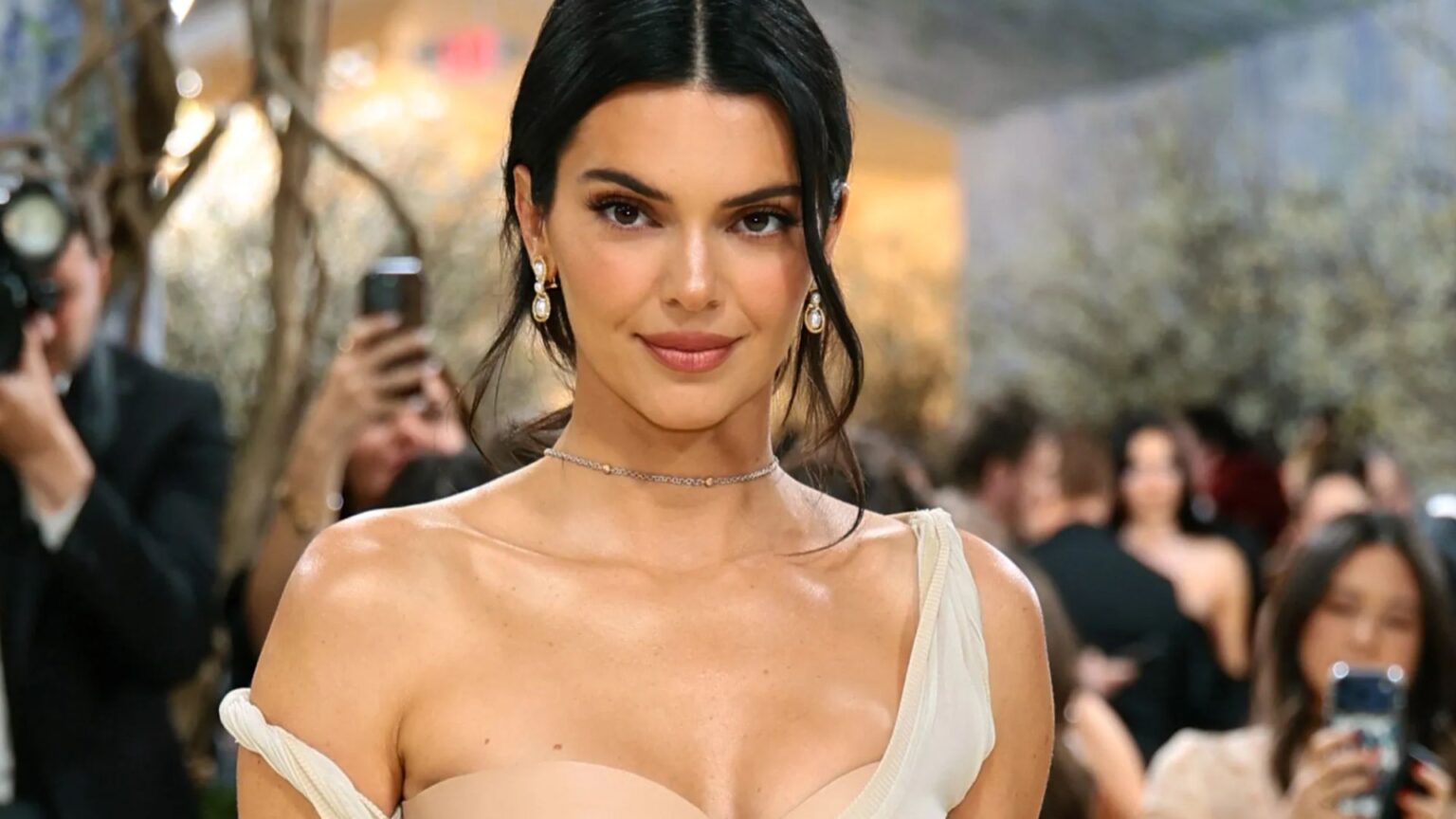
Model Kendall Jenner’s sleek, barely there decolletage was among the stars at the Met Gala who appeared to prove stars are ditching fuller figures Credit: Getty
Make-up guru Hailey Bieber is part of the shift into more long, lean model bodies Credit: Getty
Slim, toned and barely there, it is a world away from the inflated glamour of Nineties pin-ups such as Baywatch babe Pamela Anderson.
From model Kendall Jenner’s sleek, barely there decolletage to model Irina Shayk and rapper Doechii’s waif-like silhouettes, Gracie Abrams’ lithe frame and the delicate curves favoured by South African singer Tyla, and make-up guru Hailey Bieber, the most-photographed women in La La Land now appear to favour tiny, sculpted breasts that look weightlessly natural.
Meanwhile, stars known for fuller figures, including Sydney Sweeney, are now the exception.
Experts say the shift has been brewing quietly for years, fuelled by the rise of fat jabs, Pilates culture and fashion’s obsession with long, lean model bodies.
SALE AWAY
The stars who ditched designer for discount shops including rapper seen in Co-op
STRIPPER SECRETS
Confessions of a strip club hostess…where dancers make £3k a night
And the numbers back it up.
Figures from the British Association of Aesthetic Plastic Surgeons (Baaps) reveal the number of UK boob jobs fell nine per cent to 4,752 in 2025, while breast reductions rose by two per cent to 4,551.
Dubbed “ballerina boobs” or “yoga boobs” online, the look often comes naturally to those with slimmer frames — but for others, it is achieved through subtle enhancement.
That could be smaller implants or lifts, creating softer curves and a chest that complements rather than dominates the body.
A lithe frame and delicate curves are favoured by South African singer Tyla Credit: Getty
Doechii left little to the imagination and showed off her natural silhouette – a stark contrast to the fake boobs of 20-years ago Credit: Getty
Nora Nugent, a Kent-based cosmetic surgeon and Baaps president, says women are increasingly rejecting the “top-heavy” aesthetic once associated with Wag culture and reality TV.
“There is most definitely a move towards smaller implants and a more natural, proportionate aesthetic,” she says. “People come in asking for more fullness usually and a better shape, but to keep things proportionate to their body. They don’t want to look overblown or obviously augmented.”
For many women, it is not about going bigger any more, but fixing shape, lift and proportion.
The surgeon has also had clients asking to downsize.
It comes in stark contrast to the obviously fake boobs that were all the rage 20-odd years ago — popularised by the likes of ex-glamour model Katie Price, Pamela Anderson and former Spice Girl Victoria Beckham.
But just like hemlines and eyebrows, boob trends keep evolving.Early procedures used injections, then there was the silicone implant boom. And while bigger, perkier breasts were once considered a style accessory, there was backlash over fears they could damage health.
Now seen as a cosmetic fix, boob jobs were originally developed to help rebuild cancer patients’ bodies.
Retired reconstructive plastic surgeon Martin Coady reveals the techniques behind modern lifts were honed in wartime surgery.
Dubbed ‘ballerina boobs’ or ‘yoga boobs’ online, the look often comes naturally to those with slimmer frames (pictured singer Gracie Abrams) Credit: Getty
Victoria Beckham, who boosted her bust from a 34A to a 34DD in the Nineties, has been open about regretting getting ‘torpedo bazookas’ Credit: Getty Images – Getty
“The skills you require to put somebody back together if they’ve been blown apart are skills you would require to change people’s bodies,” he says.
“The desire to change the shape of the breasts has been around for some time, partly influenced by surgery to treat breast cancer.”
But it was silicone that changed everything, taking breast surgery from medical necessity to big business.
Originally used in aircraft engines during the Second World War, it paved the way for American Timmie Jean Lindsey to get the world’s first implants in 1962.
Within eight years, 50,000 implants had been sold.
But in 1992, the boob job boom hit its first major crisis when the US Food And Drug Administration severely restricted silicone gel implants after years of fears over ruptures, leaks and alleged links to illness.
For the next 14 years, they were largely kept off the cosmetic market, although some women could still get them for reconstruction surgery.
They were not fully approved again for cosmetic use in the US until 2006.
It is a world away from the inflated glamour of Nineties pin-ups such as Baywatch babe Pamela Anderson Credit: Alamy
Stars known for fuller figures, including Sydney Sweeney, are now the exception Credit: Getty
In Britain, another scare had already erupted. Polyurethane-coated silicone implants were withdrawn in 1991 amid fears they could increase the risk of cancer.
But later research found the lifetime risk was around one in a million and the implants were reintroduced in 2005.
In the years that followed, textured implants, designed to reduce hard scar tissue, were linked to a rare cancer, Breast Implant-Associated Anaplastic Large Cell Lymphoma.
Then, in 2010, the PIP scandal exposed faulty implants made with unapproved silicone, affecting around 47,000 British women.
For thousands, it turned a beauty boost into a health scare.
Even so, demand for bigger, more dramatic breasts did not disappear. If anything, it surged. The Nineties ushered in the era of the unmistakably “fake” boob, with firmer, saline-filled implants creating a more obviously enhanced look.
Even after silicone returned, the early Noughties favoured rounded, high, gravity-defying shapes.
Now, the mood is shifting again. Victoria Beckham, who boosted her bust from a 34A to a 34DD in the Nineties, has been open about regretting getting “torpedo bazookas”. Pammy also later said of her own bumper cleavage: “I just didn’t feel like it looked very good.”
Nora Nugent explains: “Part of this is the realisation that bigger is not better.” She adds that bigger implants can “overstretch breasts” if they are “too heavy”.
Rapid weight loss can also leave women with less volume in the chest, accelerating the shift towards smaller, subtler shapes.
Access to weight-loss jabs such as Ozempic, Wegovy and Mounjaro may also be playing a role.
Nora adds: “The pendulum is swinging towards a slimmer physique, and weight-loss medications have played a huge role in this.
“The growing wellness and fitness areas also contribute — smaller implants fit better for those who are athletic or prioritise fitness, partly because exercise is more comfortable and partly because the athletic aesthetic fits better with smaller breasts.”
If this year’s Met Gala is anything to go by, that shift is no longer subtle.
And for now, at least, the “bigger is better” era appears to be over.