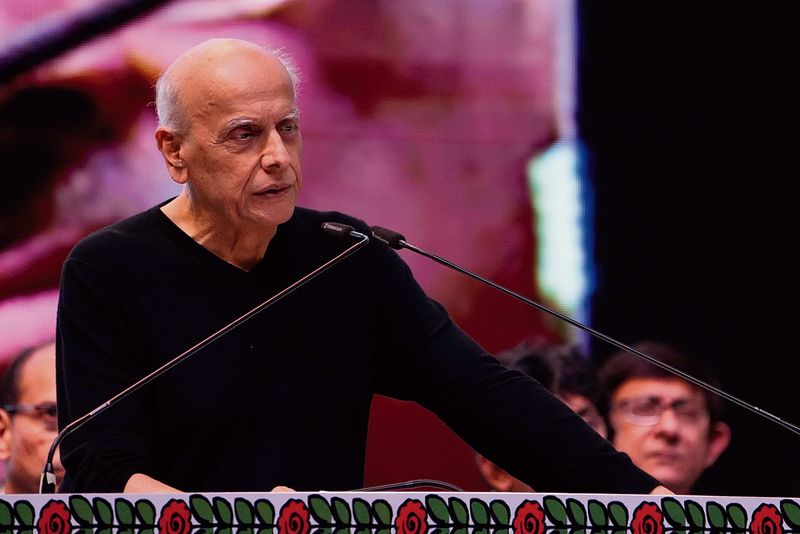

The climax of Mahesh Bhatt’s “Arth” in which the protagonist walks away from her “wayward” husband rather than reconciling with him was dismissed as suicidal by distributors and exhibitors with even top filmmakers warning the director that the film was headed for box office doom.But Bhatt, reveals a new book, “The Ashes are Warm: Memories of a Lifetime Spent With UG Krishnamurti”, refused to conform. And the 1982 Shabana Azmi, Kulbhushan Kharbanda, Smita Patil starrer went on to become a critical hit still remembered for its unconventional storyline.The film, which gave his career a new lease of life after a “decade of flops” such as “Vishwasghaat” and “Naya Daur”, was nearly reshaped to fit conventional expectations, Bhatt tells author Jattvibeita Pant Bansal in the book.”Arth”, which also stars Raj Kiran, is a semi-autobiographical drama centred on infidelity, abandonment, and a woman’s journey to self-discovery. In the end, Pooja (Shabana Azmi) chooses to walk away from the husband (Kulbhushan Kharbanda) and also the empathetic friend (Raj Kiran) who wants a life with her. “Screening after screening, distributors came, shook their heads, and said: ‘No, it won’t work. Change the ending. Change the ending’,’ he wrote. The final print, despite stellar performances by the cast and music by Jagjit Singh, was treated like an “orphan”.According to the 77-year-old, even filmmakers he admired, including his “guru” Raj Khosla and star director Vijay Anand, joined the chorus and urged him to modify what they termed a “suicidal climax”.”India, they said, is a traditional country. A wayward husband, when he returns like a prodigal child, must be embraced by the wife. That is what the culture demands. Anything else will be rejected,” he added.The filmmaker drew strength from the radical ideas of philosopher UG Krishnamurti, whose critique of tradition and social conditioning shaped Bhatt’s resolve.”Tradition is only a high-sounding word behind which you hide to protect your patriarchal worldviews. Tradition is your unwillingness to change. All these assurances — God, ideology, society — they exist only to prevent the release of what is already there,” Bhatt said quoting Krishnamurti.“Arth” finally released in 1983, the very day India won the World Cup, at Plaza in Delhi.Bhatt recalled the day in detail.”I remember pacing through Connaught Place during intermission, July heat pressing down, heart clenched with doubt. By the time I returned, the defining moment had arrived. Shabana asks, ‘If I had done the same thing, would you take me back?’ He says ‘no’. She says goodbye.””From the front rows came applause-not from the balcony, too refined for that, but from the heart of the audience. And in that applause I felt it-Mahesh Bhatt had made it! The suicidal climax had worked.” Bhatt also credited producer Kuljit Pal for backing his vision despite the risks and described the film as a “turning point” in his career.Priced at Rs 495 and published by Rupa, “The Ashes are Warm” is Bhatt’s private jottings, recounting his memories of his “anti-guru” Krishnamurti with what he describes as a “ruthless and unflinching honesty”.